English
Why Material Cost Takes 60% in Titanium CNC Machining
Writer:admin Time:2026-01-10 01:58 Browse:views
In the world of precision manufacturing, particularly in CNC machining of titanium parts, material costs represent a substantial portion of the total production cost. In fact, for titanium, the raw material can easily account for 60% or more of the total machining cost. This article breaks down the factors contributing to this high percentage, offering a detailed examination of how material properties, machining complexity, and additional operational costs drive up the material cost in titanium CNC machining.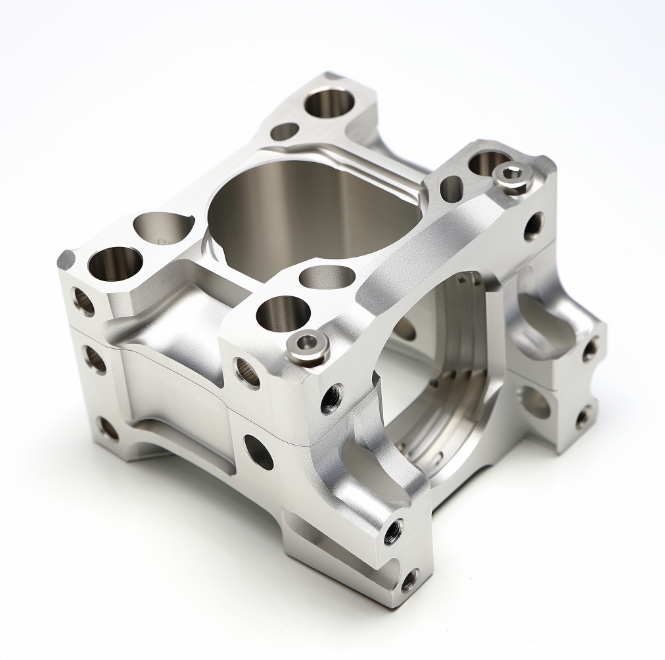
1. Introduction: The Role of Material in CNC Machining
Titanium alloys, particularly Ti-6Al-4V, are widely known for their strength, corrosion resistance, and high performance at extreme temperatures. These properties make titanium ideal for aerospace, medical, and military applications. However, the material’s inherent hardness, low thermal conductivity, and affinity for tool wear present serious challenges during machining, driving up the material cost component of production.
Material costs in CNC machining are divided into two major components:
Cost of Raw Material: The price of titanium itself, which varies based on market conditions and material grade.
Cost of Tool Wear & Production Time: Titanium’s difficulty to machine leads to rapid tool wear, longer production cycles, and more frequent tool replacements, further driving up the material cost.
This article delves into how these factors interact to make material cost the dominant factor in the final cost of machining titanium parts.
2. Raw Material Cost of Titanium
The price of raw titanium is a significant contributor to the high material cost in CNC machining. The cost of titanium per kilogram is much higher than that of many other metals due to its rarity, extraction process, and the complexity of its alloy formulations. When machining titanium, a substantial portion of the material is removed as waste, further adding to the cost.
Table 1: Raw Material Costs for Common CNC Machining Materials
| Material | Raw Material Cost (per kg) | Machinability | Common Applications |
|---|---|---|---|
| Aluminum 6061 | $2–$4 | Easy | Aerospace, automotive |
| Stainless Steel 304 | $5–$7 | Moderate | Industrial, medical |
| Titanium Ti-6Al-4V | $40–$70 | Difficult | Aerospace, medical implants |
| Inconel 718 | $45–$80 | Very Difficult | Aerospace, high-temp environments |
| Steel (HRC45+) | $2–$5 | Hard | Structural, automotive |
This table shows that titanium is approximately 8–15 times more expensive than commonly used materials like aluminum and stainless steel, which inherently raises the cost of machining.
3. Machinability of Titanium and Impact on Time
Titanium’s low thermal conductivity means it generates more heat during machining, which accelerates tool wear and increases cycle time. This, in turn, leads to longer machining times and higher labor costs.
Table 2: Machining Time for Titanium vs Other Materials
| Material | Machining Time (per part) | Remarks |
|---|---|---|
| Aluminum 6061 | 20–30 minutes | Quick to machine |
| Stainless Steel 304 | 30–60 minutes | Moderate hardness |
| Titanium Ti-6Al-4V | 60–120 minutes | High tool wear |
| Inconel 718 | 120–240 minutes | Extremely difficult to machine |
Titanium parts can take 2–3 times longer to machine compared to aluminum or stainless steel parts of the same geometry due to the material’s high strength and low machinability. The extended machining time directly correlates to higher labor and operational costs.
4. Tool Wear and Its Effect on Material Cost
Because titanium is a hard material, it causes significant wear on CNC tools. In many cases, the tool life is drastically reduced compared to machining softer materials. The more rapid tool wear results in more frequent tool changes, which increases the overall machining cost.
Table 3: Tool Wear Rate Comparison in CNC Machining
| Material | Tool Wear Rate (average) | Tool Type | Tool Life (minutes) | Tooling Cost per Part (%) |
|---|---|---|---|---|
| Aluminum | Low | Carbide | 200–300 | 5–10% |
| Stainless Steel | Moderate | Carbide, CBN | 100–200 | 10–20% |
| Titanium | High | CBN, PCD | 20–50 | 30–40% |
| Inconel | Very High | CBN, Ceramic | 10–20 | 40–50% |
As shown in the table, titanium’s high tool wear (especially when using carbide, CBN, or PCD tools) means that tooling costs in titanium machining can reach 30–40% of the overall production cost, a significant increase compared to softer materials like aluminum.
5. Material Waste in Titanium Machining
In titanium CNC machining, material waste can be substantial due to the nature of the cutting process. Titanium is a difficult material to machine, and achieving the desired part geometry often requires the removal of large volumes of material. The high removal rate leads to an increase in scrap and waste.
Table 4: Material Waste by Material Type in CNC Machining
| Material | Material Waste (%) | Impact on Cost | Notes |
|---|---|---|---|
| Aluminum 6061 | 5–10% | Low | Easily machinable, minimal waste |
| Stainless Steel 304 | 10–15% | Moderate | Moderate material loss |
| Titanium Ti-6Al-4V | 20–40% | High | Significant material removal due to hardness |
| Inconel 718 | 30–50% | Very High | Very high waste due to difficult machining |
The material waste during machining titanium is notably higher than other materials, particularly because titanium has poor chip-breaking characteristics and high cutting forces. This waste directly increases the cost of material and the overall part price.
6. Material Efficiency and the Importance of Process Optimization
To mitigate the cost of titanium CNC machining, it is crucial to optimize the machining process. This includes the use of advanced tooling, efficient cutting strategies, and cooling techniques that help reduce material waste, extend tool life, and minimize production time.
High-performance tooling: Use of coated carbide or PCD (Polycrystalline Diamond) tools can significantly reduce tool wear and extend tool life.
Optimized cutting parameters: Adjusting feed rates, speeds, and coolant flow can reduce the cutting forces exerted on the material, helping to preserve both tool life and material efficiency.
Additive manufacturing pre-forms: In some cases, parts may be partially built using additive manufacturing (such as laser powder bed fusion) before CNC machining, which reduces the amount of material needed for machining.
As an example, https://www.eadetech.com highlights the importance of selecting the right process combination for titanium parts, combining additive manufacturing and CNC machining to reduce material waste and cost.
7. Case Study: Titanium Aerospace Part
To better understand the material cost drivers in CNC machining, consider a case study of a titanium aerospace bracket:
Material: Ti-6Al-4V, 100 mm × 50 mm × 30 mm
Machining Time: 90 minutes
Tool Life: 30 minutes per tool
Material Waste: 35%
Table 5: Case Study Cost Breakdown
| Cost Component | Percentage of Total Cost | Notes |
|---|---|---|
| Raw Material | 55% | High titanium cost per kg |
| Tooling | 20% | Frequent tool changes due to wear |
| Machining Time | 15% | Extended time due to hardness |
| Waste | 10% | Significant material removal |
In this case, the raw material alone represents 55% of the total cost of machining, driven by both the high price of titanium and the substantial material waste. Tooling and machining time contribute an additional 35%.
8. Strategies for Reducing Material Cost in Titanium Machining
Several strategies can help reduce the material cost of titanium parts:
Material Sourcing: Working with suppliers who offer bulk discounts or recycled titanium may lower material costs.
Process Optimization: Combining additive manufacturing with CNC machining, as seen at https://www.eadetech.com, allows for more efficient material usage and reduces waste.
Tool Selection: Investing in advanced cutting tools that are specifically designed for titanium can extend tool life and reduce material loss.
9. Conclusion
Titanium CNC machining
is an essential process for many high-performance applications but is also cost-prohibitive due to material costs, tool wear, and machining complexity. Understanding the breakdown of these costs is crucial for manufacturers to make informed decisions about their machining processes.
With raw material costs typically accounting for 60% or more of the total machining cost, the need to reduce waste, optimize tools, and improve process efficiency is evident. For manufacturers looking to mitigate these costs, adopting advanced manufacturing technologies like additive manufacturing and hybrid machining is crucial, as demonstrated by solutions offered on platforms like https://www.eadetech.com.
By carefully balancing material, time, tooling, and process optimization, CNC machining companies can better control their overall production costs while maintaining the precision and quality required for titanium parts in critical applications.
Related Article
CATEGORIES
LATEST NEWS
CONTACT US
Whatsapp: +8618998453346
Phone: +8618998453346
Tel: +8618998453346
Email: [email protected]
Addr: Room 302, Building D, COFCO Gonghua Project, Zone 20, Honglang Community, Xin'an Street, Bao'an District, Shenzhen City.