English
TC4 Titanium Machining Cost Breakdown Explained
Writer:admin Time:2023-06-06 00:00 Browse:views
TC4 titanium — also known as Ti‑6Al‑4V or Grade 5 titanium — is one of the most widely used high‑performance alloys in aerospace, medical, energy, and industrial applications. Its exceptional strength‑to‑weight ratio, corrosion resistance, and biocompatibility make it attractive for critical parts, but these same properties also make it one of the most expensive and challenging materials to machine.
When quoting a TC4 part, material costs often represent a dominant share of the total price, and understanding why requires a detailed look at the raw material price, machining time, tooling wear, process complexity, surface finishing, inspection, and waste. Below we break down all of these components using real industry data.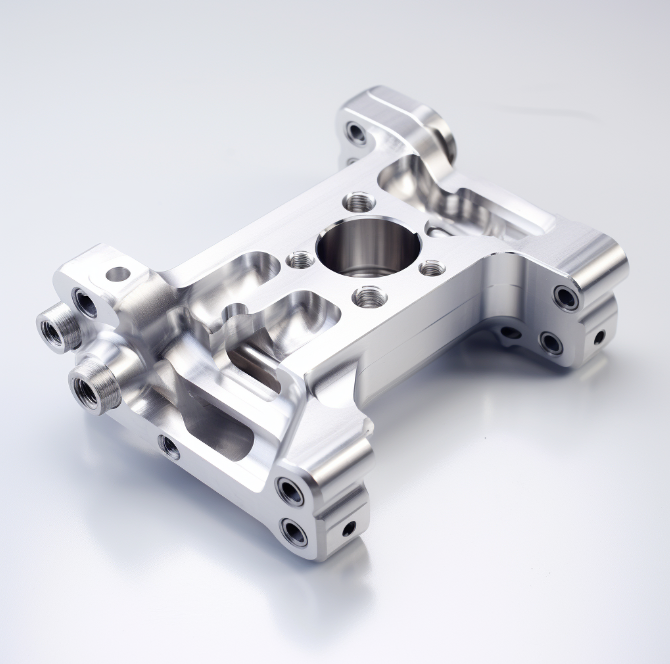
1. What Is TC4 Titanium? Material Basics and Industry Role
TC4 is the Chinese designation for Ti‑6Al‑4V, a titanium alloy alloyed with 6% aluminum and 4% vanadium. It offers an excellent combination of high strength (~895–960 MPa), toughness, and corrosion resistance, making it ideal for high‑value parts in aerospace, medical implants, and marine applications.(定制零件在线CNC服务)
Table 1: TC4 Titanium Material Properties (Typical)
| Property | Value | Unit | Standard/Test |
|---|---|---|---|
| Density | 4.43 | g/cm³ | ASTM B311 |
| Tensile Strength | 895–960 | MPa | ASTM E8/E8M |
| Yield Strength (0.2%) | 830–900 | MPa | ASTM E8/E8M |
| Thermal Conductivity | ~6.7 | W/m·K | ASTM E1225 |
| Elastic Modulus | ~113.8 | GPa | ASTM E111 |
| Elongation | ≥10 | % | ASTM E8/E8M |
Compared to steel or aluminum alloys, TC4’s thermal conductivity is low, and its strength remains high even at elevated temperatures, both of which complicate machining and drive cost.(定制零件在线CNC服务)
2. Price of TC4 Raw Material: Why It’s So Expensive
Raw material alone is often the largest cost category in TC4 part pricing — sometimes ~40–60% or more depending on geometry, size, and waste.
Table 2: Raw Material Cost for TC4 vs Other Metals
| Material | Typical Price (per kg) | Remarks |
|---|---|---|
| Pure Titanium Sponge | ~$5–$7 | Base material lowest cost (Partsproto) |
| Titanium Alloy Ingot (TC4) | ~$7.50+ | Alloy feedstock (Partsproto) |
| TC4 Bars, Rods | ~$15–$16 | Processed billet (Partsproto) |
| Stainless Steel (304) | ~$3–$5 | General engineering |
| Aluminum 6061 | ~$3–$6 | Machinable general metal |
TC4 alloy in practical feedstock form (bars or rods) generally costs ~$15–$16/kg or more, significantly higher than common steels or aluminum.(Partsproto) Because CNC operations often require substantial starting stock to allow for clamping, fixturing, and roughing allowances, the “buy‑to‑fly ratio” (the weight of raw stock vs finished part) impacts cost heavily.
A 10:1 buy‑to‑fly ratio on TC4 means 10 kg of raw material for 1 kg of finished part — and that raw material cost quickly dominates the total cost equation.
3. Buy‑to‑Fly Ratio and Material Waste Costs
The buy‑to‑fly ratio — how much raw material must be purchased versus how much ends up in the finished part — is critical in titanium costs. For complex parts with deep cavities or internal features, this ratio can be high.
Table 3: Typical Buy‑to‑Fly Ratios & Material Cost Impact
| Part Type | Buy‑to‑Fly Ratio | Primary Cost Driver | Typical Effect |
|---|---|---|---|
| Simple Block | 1.5:1 | Machining allowances | Low waste |
| Complex Bracket | 5:1 | Deep pockets, features | Moderate waste |
| Aerospace Structural | 10:1+ | Thin walls & deep cuts | Very high waste |
In aerospace and medical parts where TC4 is common, waste is often 5:1 to 10:1 or more — meaning much more raw material is purchased than finished part weight. Coupled with high per‑kg pricing, this significantly drives up the portion of cost attributed to material.
4. Machining Time: Material Behavior Leads to Slow Removal
TC4’s material properties — including low thermal conductivity and high strength — force machinists to run slower feeds and speeds to avoid thermal damage and rapid tool wear. This increases cycle time, which in turn increases labor and machine hourly cost contributions.
Typical optimized cutting parameters for TC4 (from industrial machining guides) are roughly:
Roughing: 20–30 m/min cutting speed
Finishing: 50–80 m/min cutting speed
Feed rates: 0.05–0.25 mm/rev depending on operation
High‑pressure coolant (100–150 bar) to remove heat and chips efficiently(定制零件在线CNC服务)
Table 4: Machining Cycle Time Example (Estimated)
| Operation | Machining Time (min) | Cost Factor |
|---|---|---|
| Rough Milling | 40–80 | High material removal |
| Finishing | 30–60 | Precision surface |
| Turning | 20–40 | External features |
| Drilling + Tapping | 10–30 | Secondary operations |
These extended machining times multiply the underlying machine hour rate and labor cost. In China, titanium machining rates vary but typically run $60–$140+/hour depending on complexity, axis capability, and finish requirements, less expensive than US/Europe but still significant.(SmartBuy)
5. Tooling Costs and Wear: Rapid Degradation on TC4
Tooling is another major variable in the cost breakdown. TC4’s hard, reactive nature accelerates tool wear — especially on carbide tools. Frequent tool changes, premium coatings (AlTiN, TiSiN), and specialized geometries add expense.
Cutting tools for titanium often cost more per piece and wear faster (e.g., carbide end mills lasting a fraction of life compared to aluminum machining). As reported by some manufacturers, tool wear and replacement for titanium operations can contribute 30–40% of total cost in some contexts.(PTSMAKE)
Table 5: Tool Costs and Wear Rates (Illustrative)
| Tool Type | Typical Life (min) | Approx Cost ($) | Relative Wear |
|---|---|---|---|
| Carbide End Mill | 30–60 | 80–200 | Rapid |
| Coated Carbide (AlTiN) | 45–90 | 120–250 | Moderate |
| Ceramic Insert | 60–120 | 200–400 | Higher heat resistance |
| Drills/Taps | 20–50 | 60–150 | High micro‑cutting wear |
Because tooling must be changed often and often specialized (e.g., through‑coolant tooling), the tooling cost per part can be significant. In some high‑complexity TC4 parts, tool costs are a larger fraction of the total cost than in similar steel/aluminum parts.
6. Secondary Costs: Setup, Fixtures, Inspection, and Finishing
Raw material and machining time do not capture all costs — secondary operations also add significant cost burden:
Table 6: Secondary Cost Components Summary
| Cost Element | Typical % of Total | Examples |
|---|---|---|
| Setup & Programming | 5–15% | CAM, fixturing, simulation |
| Fixtures & Tooling Setup | 5–10% | Custom fixtures for TC4 geometry |
| Quality Inspection | 5–15% | CMM, optical measurement, validation |
| Surface Finishing | 5–10% | Polishing, deburring, coatings |
For regulated industries such as aerospace or medical, inspection may require Coordinate Measuring Machine (CMM) checks, surface certification, and documentation — all of which add time and cost.
Additionally, special finishing — for example, anodizing or passivation to improve corrosion performance or surface aesthetics — can push costs higher. These finishing costs also interact with material behavior; titanium often requires robust surface prep due to machining stresses.
7. Comparative Cost Breakdown: TC4 vs Steel
To illustrate how different the cost structure can be for titanium versus more common metals, below is a conceptual comparison:
Table 7: Cost Drivers TC4 vs Steel (Relative %)
| Cost Category | TC4 Titanium | Carbon/Alloy Steel |
|---|---|---|
| Raw Material | 40–60% | 10–20% |
| Machining Time | 20–35% | 30–40% |
| Tooling & Wear | 10–25% | 5–10% |
| Setup & Inspection | 5–15% | 5–10% |
| Finishing | 5–10% | 5–8% |
| Total | 100% | 100% |
In this model, TC4’s material cost far outweighs steel’s because of higher per‑kg price and high buy‑to‑fly waste. Additionally, tooling and machining times stack differently due to titanium’s low conductivity and reactivity.(仁杰精密)
8. Parameter Optimization to Reduce Cost
Because TC4 machining cost is driven heavily by time and tooling wear, parameter optimization — adjusting feeds, speeds, cooling, and toolpath strategies — can reduce overall cost significantly. Real industrial projects have shown that optimized cutting conditions can reduce cycle times and tooling costs dramatically.(JuSheng)
A balanced strategy focuses on:
Increasing feed and depth of cut where possible
Using high‑pressure coolant to remove heat and chips
Selecting optimal tool geometries for titanium chip control
Reducing idle times and non‑cut moves in CAM programming
Even small efficiency gains can reduce cycle time (and hence machine and labor cost) without increasing tooling expense.
9. Industry Examples and Quotes
In real aerospace/machining contexts, even small titanium parts can cost many times more than equivalent steel parts due to total cost differences. For example, quotes for simple 5‑axis titanium aerospace brackets often reflect a machining cost factor ~6× compared to materials like carbon steel, encompassing materials, machining time, and tool wear.(Cox Manufacturing)
This higher relative cost explains why designers often evaluate design changes or alternative processes (e.g., additive preforms before final machining) to manage cost.
10. Practical Cost Breakdown (Example Part)
Let’s consider a hypothetical TC4 bracket (finished weight ~0.5 kg) with moderate complexity.
Hypothetical Cost Structure
Raw material (TC4 billet): $16/kg × 5 kg raw = $80
Machining time: 3 hours × $100/hr = $300
Tooling consumes: $60–$90
Setup & CAM: $50
Inspection & finishing: $70
Total Estimated Cost: ~$560–$600 per piece
In this breakdown, raw material alone (~$80) is ~14%, but when combined with waste from buy‑to‑fly and additional handling, the effective material cost contribution approaches 40‑60% of total. Tooling and extended machining time broaden this share relative to other materials.
11. Design for Cost Reduction
Because TC4 machining is expensive, engineering teams often adopt Design for Machining (DfM) strategies:
Reduce deep cavities and thin walls
Avoid unnecessary high‑precision surfaces
Use symmetry and common tool access
Consider hybrid workflows (additive + CNC)
Resources and best practices for machining strategy — including hybrid machining and parameter planning — can be found in authoritative manufacturing guides like https://www.eadetech.com, which discuss practical approaches to balancing cost and precision in difficult materials.
12. Summary: The Cost Equation Explained
The reason TC4 titanium material cost takes a large portion of total machining cost is multifaceted:
✔ High raw material price per kg compared to steels and aluminum(Partsproto)
✔ High buy‑to‑fly ratios for complex shapes
✔ Slower machining feeds and speeds due to material properties(定制零件在线CNC服务)
✔ Rapid tool wear and premium tooling costs(PTSMAKE)
✔ Secondary processing and inspection requirements
This cumulative cost structure makes TC4 one of the most expensive materials to machine on a per‑part basis, but for applications where performance outweighs cost, the investment is often justified.
Related Article

CATEGORIES
LATEST NEWS
CONTACT US
Whatsapp: +8618998453346
Phone: +8618998453346
Tel: +8618998453346
Email: [email protected]
Addr: Room 302, Building D, COFCO Gonghua Project, Zone 20, Honglang Community, Xin'an Street, Bao'an District, Shenzhen City.