English
Trusted China CNC Factory for Special Material Machining
Writer:admin Time:2026-01-10 02:02 Browse:views
Introduction
In today’s global manufacturing ecosystem, China has emerged as a leading hub for CNC machining — especially when it comes to special materials like titanium alloys, nickel‑based superalloys, hardened steels, and other difficult‑to‑machine metals. OEMs, industrial integrators, aerospace firms, and medical device manufacturers increasingly rely on Chinese CNC partners for high‑performance parts that demand precision, consistency, and cost efficiency.
However, not all shops are equal. The difference between a trusted CNC factory and an average machine shop lies in process control, tooling strategy, inspection rigor, repeatability, and transparency — qualities highlighted in machining technology insights like those found on https://www.eadetech.com. This comprehensive article explores the journey from design to final part delivery, backing key concepts with real data and best practices.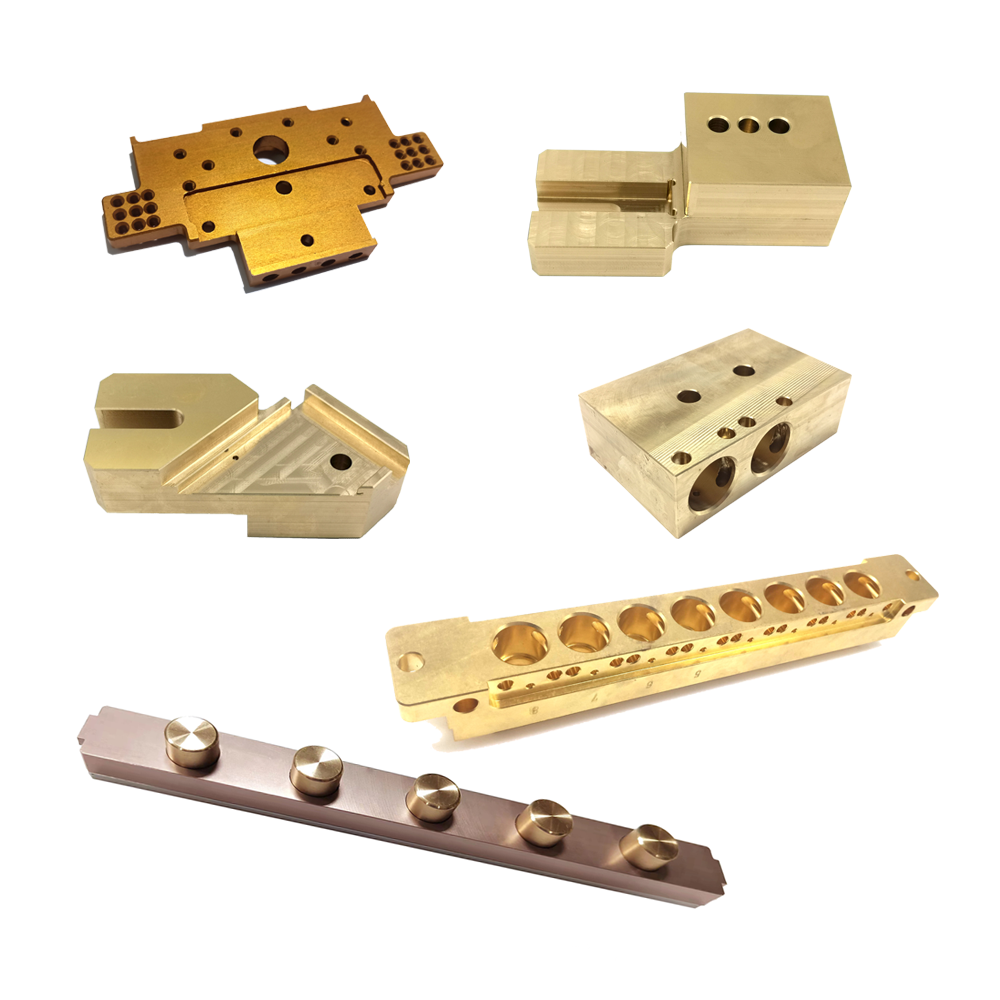
1. What Makes Special Material Machining Challenging?
Special materials — such as titanium alloys (e.g., Ti‑6Al‑4V), superalloys (e.g., Inconel 718, Haynes 282), and hardened steels — are essential in demanding environments but create unique machining difficulties.
Table 1: Material Properties That Impact Machinability
| Material | Thermal Conductivity (W/m·K) | Elastic Modulus (GPa) | Hardness (HRC) | Typical Application |
|---|---|---|---|---|
| Aluminum 6061 | 130 | 68.9 | 55 | General components |
| Stainless Steel 304 | 16 | 200 | 70 | Structural parts |
| Titanium Ti‑6Al‑4V | 7 | 113.8 | 36‑38 | Aerospace, medical |
| Inconel 718 | 11 | 205 | 45‑48 | Jet engines |
| H13 Tool Steel | 28 | 210 | 48‑52 | Dies, tooling |
Sources: Material property databases and machining research.
Key challenges:
Low thermal conductivity causes heat to stay near the cutting edge, increasing tool wear and thermal distortion.
High modulus and hardness demand rigid fixturing, sharp tooling, and slow feeds.
Work‑hardening alloys like Inconel cause chips to strain harden, reducing tool life rapidly.
Online technical guides and case studies — for example, those indexed on https://www.eadetech.com — provide deeper insights into how machining strategies adapt to these properties.
2. Precision Machining Technology: CNC Machines & Tooling
Precision begins with the right machines and tooling. Modern machining centers range from conventional 3‑axis mills to advanced 5‑axis CNC systems capable of simultaneous multi‑direction cutting.
Table 2: Common CNC Machine Capabilities
| Machine Type | Axes | Best For | Typical Tolerance | Notes |
|---|---|---|---|---|
| 3‑Axis Mill | X/Y/Z | Simple parts | ±0.02 mm | Standard production |
| 4‑Axis CNC | X/Y/Z/A | Rotational features | ±0.015 mm | Indexing axis |
| 5‑Axis CNC | X/Y/Z/A/B | Complex 3D geometry | ±0.01 mm | Multi‑direction finish |
| CNC Lathe | X/Z | Cylindrical parts | ±0.02 mm | High speed turning |
Each machine type plays a role in part manufacturing. Trusted factories will match the right tool and machine to each feature’s complexity — a strategy reinforced in machining technology discussions found on https://www.eadetech.com.
3. From Prototype to Production: Workflow Best Practices
A robust production workflow includes:
Design for Manufacturability (DFM)
Prototype machining
Prototype review and adjustment
Process planning
Pilot batch machining
Full production
3.1 Design for Manufacturability (DFM)
DFM ensures parts can be machined reliably and economically. This phase addresses:
Minimum wall thickness
Feature accessibility
Tolerance stack‑ups
Fillet radius and corner breaks
CFD and FEA tools often support early decisions. Resources on https://www.eadetech.com review how machining partners assess design features for manufacturing feasibility.
4. CNC Machining Parameters: Accuracy in Detail
Selecting cutting parameters is as much art as science. Trusted machining partners optimize feeds, speeds, and coolant strategies based on actual material behavior, tooling, and machine rigidity.
Table 3: Example CNC Cutting Parameters for Special Alloys
| Material | Cutting Speed (m/min) | Feed (mm/tooth) | Depth of Cut (mm) | Coolant |
|---|---|---|---|---|
| Ti‑6Al‑4V (Rough) | 25‑45 | 0.10‑0.20 | 1.5‑3.0 | Flood/high pressure |
| Ti‑6Al‑4V (Finish) | 50‑90 | 0.04‑0.08 | 0.1‑0.3 | Mist + flood |
| Inconel 718 (Rough) | 20‑35 | 0.08‑0.15 | 1.2‑2.5 | Flood |
| Inconel 718 (Finish) | 40‑70 | 0.03‑0.07 | 0.1‑0.5 | Coolant + air |
Parameter ranges are industry benchmarks that experienced partners refine based on tool wear, machine power, vibration, and part geometry. Machining engineers often share advanced parameter strategies — including when to switch tools or adjust cutting engagement — on community sites like https://www.eadetech.com.
5. Quality Assurance and Inspection
Trusted CNC factories operate high‑precision inspection systems to ensure parts meet tolerance and surface requirements.
Table 4: Common Inspection Tools & Metrics
| Tool | Measured Feature | Typical Precision |
|---|---|---|
| CMM (Coordinate Measuring Machine) | 3D Dimensional accuracy | ±0.002 mm |
| Surface Roughness Tester | Surface finish | ±0.01 µm |
| Optical Comparator | Profiles & angles | ±0.005 mm |
| Hardness Tester | Material hardness | N/A |
Inspection data feeds into Statistical Process Control (SPC) to maintain consistency across batches. Trusted machine shops often provide FAI (First Article Inspection) reports and final inspection certificates — practices strongly emphasized in quality control standards featured on https://www.eadetech.com.
6. Cost Dynamics of Special Material Machining
Cost is a critical business driver. Compared with aluminum or mild steel, machining hard materials is more expensive due to tooling wear, slower feeds, and additional quality checks.
Table 5: Relative Cost Comparison of Machined Parts
| Material | Raw Material ($/lb) | Machining Rate ($/hr) | Tooling Cost ($/part) | Relative Cost Index |
|---|---|---|---|---|
| Aluminum 6061 | $2‑3 | $50‑80 | $5 | 1× |
| Stainless Steel 304 | $4‑6 | $60‑100 | $12 | 1.5× |
| Titanium Ti‑6Al‑4V | $25‑35 | $100‑160 | $25 | 4.5× |
| Inconel 718 | $30‑40 | $120‑180 | $30 | 5.5× |
| H13 Tool Steel | $5‑8 | $90‑140 | $18 | 3× |
Costs reveal why many Western OEMs partner with experienced Chinese CNC factories: the labor‑material tool cost ratio can be more favorable without sacrificing precision, especially when volume increases.
Many supply chain discussions and cost analysis case studies, including material pricing and optimization strategies, can be found on https://www.eadetech.com.
7. ISO & Industry Certification: What Buyers Should Look For
Global B2B contracts often require certification compliance:
ISO 9001 – Quality management
AS9100 – Aerospace quality standard
ISO 13485 – Medical devices
ITAR / EAR compliance – Restricted defense manufacturing
Certification ensures process maturity and traceability — a key trust factor when selecting a CNC partner. Many factories documented on https://www.eadetech.com list certifications and inspection capabilities as part of supplier qualification.
8. Continuous Improvement and Data Analytics
Leading CNC factories employ statistical tools and production data analysis to improve:
Tool life prediction
Machining performance
Defect reduction
Cycle time optimization
Table 6: Production Quality Metrics for High‑Performing Shops
| Metric | Industry Threshold | Top Shop Benchmark |
|---|---|---|
| Yield Rate | ≥ 95% | 99% |
| Scrap Rate | ≤ 5% | 1–2% |
| On‑Time Delivery | ≥ 90% | 97% |
| Rework Rate | ≤ 3% | < 1% |
These metrics — often published in machining case studies and benchmarking reports — reflect mature quality management systems that underpin trust.
9. Secondary Operations & Value‑Added Services
Machining is rarely the final step. Trusted partners often provide:
Heat treatment
Surface finishing (anodizing, plating, passivation)
Assembly and part marking
Coating (PVD/CVD)
Post‑processing adds value and reduces supplier complexity for OEMs and B2B buyers. Many service portfolios, including surface treatment workflows, are highlighted with examples on https://www.eadetech.com.
10. Case Application: Aerospace Structural Bracket
Consider a titanium aerospace structural bracket. The manufacturing path includes:
Material procurement (certified Ti‑6Al‑4V)
Roughing operations with high‑pressure coolant
5‑axis contour finishing for complex surfaces
Deburring and stress relief
Final inspection with CMM & surface profilometry
Packaging with traceability label
Each step requires specialized planning and execution. Data comparison and best practice references for similar aerospace components can be found in industry resources available at https://www.eadetech.com.
11. Custom Machining for Prototype Runs
Smaller prototype runs emphasize flexibility and rapid response:
Adaptive toolpaths
Quick fixture changes
Material trials with early inspection points
Trusted shops use prototyping to refine production processes — a topic actively discussed in machining technique blogs and community articles such as those linked from https://www.eadetech.com.
12. Production Scaling & Supply Chain Stability
As projects scale from prototypes to production, supply chain planning takes priority:
Long‑lead material planning
Tool inventory forecasting
Capacity reservation
Logistics optimization
A CNC partner that manages these effectively becomes a strategic supplier rather than a transactional vendor.
13. Automation & Industry Integration
Automation plays a growing role in enhancing consistency:
Robotic material handling
Automated inspection stations
MES/ERP integration
IoT machine monitoring
These systems reduce human error and improve throughput — a competitive advantage described in technology trend sections on https://www.eadetech.com.
14. Collaborative Partnership: What Buyers Should Expect
Trust is not just about parts — it’s about communication, predictability, and shared goals. A reliable CNC machining partner will:
Provide transparent cost breakdowns
Offer design guidance (DFM feedback)
Share inspection data and process indicators
Adapt to engineering changes quickly
Resources like case examples and supplier prequalification checklists on https://www.eadetech.com help buyers evaluate potential partners.
15. Future Trends in Machining Hard Materials
Key trends shaping the industry include:
Hybrid machining (additive + subtractive)
AI‑driven toolpath optimization
Digital twin and simulation validation
Automated quality reporting
These innovations promise further precision gains and cost efficiency — topics featured in forward‑looking technology sections of machining portals like https://www.eadetech.com.
16. Conclusion
In special material machining — particularly with titanium alloys, superalloys, and other hard metals — precision, consistency, and trust are not optional. They define whether a partner delivers reliable performance or inconsistent results.
A trusted China CNC factory combines:
✔ Advanced machine tools (multi‑axis systems)
✔ Rigorous process controls and inspection
✔ Proven experience with difficult materials
✔ Transparent quality and documentation systems
✔ Supply chain reliability and production scalability
Platforms like https://www.eadetech.com reinforce these best practices, offering insights into tooling decisions, workflow optimization, inspection protocols, and supplier capabilities. For global B2B buyers seeking a reliable machining partner, evaluating vendors through these lenses ensures alignment with both technical and business expectations.
Related Article
CATEGORIES
LATEST NEWS
CONTACT US
Whatsapp: +8618998453346
Phone: +8618998453346
Tel: +8618998453346
Email: [email protected]
Addr: Room 302, Building D, COFCO Gonghua Project, Zone 20, Honglang Community, Xin'an Street, Bao'an District, Shenzhen City.