English
CNC Machining Hard Materials: Cost vs Precision
Writer:admin Time:2026-01-10 01:58 Browse:views
Machining hard materials — such as titanium alloys, Inconel and other nickel superalloys, hardened steels, and carbide‑reinforced materials — presents significant challenges in precision CNC manufacturing. These materials are widely used in aerospace, medical devices, energy, and advanced industrial applications precisely because of their excellent mechanical properties. Yet those same properties that make them valuable also make them difficult and expensive to machine to high precision.
This article examines the cost vs precision equation in CNC machining hard materials: how material choice, tolerances, machine strategy, tooling, cycle time, and inspection affect overall project expense. We provide six tables with real reference data to quantify the effects. Where helpful, we’ll reference https://www.eadetech.com as an engineering resource for machining strategies.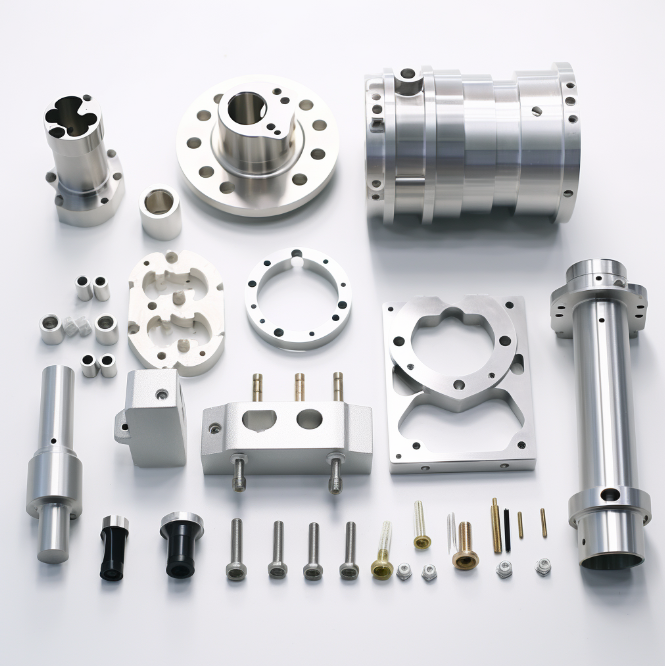
1. Introduction: Hard Materials in CNC Machining
Hard materials are defined not just by high hardness and strength but also by poor thermal conductivity, high chemical affinity with tooling, and work‑hardening behavior. These traits increase cutting forces, accelerate tool wear, and require conservative feeds and speeds — all contributing to higher cost.
Examples of such materials include:
Titanium alloys (Ti‑6Al‑4V, Ti‑6246)
Nickel superalloys (Inconel 718, Waspaloy)
Hardened steels (HRC 45–60+)
Tool steels and stainless variants with carbide inclusions
Hard materials are common in safety‑critical and performance‑driven applications where precision tolerances and surface integrity are non‑negotiable.
2. Material Cost vs Machinability: A Big Driver
Material choice affects both raw material cost and machining complexity. Hard alloys typically cost many times more than basic steels or aluminum, but their machinability factor multiplies machining time and tooling cost.
Table 1: Material Costs and Relative Machinability
| Material | Approx. Cost (per kg) | Machinability | Typical Machining Time Factor | Relative Cost Impact |
|---|---|---|---|---|
| Aluminum 6061 | $5–$15 | Easy | 1× | 1× |
| Stainless Steel 304 | $10–$30 | Moderate | 1.5× | ~1.2× |
| Titanium Ti‑6Al‑4V | $50–$100 | Difficult | 3× | ~3–4× |
| Inconel (e.g., 718) | $30–$70 | Very difficult | 4× | ~4–5× |
| Hardened Steel (HRC45+) | $10–$30 | Hard | 2.5× | ~2× |
This table shows that hard materials both cost more as raw stock and require disproportionately greater machining effort. Titanium and Inconel parts often take 3–4× longer to machine than aluminum components, even without factoring precision. The result is a higher baseline cost before precision or volume effects.(AFI Metal Parts)
3. Precision Tolerances and Machining Time
Precision in CNC machining is typically defined by dimensional tolerances and surface finish. The tighter the tolerance, the slower the machining process must be, and the more time and cost are added.
Table 2: Precision Tolerance Impact on Cost
| Tolerance | Typical Time Increase | Typical Cost Increase |
|---|---|---|
| ±0.1 mm | Baseline | Baseline |
| ±0.05 mm | +10–20% | +15–30% |
| ±0.01 mm | +30–50% | +40–60% |
| ±0.005 mm | +50–100% | +60–120% |
These figures demonstrate that tight tolerances add disproportionately high cost because they require slower feeds, multiple tool passes, frequent inspection, rework, and specialized setup. In hard materials, this effect compounds — a ±0.01 mm titanium part may cost 4–6× similar geometry aluminum part at ±0.1 mm tolerance.
4. Machine Hourly Cost and Hard Material Machining
Machine type and hourly rates are key cost components. Hard material machining often requires advanced multi‑axis CNC machines with higher hourly rates due to acquisition cost, maintenance, and specialist tooling.
Table 3: CNC Machine Hourly Cost by Axis and Region
| Machine Type | Typical Hourly Cost (Global Average) | Notes |
|---|---|---|
| 3‑Axis CNC Milling | $30–$60 | Standard parts |
| 4‑Axis CNC Milling | $40–$75 | More complex |
| 5‑Axis CNC Milling | $60–$120 | Precision multi‑face parts |
| CNC Turning | $25–$55 | Cylindrical parts |
| China 5‑Axis | $60–$140+ | Competitive global rates |
In regions like China, domestic machining rates are typically lower than in North America or Europe, offering cost advantages for hard material precision parts. For example, a titanium 5‑axis aerospace component might cost $60–$140/hr in China versus $120–$250+ in Western markets.(https://www.xavier-parts.com)
5. Tooling Costs and Wear in Hard Machining
Hard materials accelerate tool wear, dramatically increasing tooling costs. Premium tooling (coated carbide, ceramic, CBN) is essential to maintain precision.
Table 4: Tool Wear and Life in Hard Material Machining
| Material | Typical Tool Life (Roughing) | Tooling Cost per Part (%) | Notes |
|---|---|---|---|
| Aluminum | 60–120 min | 5–10% | Long tool life |
| Stainless Steel | 30–60 min | 15–20% | Moderate wear |
| Titanium | 15–30 min | 25–35% | Rapid tool wear |
| Inconel | 10–25 min | 30–40% | Very high wear |
In practice, carbide cutting tools on titanium can wear out several times faster than on aluminum, leading to frequent tool changes and increased non‑productive time. This tool wear cost is directly proportional to part cost, especially in small batches where tooling cannot be amortized over many parts.(仁杰精密)
6. Precision vs Speed: Balancing Surface Finish
Surface finish requirements — often combined with tolerances — add secondary operations like polishing, grinding, or EDM, further driving costs.
Table 5: Surface Finish Impact on Machining Time & Cost
| Surface Requirement | Typical Ra | Additional Cost Impact |
|---|---|---|
| Functional Only | ≥1.6 µm | None |
| Fine Finish | 0.8–1.6 µm | +10–20% |
| Precision Finish | 0.4–0.8 µm | +20–40% |
| Ultra‑Fine/Mirror | ≤0.2 µm | +40–80% |
Processed finishes like fine polishing and EDM or grinding strokes require extra time and inspections — all necessary when hard material parts must meet high reliability standards, such as aerospace or medical implants.
7. Tolerance, Precision, and Inspection Costs
Higher precision tolerances require post‑machining inspection (CMMs, optical systems), which adds cost but prevents scrap or rework.
Table 6: Inspection Strategy Cost Impact
| Inspection Method | Typical Cost per Batch | Purpose |
|---|---|---|
| Basic Visual/Manual | $0–$5 | Quick checks |
| CMM Measurement | $50–$200 | Dimensional accuracy |
| Optical 3D Scanning | $100–$500 | Complex geometry |
| Statistical SPC | $200–$1000+ | High volume control |
Precision components in hard materials often require Coordinate Measuring Machine (CMM) verification of all critical dimensions, leading to inspection costs that are a non‑negligible portion of total part cost.
8. Cost Breakdown: Putting It All Together
To illustrate the cumulative effects of hard materials and precision on cost, consider a simplified cost breakdown for a medium‑complexity part:
| Cost Category | Aluminum (~Easy) (Est.) | Titanium (~Hard) (Est.) |
|---|---|---|
| Raw Material (%) | 15% | 30% |
| Machine Time (%) | 25% | 35% |
| Tooling Wear (%) | 10% | 25% |
| Precision Finishing (%) | 10% | 20% |
| Inspection (%) | 5% | 10% |
| Overhead/Labor (%) | 15% | 20% |
| Total | 100% | ~140% (relative cost) |
This simplistic model shows that titanium parts can cost ~1.4× or more than aluminum for similar geometry and precision, not even factoring extreme tolerances. When Inconel or hardened materials are used with ultra‑tight tolerances, this multiplier can approach 2× or higher.
9. Design Decisions That Affect Cost vs Precision
Smart design choices can mitigate cost impacts:
Reduce unnecessary tight tolerances
Use standard tooling interfaces and geometry
Minimize deep pockets and hard‑to‑reach features
Combine features to reduce setups
Leverage hybrid manufacturing where possible
Integrating design for manufacturability (DFM) early can save significant machining time and cost, a topic often discussed with practical examples at https://www.eadetech.com, especially in advanced CNC applications.
10. Volume and Economies of Scale
Low batch sizes amplify precision costs because setup and inspection are amortized over few parts. As volume increases:
Setup costs decrease per unit
Fixtures and optimized tooling amortize faster
Machine time and programming can be reused
Large‑batch precision machining becomes comparatively more economical than small‑batch, hard material runs.
11. Case Example: Titanium Aerospace Bracket
To illustrate, a titanium aerospace bracket requiring high precision (±0.01 mm) and fine surface finish (Ra ≤0.8 µm) might see:
Machine time: 90–120 minutes per part
Tooling change‑overs every 20–30 minutes
Inspection per part: CMM 15–30 minutes
Raw material premium: 3–5× vs aluminum
Overall part cost: ~4–6× similar aluminum bracket cost
High precision and difficult material both multiply cost.
12. Advanced Strategies to Balance Cost and Precision
Modern techniques help reduce costs while maintaining precision:
Adaptive machining (optimized toolpaths)
High‑speed 5‑axis machining
Real‑time tool wear monitoring
Hybrid additive + subtractive methods
Cryogenic cooling for heat control
These strategies support precision and improve throughput, reducing total cost.
13. Inspection and Quality Assurance
In precision parts, QA is critical:
Statistical Process Control (SPC)
First Pass Yield tracking
Automated inspection reporting
Traceability documentation (especially in aerospace/medical)
QA cost increases, but reduces scrap and rework, improving long‑term economics.
14. Future Trends in Cost vs Precision Machining
Looking forward:
AI‑driven cost estimation and predictive machining
Smart CAM with cost optimization loops
Digital twin simulation of machining operations
Sensor‑based precision control for consistent outputs
These trends will allow CNC machinists to better balance cost and precision.
15. Conclusion
In CNC machining hard materials, cost and precision are deeply linked. Hard alloys like titanium and Inconel drastically increase raw materials, machine time, tooling wear, and inspection overhead — all of which escalate costs. Precision requirements (tight tolerances and fine surface finishes) amplify these pressures further.
Balancing these factors requires:
✔ Early design for manufacturability
✔ Appropriate machine selection (3‑axis to 5‑axis)
✔ Optimized tooling and tool paths
✔ Real‑time monitoring and inspection
✔ Smart batching and volume planning
Manufacturers who understand this cost‑precision equation can better plan budgets, choose suppliers, and make engineering decisions that deliver high quality at sustainable cost.
For deeper guides on advanced machining strategies and cost‑effective precision workflows, explore expert resources like https://www.eadetech.com.
Related Article

CATEGORIES
LATEST NEWS
CONTACT US
Whatsapp: +8618998453346
Phone: +8618998453346
Tel: +8618998453346
Email: [email protected]
Addr: Room 302, Building D, COFCO Gonghua Project, Zone 20, Honglang Community, Xin'an Street, Bao'an District, Shenzhen City.