English
Why Titanium CNC Machining Costs More — Factory Insight
Writer:admin Time:2025-05-30 01:03 Browse:views
Titanium CNC machining stands apart from machining more common metals like aluminum or steel, and its cost structure reflects that difference. Whether you’re an engineer, a sourcing manager, or a product designer considering titanium parts for aerospace, medical or high-performance applications, understanding why titanium is expensive and how these costs are structured is essential for realistic budgeting and design optimization.
Overall, titanium CNC machining can cost 3–5× more than machining aluminum or standard steels and often even higher depending on tolerances, complexity, and finishing requirements. (TEAM MFG)
This article breaks down those cost drivers with real data, cost comparisons, process insights from factory practices, and optimization strategies — providing a clear and factual guide to help you make better decisions when working with titanium.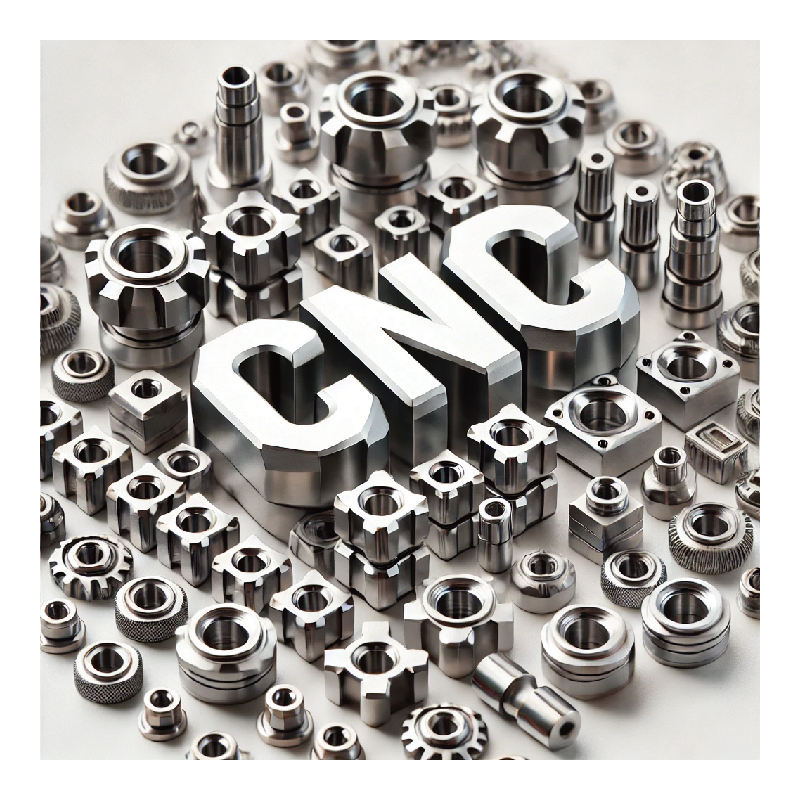
1. Raw Material Costs — Titanium Is Expensive by Nature
The raw material itself is often the largest cost contributor in titanium CNC machining.
Reasons Titanium Raw Material Costs Are High
Complex extraction and refining: Titanium ore (rutile and ilmenite) requires a multi-stage Kroll process that is capital and energy-intensive.
Limited supply chain volume: Titanium production is smaller compared with steel or aluminum, so economies of scale don’t reduce cost as much.
Alloying complexity: Aerospace-grade titanium like Ti-6Al-4V (Grade 5) commands a premium due to its mechanical properties and certification standards.
Table 1: Raw Material Cost Comparison (Typical Market Rates)
| Material | Cost per kg (USD) | Notes |
|---|---|---|
| Aluminum (6061) | $5–$15 | Common structural alloy |
| Stainless Steel (304) | $10–$30 | Corrosion-resistant steel |
| Titanium (Ti-6Al-4V, Grade 5) | $30–$100+ | Aerospace/medical grade (AFI Metal Parts) |
| Inconel alloys | $30–$80 | Superalloy, similarly expensive |
| Brass | $8–$20 | Easier to machine than titanium |
Titanium’s raw material cost alone can easily exceed 3–10× that of common steels or aluminum. (金属工艺+)
This alone doesn’t explain the full cost — but it sets the baseline for why titanium parts tend to be expensive before machining begins.
2. Machinability Challenges — Low Thermal Conductivity & Hardness
Titanium’s material behavior significantly affects machining operations:
Low Thermal Conductivity: Heat generated at the cutting interface doesn’t dissipate into the bulk material like it does with aluminum or steel. As a result, heat builds at the tool tip, accelerating tool wear and risk of thermally induced part distortion. (MDPI)
High Strength at Elevated Temperatures: Even at higher temperatures, titanium retains strength, meaning cutting forces remain high throughout the process.
Work Hardening: If cutting parameters are off, titanium can work harden quickly, degrading the surface and tool life.
These properties require slower cutting speeds, conservative feeds, and specialized cooling strategies, all of which lengthen cycle times (machine hours) and increase costs.
3. Machine Time & Labor — Slower, More Precise, More Expensive
Compared with other metals, titanium machining generally requires:
Slower cutting speeds — to control heat.
More frequent tool changes — due to fast tool wear.
Longer cycle times — deeper or repeated passes needed for accuracy.
Table 2: Relative Machining Time & Cost Factors
| Material | Typical Cycle Time Factor* | Relative Cost Factor | Notes |
|---|---|---|---|
| Aluminum 6061 | 1.0× | 1.0× | Baseline easy cut |
| Stainless Steel 304 | 1.5× | ~1.5× | Moderate difficulty |
| Titanium (Ti-6Al-4V) | 3–5× | ~3–5× | Slow speeds, heat control (TEAM MFG) |
| Inconel | 4–8× | ~4–7× | Deep work hardening |
| *Compared to a baseline aluminum part of similar size and geometry. |
The machine-hour rate for titanium machining is higher because:
Setup clarity must be precise (poor setups are costly to redo).
Low feeds and speeds extend part cycle times.
Complex part features (tight tolerances, thin walls) require more careful programming and multiple passes.
Factories often run titanium on high-rigidity CNC machines with advanced coolant systems to manage heat and tool wear — not cheap equipment to operate.
4. Tooling & Cutting Consumables
Titanium quickly accelerates tool wear due to poor heat dissipation and its abrasive nature. Tooling costs for titanium far exceed those for steel or aluminum.
Table 3: Tooling Consumption Estimates (Example Data)
| Tool Type | Tool Life (Relative) | Typical Replacement Frequency | Relative Cost Contribution |
|---|---|---|---|
| Standard Carbide (Aluminum) | Baseline | Hours to days | Low |
| Coated Carbide (Steel) | 0.7–1.0× | Moderate | Mid |
| Titanium Specific Coated Carbide | 0.2–0.3× | Minutes to <1 hour | High (仁捷精密) |
| PCD / Ceramic Finishing Tools | N/A | Niche | Very High (for finish) |
In titanium, tool wear is often 3–5× faster than steel, meaning frequent tool changes that directly add to cost. (仁捷精密) Advanced coatings like TiAlN or AlCrN are often necessary but are also more expensive than standard tools.
5. Coolant, Heat Control & Process Strategies
Unlike machining easy materials, titanium machining typically needs:
High-pressure coolants to flush chips and pull heat away.
Through-tool coolant delivery to the cutting edge.
Active thermal compensation systems on vertical 3- or 5-axis machines.
Lack of proper cooling leads to heat accumulation, surface work hardening, and eventual dimensional distortion — costly rework or scrap if unmanaged. These coolant and thermal control systems add both capital and operational cost.
6. Machine Features & Maintenance Costs
Advanced CNC machines capable of handling titanium effectively often have:
Enhanced rigidity and vibration damping
High-torque spindles for low speeds
Coolant delivery systems >80 bar pressure
Multi-axis capability (3-, 4- or 5-axis)
These machines are more expensive to buy and operate, and maintenance (spindle bearings, coolant pumps, filters) is higher than for general-purpose mills.
7. Tolerances, Inspection & Quality Assurance
Titanium parts are often used in critical applications (e.g., aerospace, medical) where tolerances and quality controls are stringent. Tight tolerances dramatically increase cost.
Table 4: Cost Impact of Tolerance Tightening
| Tolerance Range | Typical Increase in Machining Time | Impact on Inspection/QA |
|---|---|---|
| ±0.1 mm | Baseline | Standard checks |
| ±0.05 mm | +20–40% | More probing, CMM inspection |
| ±0.01 mm | +80–120% | Extensive CMM + SPC controls (金属工艺+) |
| ±0.005 mm | Exponential increase | Multiple re-checks, adaptive machining |
This data reflects typical industry cost multipliers associated with tighter tolerances — the tighter the tolerance, the exponentially higher the cost.
Inspection and QA are not optional — for aerospace/medical parts, traceability, CMM verification, and often third-party certification are required, adding labor and machine time cost.
8. Scrap, Rework & Waste Management
Titanium chips cannot usually be recycled back for aerospace or medical parts due to certification restrictions. That means:
Chip waste is a pure cost with little to no recovery value.
A mistake or scrap part means not just lost material but lost machining time, labor, and setup effort.
Machining keyboards with buy-to-fly ratios often above 5:1 mean for every kg of final part, 5 kg or more of raw is consumed, increasing effective material cost. (Cranfield DSpace)
9. Complexity & Setup Costs
Complex parts with:
Multi-axis features (requiring 4/5-axis CNC)
Deep cavities or thin walls
Challenging geometries
Tight GD&T enforcement
increase design and programming cost significantly. Initial CAM programming, simulation, fixturing, and first-article inspection may require hours of engineering work before machining even begins.
10. China’s Competitive CNC Environment and Cost Dynamics
China is one of the largest hubs for precision CNC machining and often offers competitive pricing due to lower labor cost and high machine utilization. Typical rate ranges in China, for example, show:
Aluminum prototypes: $5–$10 per part
Steel medium precision parts: $10–$25
Precision multi-axis titanium parts: $60–$150+ per part (https://www.xavier-parts.com)
Chinese facilities leverage modern equipment, high production capacity, and specialized titanium experience — making them attractive for global sourcing. For example, foundries and CNC factories often integrate design for manufacturability (DFM) support early to reduce cost — a service many buyers find valuable.
For deeper case studies on reducing titanium machining costs while maintaining performance, platforms like https://www.eadetech.com showcase practical insights and optimization strategies from experienced manufacturing teams.
11. Cost Structure Breakdown Example
To illustrate actual cost composition, here’s a generalized cost breakdown for a medium-complexity titanium CNC part:
Table 5: Typical Cost Breakdown (Titanium CNC Part)
| Cost Component | Percentage of Total Cost | Comments |
|---|---|---|
| Raw Material | 30–45% | Titanium billet price high |
| Machine Time & Labor | 30–50% | Long cycles, slow cutting |
| Tooling & Consumables | 15–25% | Frequent tool change |
| Inspection/QA | 5–15% | CMM, quality reports |
| Setup & Engineering | 5–10% | CAM, fixture design |
| **Scrap/Waste | 5–10% | Lost material & time |
The above composition is typical for aerospace/critical parts. Less critical industrial parts may see a slightly different distribution but still highlight labor and machining time as dominant.
12. Strategies to Reduce Cost Without Sacrificing Quality
Although titanium CNC machining inherently costs more, there are strategies to control and reduce expenses:
12.1 Design Optimization
Simplify geometry where possible.
Use larger internal radii (≥R0.5mm) to reduce tool stress.
Avoid deep pockets beyond 3× diameter. (okdor)
12.2 Consolidate Setups
Fewer fixtures = fewer setup errors and better material utilization.
12.3 Optimize CAM Toolpaths
Trochoidal and adaptive machining reduce cycle time and tool wear.
12.4 Material Buy-to-Fly Considerations
Minimize waste by right-sizing billets and nesting in multi-part contexts.
12.5 Choose Right Machine & Coolant
Through-tool coolant and high-pressure systems reduce heat and improve tool life.
By applying these strategies early in design and quoting phases, significant cost savings (10–30% or more) can often be achieved.
13. Case Studies: Titanium Cost in Practice
Case A – Aerospace Bracket
Material: Ti-6Al-4V
Feature: multi-axis thin walls, tight tolerances
Cost Example (small batch): $600–$1200 per part
Major drivers: material cost, multi-axis machine time, inspection.
Case B – Medical Implant
Material: Ti-6Al-4V (medical grade)
Feature: high surface finish + tight GD&T
Cost Example: $800–$2000 per part
Major drivers: biocompatible finishing, advanced tooling, extended QA.
These examples show how part requirements directly influence cost.* Real quoting will vary by vendor, volume, and delivery requirements.
Conclusion
Titanium CNC machining costs more than machining aluminum, steel, or other metals because of a combination of factors:
High raw material costs
Poor machinability and heat removal challenges
Tool wear and frequent tool replacement
Extended machine time and slow cutting speeds
Advanced tooling and fixturing needs
Tight tolerances and rigorous inspection requirements
Higher risk of scrap and waste
Machine sophistication and maintenance costs
By understanding the cost structure and applying design for manufacturability principles early, engineers can make informed decisions about when titanium is essential — and how to optimize parts to reduce overall CNC machining expense.
For more factory insights, tooling strategies, and practical optimization techniques for machining titanium and other difficult materials, visit https://www.eadetech.com, where industry case studies and manufacturing best practices are shared to help buyers and engineers reduce cost while ensuring performance.
Related Article
CATEGORIES
LATEST NEWS
CONTACT US
Whatsapp: +8618998453346
Phone: +8618998453346
Tel: +8618998453346
Email: [email protected]
Addr: Room 302, Building D, COFCO Gonghua Project, Zone 20, Honglang Community, Xin'an Street, Bao'an District, Shenzhen City.