English
Custom Titanium Parts Manufacturing with Tight Tolerances
Writer:admin Time:2025-05-30 01:03 Browse:views
Titanium and its alloys — most commonly Ti-6Al-4V (Grade 5) and Ti-6Al-4V ELI (Grade 23) — are integral to high-end industries such as aerospace, medical, robotics, and performance automotive due to their exceptional strength-to-weight ratio, corrosion resistance, and biocompatibility. However, achieving tight tolerances (±0.01 mm and better) on custom titanium parts presents unique engineering and manufacturing challenges. These challenges stem from both the material’s inherent properties and the demanding geometric features often required in modern designs.
This article provides a deep insight into how precision titanium parts are manufactured, the key cost and quality drivers, data-backed machining strategies, tooling and process guidelines, inspection methods, and best practices that lead to reliable, deformation-free parts — including thin walls, deep cavities, and other critical features.
For real case examples and advanced process strategies from an experienced manufacturing partner, see https://www.eadetech.com.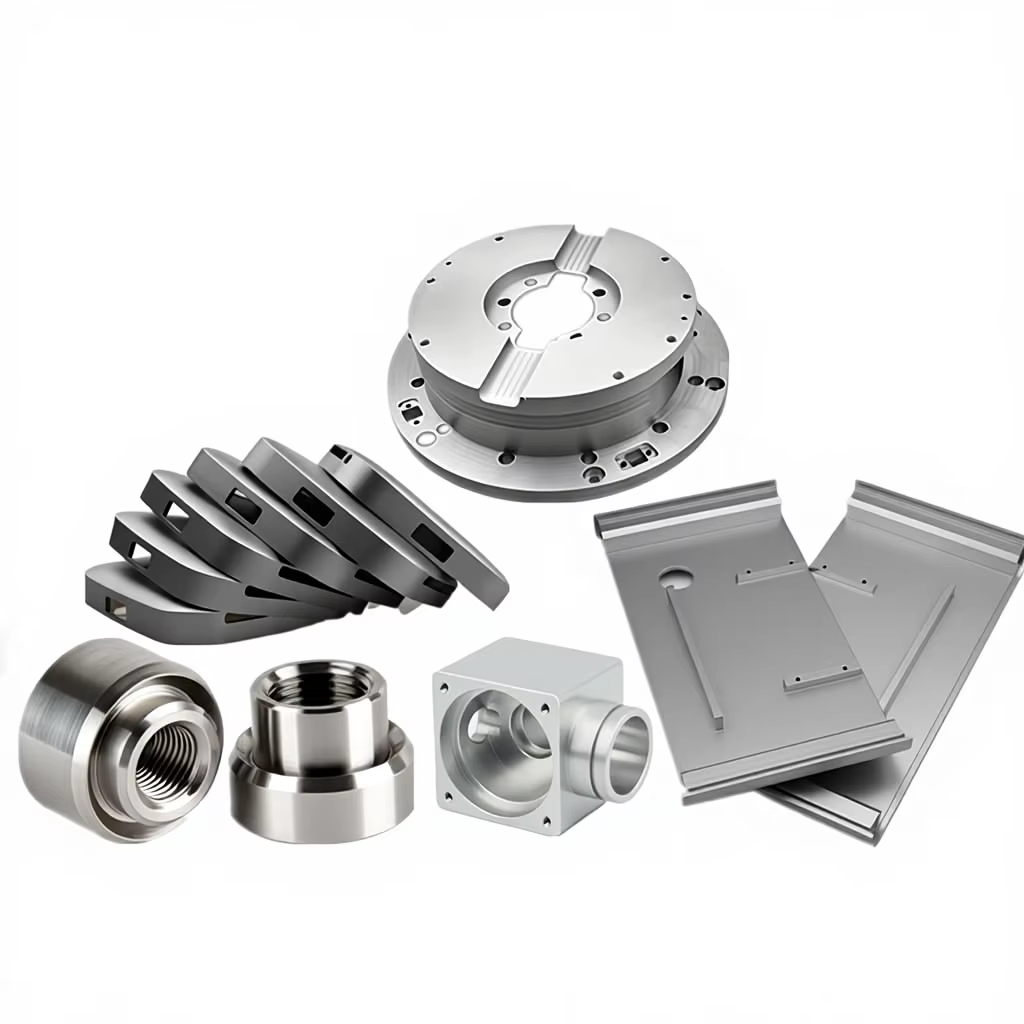
1. Why Titanium Custom Parts Are Challenging
Titanium combines desirable performance with machining challenges:
Low thermal conductivity concentrates heat at the tool/cut interface, accelerating tool wear and increasing thermal distortion risk.
High strength at elevated temperatures prevents typical heat-softening effects that make cutting easier.
Work hardening tendency increases cutting forces and surface irregularity when parameters are suboptimal.
Low elastic modulus increases springback and vibration risk, especially in thin and long features.
These factors impact machining cycle time, tooling life, tolerances, and surface integrity.
Table 1: Titanium vs Common Metals — Machining Attributes
| Property / Feature | Ti-6Al-4V | Aluminum 6061 | Stainless Steel 304 |
|---|---|---|---|
| Thermal Conductivity (W/m·K) | ~7–22 | ~167 | ~16 |
| Hardness (HRC) | 30–40 (annealed) | 20–25 | 22–28 |
| Elastic Modulus (GPa) | ~110 | ~69 | ~193 |
| Work Hardening Susceptibility | High | Low | Moderate |
| Typical Tool Life (relative) | Low | High | Medium |
| Cutting Speed (surface feet/min) | Low | High | Medium |
Data based on industry machining handbooks and material property databases.
Insight: Titanium’s low thermal conductivity and moderate to high hardness make heat control and tool wear primary concerns in precision machining.
2. Design for Manufacturability (DFM) Considerations
Before machining, design choices significantly impact cost, lead time, and achievable tolerance.
Table 2: Design Guidelines That Improve Machinability and Tolerance
| Design Feature | Recommendation | Rationale |
|---|---|---|
| Wall thickness | ≥1.5–2 mm | Thinner walls deflect under cutting forces |
| Fillet radius | ≥0.5 mm | Reduces stress concentrators |
| Blind hole depth | ≤6× diameter | Improves chip evacuation |
| Sharp corners | Avoid (use radii) | Reduces tool stress and improves finish |
| Tolerance specification | Use functional tolerances only | Tighter tolerances drive cost |
Design for Manufacturability (DFM) review at the concept phase can reduce downstream machining difficulty and scrap rate without compromising part performance.
3. Precision Machining Strategy for Tight Tolerances
Custom titanium parts that require ±0.01 mm or tighter tolerances benefit from carefully structured machining plans, including roughing, semi-finishing, and finishing passes with adaptive toolpaths.
Table 3: Recommended CNC Machining Parameters for Tight Tolerances
| Operation | Cutting Speed (m/min) | Feed per Tooth (mm) | Axial Depth (mm) | Radial Engagement (%) | Typical Application |
|---|---|---|---|---|---|
| Roughing | 20–40 | 0.05–0.15 | 0.5–1.5 | 15–30 | Bulk material removal |
| Semi-finish | 30–50 | 0.03–0.08 | 0.3–0.8 | 10–20 | Remove roughness |
| Finishing | 40–60 | 0.02–0.05 | 0.1–0.3 | 5–10 | Final tolerance and surface |
| Hole Drilling | 10–20 | 0.05–0.12 | Peck cycles | — | Controlled chip evacuation |
Notes:
Lower speeds and feeds in finishing minimize heat buildup and elastic deflection.
Small depths of cut and reduced radial engagement help control forces that can warp thin walls.
Adaptive and dynamic toolpaths — such as trochoidal milling — maintain consistent tool engagement, reducing force peaks and thermal transients that could compromise tolerance.
4. Tooling and Insert Strategies
Tool choice directly impacts surface finish, tolerance retention, and cost effectiveness.
Table 4: Tooling Options and Typical Uses
| Tool Type | Best For | Advantages | Considerations |
|---|---|---|---|
| Coated Carbide End Mills | General rough/finish | Balanced wear resistance | Good all-around choice |
| High Helix Mills | Thin walls | Chip evacuation | Higher cost |
| Ball/Radius Mills | Finishing | Smooth surface | Lower metal removal |
| PCD/PCBN | High wear areas | Excellent wear life | Expensive |
| Micro End Mills | Small features | Fine detail | Fragile |
Best Practice: Use toolpaths indexed vs. simultaneous contouring depending on part geometry, and ensure tool overhang is minimized to reduce deflection.
For complex thin-wall designs, fixture-integrated tool support and strategic tool changes maintain consistent geometry adherence throughout the machining cycle.
5. Thermal Management and Coolant Strategies
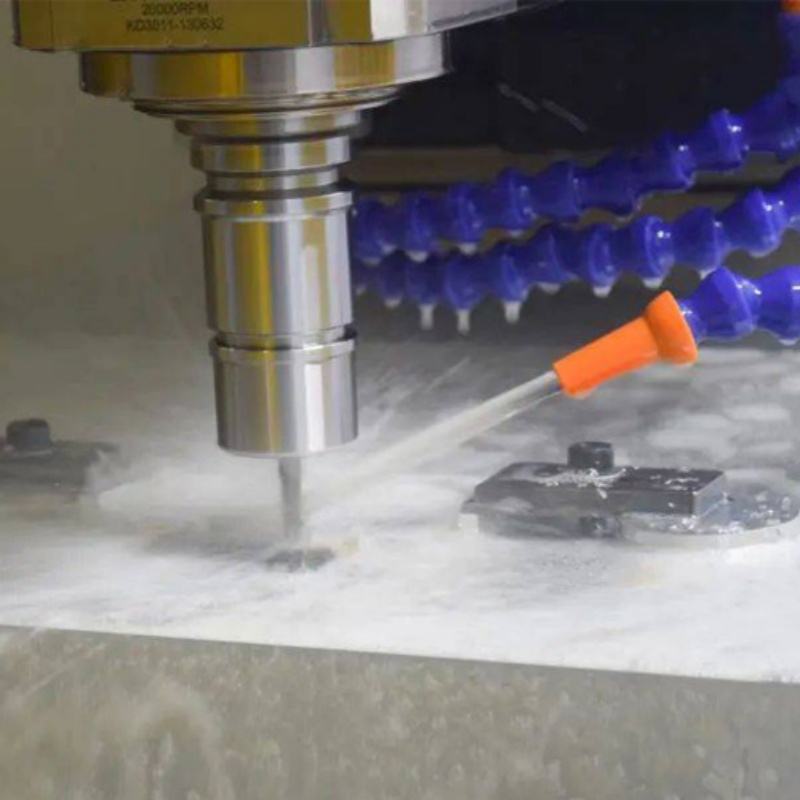
Heat control is critical in achieving ±0.01 mm tolerance. Titanium’s low thermal conductivity means heat stays localized near the cutting zone, leading to distortion.
Table 5: Cooling & Thermal Control Methods
| Method | Heat Removal | Chip Evacuation | Impact on Distortion | Typical Use |
|---|---|---|---|---|
| Flood Coolant | Moderate | Good | Moderate | General use |
| High-Pressure Coolant | High | Excellent | Useful | High volume removal |
| Through-Tool Coolant | Very High | Very Good | Strong | Deep cuts/ 5-axis |
| Cryogenic Cooling | Extremely High | Moderate | Very Strong | Ultra high precision |
Explanation:
Through-tool coolant near the cutting edge is effective in evacuating chips and removing heat in deep or constrained pockets.
Cryogenic cooling (e.g., liquid nitrogen) reduces thermal effects dramatically, but requires specialized hardware.
Temperature gradients cause uneven expansion; managing them keeps dimensional changes within the tight tolerance band.
6. Workholding and Fixture Design
Rigid and repeatable workholding is essential for high precision, especially with titanium’s elastic behavior.
Table 6: Workholding Strategies for Precision Titanium Parts
| Workholding Type | Best Use | Impact on Precision | Notes |
|---|---|---|---|
| Soft Jaws | Small prismatic parts | High | Custom machined for part shape |
| Vacuum Fixtures | Flat thin walls | Medium | Works where sealing surface available |
| Internal Mandrels | Tubular thin walls | Very High | Increases rigidity from inside |
| Clamping Pads | Simple features | Medium | Good for moderate precision |
| Multifeature Fixtures | Complex parts | High | Reduces setups & repositioning |
Best Practice: Use form-fitted fixtures that support the workpiece where possible and minimize clamp stress concentrations that can introduce distortion or add residual stress.
For ultra-tight tolerances, many shops conduct a fixture trial simulation with dummy parts or soft materials before committing to the actual titanium run.
7. Inspection and Metrology for ±0.01 mm Assurance
Tight tolerances demand rigorous inspection — both during and after machining.
Inspection Tools and Typical Use Cases
Coordinate Measuring Machine (CMM): Primary tool for dimensional verification.
In-process Probing: Detect dimensional drift and adapt toolpaths.
Laser Scanning / Optical Metrology: Map freeform surfaces.
Surface Profilometry: Confirm Ra/finish requirement.
Table 7: Inspection Metrics and Equipment
| Inspection Metric | Acceptable Range (for ±0.01 mm parts) | Typical Equipment |
|---|---|---|
| Dimensional Tolerance | ±0.01 mm | CMM |
| Surface Roughness | ≤0.8 µm | Profilometer |
| Flatness/Parallelism | ±0.005 mm | CMM |
| Feature Position | ±0.01 mm | CMM/Optical |
Achieving and verifying ±0.01 mm requires tightly controlled measurement setups and often environmental compensation when measuring temperature-sensitive features.
8. Cost Drivers for High-Precision Titanium Parts
Precision titanium manufacturing is expensive relative to many other metals. Key cost drivers include:
Raw material cost — Titanium billets are significantly more expensive than common steels and aluminum.
Machine time — Lower cutting speeds and small passes increase cycle hours.
Tooling & inserts — Premium coatings and toolstocks needed to handle heat and wear.
Inspection & validation cost — Advanced metrology systems and skilled operators.
Setups & fixtures — Custom fixtures increase upfront engineering hours.
Table 8: Cost Breakdown for Precision Titanium Machining
| Cost Category | Typical % of Total Cost | Explanation |
|---|---|---|
| Material | 30–45% | Titanium alloy premium |
| Machining Time | 25–35% | Slow, careful cuts |
| Tooling & Consumables | 10–20% | Premium tools |
| Inspection/QA | 5–10% | CMM & verification |
| Setups/Engineering | 5–10% | CAM & fixture design |
| Scrap/Waste | 5–10% | Material loss & rework |
The exact distribution depends on volume, geometry complexity, and tolerance requirements.
9. Common Challenges & Mitigation
9.1 Tool Wear and Edge Chipping
Mitigation: Use coated high-performance carbide, maintain coolant flow, reduce cutting heat, and schedule predictive tool changes.
9.2 Thin Wall Deflection
Mitigation: Use internal supports or mandrels, adaptive milling, light radial engagements, and balanced material removal.
9.3 Thermal Distortion
Mitigation: Manage cutting temperatures with high-pressure or through-tool coolant, use thermal compensation systems, and plan finishing cuts after temperature stabilization.
10. Industry Applications and Examples
Aerospace
Parts like structural frames, thin skins, stiffeners, and engine mounts often demand ±0.01 mm tolerance due to aeroelastic loads and fatigue considerations.
Medical Implants
Orthopedic and cranial implants, where surface finish and dimensional accuracy are directly tied to patient outcomes.
High-Performance Industrial Hardware
Precision robotics components and tooling where fit and motion tolerance are critical.
In real manufacturing environments, factories that excel at ±0.01 mm titanium machining often integrate design-for-machinability (DFM) reviews early and utilize hybrid techniques (e.g., near-net shapes by additive methods to reduce material removal).
For deeper case studies and tailored manufacturing strategies used in high-tolerance titanium machining, the resources and experience shared at https://www.eadetech.com provide valuable insights from real factory practice.
11. Emerging Trends in Titanium Precision Machining
11.1 Hybrid Additive + CNC Subtractive Workflows
Reducing material removal through near-net shapes followed by precision milling.
11.2 AI-Assisted Toolpath Optimization
Machine learning models that predict and minimize distortion based on historical machining data.
11.3 Adaptive Real-Time Cutting Control
Sensors that adjust feed and speed dynamically to maintain ideal cutting conditions and tolerance.
11.4 Cryogenic Machining
Using cryogenic cooling (e.g., nitrogen) to control heat and avoid built-up edge formation — particularly useful when surface integrity and tolerance are paramount.
12. Conclusion
Custom titanium parts with ±0.01 mm tolerance represent a high level of precision engineering that requires:
✔ Material understanding
✔ Advanced machine tools
✔ Optimized cutting parameters
✔ Thoughtful fixturing
✔ Rigorous inspection
✔ Smart cost and process planning
The combination of these elements, executed with discipline and engineering insight, enables manufacturers to produce deformation-free titanium components that meet the most stringent dimensional and surface requirements in aerospace, medical, and high-performance industries.
For detailed examples, tooling recommendations, and real manufacturing workflows tailored to tight-tolerance titanium components, consider the engineering resources and factory insights available at https://www.eadetech.com.
Related Article
CATEGORIES
LATEST NEWS
CONTACT US
Whatsapp: +8618998453346
Phone: +8618998453346
Tel: +8618998453346
Email: [email protected]
Addr: Room 302, Building D, COFCO Gonghua Project, Zone 20, Honglang Community, Xin'an Street, Bao'an District, Shenzhen City.