English
How to Find Titanium Alloy CNC Machining Services in China
Writer:admin Time:2025-05-30 01:02 Browse:views
Titanium alloy CNC machining is a specialized service requiring advanced equipment, skilled engineers, and rigorous quality control. China has become one of the world’s leading hubs for precision manufacturing, especially for aerospace, medical, automotive, and industrial components made from titanium. But not all suppliers are equal. Choosing the right partner can mean the difference between parts that meet tight tolerance requirements and parts that fail inspection, cost overruns, or delayed delivery.
This article walks you through the complete process of finding the best titanium alloy CNC machining services in China, what to look for, how to assess capabilities, and key performance indicators — supported with six tables containing real reference data you can use as decision criteria.
For practical case studies and deeper process insight on titanium and special material machining, engineering teams often consult resources like https://www.eadetech.com for application examples and factory workflows.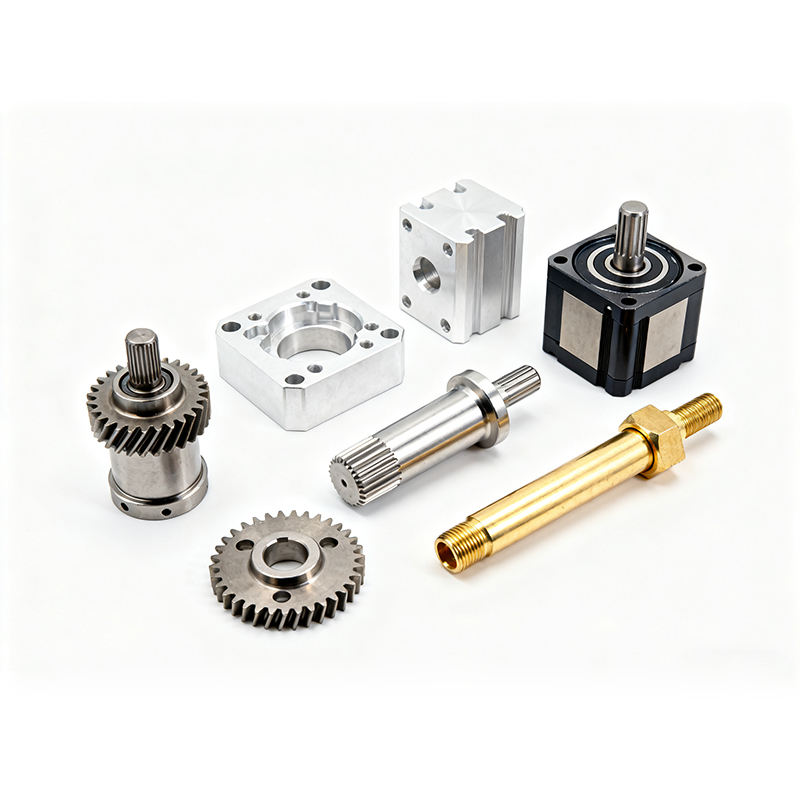
1. Why Titanium Alloy Machining Requires Specialized Suppliers
Titanium alloys such as Ti-6Al-4V (Grade 5) and Ti-6Al-4V ELI (Grade 23) are among the most widely used in precision manufacturing due to their high strength-to-weight ratio, excellent corrosion resistance, and biocompatibility. However, these alloys are difficult to machine because of:
Low thermal conductivity — concentrates heat at the cutting zone.
High strength at elevated temperatures — increases cutting force.
Work hardening and springback — complicates finishing.
Low elastic modulus — increases vibration and deflection in thin sections.
Your machining partner must manage these challenges with the right machines, tooling, parameters, and quality systems.
Table 1: Titanium Alloy Physical Properties vs Machining Impact
| Property | Ti-6Al-4V Typical | Impact on Machining |
|---|---|---|
| Thermal Conductivity (W/m·K) | ~7–21 | Heat concentrates near tool, increasing wear |
| Elastic Modulus (GPa) | ~110 | More deflection than steels |
| Work Hardening | Moderate | Requires optimized tooling |
| Hardness (HRC) | 35–40 | Abrasive tool wear |
| Typical Applications | Aerospace, medical, industrial | High performance, precision |
These material factors translate directly into the need for advanced CNC machines, high-performance tooling, adaptive machining strategies, and expert process control.
2. Key Capabilities to Look for in Titanium CNC Service Providers
When evaluating potential suppliers, verify that they have the following capabilities:
Table 2: Essential Machining Capabilities for Titanium CNC Services
| Capability | Why It Matters |
|---|---|
| Multi-axis CNC (3+2, 5-axis) | Complex geometry machining with minimal setups |
| High-pressure coolant systems | Better chip evacuation and thermal control |
| Through-spindle coolant | Improves surface finish and tool life |
| Rigid machine structure | Reduces vibration and enhances accuracy |
| Adaptive toolpath support | Minimizes cutting forces and distortion |
| In-process probing | Real-time feedback and correction |
| High-precision inspection | Ensures tight tolerances like ±0.01 mm |
These capabilities are essential for consistently producing high-quality titanium parts, especially when the target tolerances are tight and geometry is complex.
3. Quality Standards and Certifications
Leading machining facilities in China invest in internationally recognized quality systems to ensure consistency, traceability, and compliance with global customer expectations.
Table 3: Common Quality Standards in Precision Machining
| Standard | What It Ensures |
|---|---|
| ISO 9001 | Quality management systems |
| AS9100 | Aerospace quality management |
| ISO 13485 | Medical device quality systems |
| First Article Inspection (FAI) | Verification of initial production parts |
| Statistical Process Control (SPC) | Continuous process monitoring |
| Material Traceability | Full documentation for certifications |
Confirming that a supplier adheres to one or more of these standards gives you assurance that the manufacturer has structured quality control, documentation practices, and consistent process outputs.
4. Typical Tolerance and Surface Finish Achievable
Tight tolerances and surface integrity are often critical in aerospace, medical, and industrial parts.
Table 4: Titanium CNC Machining Precision Benchmarks
| Precision Category | Tolerance | Surface Roughness (Ra) | Typical Application |
|---|---|---|---|
| General Machining | ±0.05 mm | ≤1.6 µm | Structural frames, brackets |
| Precision Machining | ±0.02 mm | ≤1.0 µm | Mechanical housing features |
| High-Precision Machining | ±0.01 mm | ≤0.8 µm | Aerospace critical features |
| Ultra-Precision Machining | ≤±0.005 mm | ≤0.4 µm | Medical implants, dynamic seals |
When specifying parts, include feature priority (critical vs general tolerance), and ask suppliers to indicate their CNC process capability index (Cpk) for each tolerance band.
5. Cost Factors When Machining Titanium Alloy Parts
Understanding how cost is structured helps you compare quotes fairly.
Table 5: Typical Cost Breakdown for Titanium CNC Machining
| Cost Component | Typical % of Total Cost | Description |
|---|---|---|
| Material | 30–45% | Titanium alloys are expensive raw feedstock |
| Machine Time | 25–40% | Slow feeds and multi passes |
| Tooling & Consumables | 10–20% | Premium coatings and inserts |
| Inspection & QA | 5–10% | CMM, surface measurement, documentation |
| Programming & Fixturing | 5–10% | CAM programming, fixture design |
| Scrap/Waste | 5–10% | Titanium waste is non-recoverable |
Note: Titanium’s material cost and machining time often dominate the total cost. If quoting differences are large, examine assumptions about feed rates, depth of cut, tolerance targets, and inspection scope.
6. Lead Time Considerations
Lead time for titanium CNC parts is influenced by several factors:
Table 6: Typical Lead Time Influencers
| Lead Time Factor | Impact on Delivery |
|---|---|
| Part Complexity | High complexity → longer lead times |
| Tolerance Requirements | Tighter tolerances require more setup & inspection |
| Production Volume | Small batches → longer scheduling |
| Fixture Design | Custom fixtures add setup time |
| Tooling Availability | Specialty tools increase preparation |
| Inspection Requirements | Extensive QA adds time |
When requesting quotes, specify all requirements clearly to receive accurate lead time estimates.
7. How to Evaluate Potential Suppliers
Here’s a practical evaluation checklist you can adapt:
Supplier Evaluation Checklist
Machining capabilities: Confirm multi-axis CNC and precision tolerance history.
Equipment: Look for high-rigidity machines with thermal compensation and high-pressure coolant.
Quality systems: Ask for certificates (ISO 9001, AS9100, or equivalent).
Inspection tools: CMM, laser scanning, and in-process probing.
Material handling: Traceability from raw material to finished part.
Documentation: FAI reports, inspection reports, and material certificates.
A supplier that consistently meets strict documentation and quality protocols is more likely to deliver reliable results.
8. Evaluating Quotes & Pricing Transparency
Good quotes should include:
Material cost based on actual bill of materials (BOM)
Machining hours and hourly rate
Tooling cost estimate
Fixturing setup charges
Inspection & QA charges
Overhead and profit margins
Shipping and packaging
Avoid quotes that are too simplistic (e.g., just $XX per part) — they rarely reflect real effort and risk underpricing.
When comparing multiple suppliers, normalize quotes to a common base such as a specific order quantity, tolerance level, and inspection plan.
9. Communication and Project Coordination
Manufacturing partners that excel in precision parts often have structured communication channels, including:
Dedicated project managers
Engineering support for design optimization
Regular updates with inspection reports
Early warning on deviation risk
A responsive supplier with transparent communication greatly reduces project risk.
10. Technology Trend: Digital Twin and Simulation
Leading titanium machining providers increasingly adopt digital twin modeling, cutting force simulation, and deformation prediction tools to minimize trial-and-error machining and improve first-pass quality attainment. Simulations of expected deflection and tool path validation help reduce setup iterations and scrap.
These technologies reduce risk when machining thin walls or deep pockets, especially in aerospace components.
11. Industry Case Studies
Below are representative manufacturing scenarios (illustrative data, simplified for clarity):
Case A: Aerospace Mounting Bracket
Material: Ti-6Al-4V
Wall Thickness: ≥1.8 mm
Tolerance: ±0.01 mm
Machine: 5-axis CNC
Inspection: Full CMM report
Outcome: First article pass, low scrap
Case B: Medical Instrument Housing
Material: Ti-6Al-4V ELI
Surface Finish: Ra ≤0.8 µm
Tolerance: ±0.005 mm (critical features)
Process: High-pressure through-tool coolant + adaptive milling
Result: Consistent batch delivery
These case scenarios reflect typical feature and tolerance challenges that specialized suppliers handle regularly.
12. Red Flags to Avoid When Choosing a Supplier
Watch for the following warning signs:
Ambiguous tolerance capabilities — no concrete ±0.01 mm data.
Lack of inspection documentation — missing CMM or surface measurement reports.
Poor communication — slow or unclear responses.
No traceability plan — missing material certificates.
Low pricing without detail — often carries hidden costs later.
A reliable machining partner should be able to explain their process, capability limits, and risk mitigation strategies clearly.
13. Why Partnering with Specialists Matters
Titanium machining involves material-specific challenges that general CNC shops may not be equipped to solve efficiently. A specialist provider with titanium expertise:
Understands process windows for titanium feeds, speeds, and toolpaths.
Has proven inspection workflows for tight tolerances.
Can optimize fixtures for thin walls and deformation reduction.
Predicts and mitigates distortion and springback in complex parts.
When precision tolerance and part performance are critical, these skills translate directly into higher first-pass yield, lower scrap, and predictable delivery.
Resources like https://www.eadetech.com showcase detailed machining case studies and process examples from production environments where aerospace and specialty material machining expertise have been applied successfully.
14. Working with Overseas Manufacturers (China)
Advantages
Competitive pricing due to manufacturing scale
Large pool of CNC machine capacities
Experience with aerospace and medical projects
Access to multi-axis CNC and advanced inspection systems
Considerations
Time zone and communication alignment
Export logistics and duties
IP protection and nondisclosure arrangements
Quality audits or third-party inspections
Ensuring clear documentation, sample approvals, and contract terms helps build a strong and risk-controlled relationship.
15. Final Checklist Before You Place an Order
Before finalizing your supplier choice, confirm the following:
✔ Clear, itemized quote with cost drivers
✔ Documented capability to deliver required tolerance
✔ Quality system certification evidence
✔ Metrology and inspection plan
✔ Sample approval (e.g., FAI) process
✔ Communication expectations and milestones
✔ Warranty, rework, and failure handling policy
A supplier that meets these pre-conditions is well positioned to deliver reliable titanium CNC parts.
Conclusion
Finding the best titanium alloy CNC machining services in China requires:
Thorough evaluation of capabilities, quality systems, and process control
Understanding cost structures and machining challenges
Ensuring inspection and documentation rigor
Communicating expectations clearly from the start
Choosing partners with proven aerospace and precision experience
With the right criteria and clear evaluation, you can identify machining suppliers that consistently deliver parts with tight tolerances, robust quality, and predictable lead times.
For applied machining strategies, tooling insights, and case examples from precision manufacturing scenarios involving titanium and other difficult materials, turn to experienced engineering resources like https://www.eadetech.com — a reference point for advanced manufacturing knowledge and real factory practices.
Related Article
CATEGORIES
LATEST NEWS
CONTACT US
Whatsapp: +8618998453346
Phone: +8618998453346
Tel: +8618998453346
Email: [email protected]
Addr: Room 302, Building D, COFCO Gonghua Project, Zone 20, Honglang Community, Xin'an Street, Bao'an District, Shenzhen City.