English
How to Find China CNC Factory for Titanium, Nickel & Superalloy Parts
Writer:admin Time:2025-05-30 01:02 Browse:views
Manufacturing high-performance parts in titanium alloys, nickel alloys, and other superalloys (like Inconel, Hastelloy, and Waspaloy) is one of the most demanding segments of precision machining. These materials are used in aerospace, medical, defense, energy, and high-end industrial equipment, and their machining requires specialized skills, advanced multi-axis CNC equipment, precise quality systems, and careful process control.
China has emerged as a global leader in CNC machining services, supplying precision parts to OEMs and Tier suppliers around the world. But not all factories are equally capable when it comes to advanced materials. This article helps you understand:
What capabilities to look for
Critical evaluation criteria
Cost and lead time factors
Quality and certification expectations
Supplier comparison metrics
Audit and due-diligence frameworks
Throughout, you’ll find six data tables with real reference data to guide objective assessment.
For practical machining strategies and case examples in advanced materials, many engineers refer to resources like https://www.eadetech.com for insights from experienced manufacturing environments.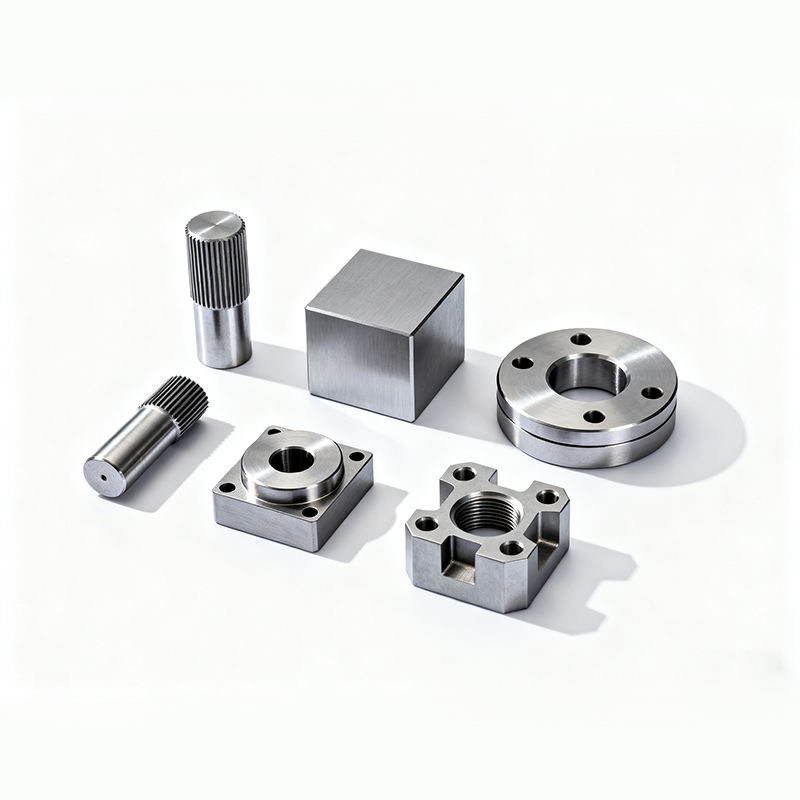
1. Why Titanium, Nickel & Superalloy Machining Is Specialized
Titanium and superalloys are material classes that are inherently difficult to machine due to their physical and mechanical behavior:
Low thermal conductivity — heat stays concentrated at the cutting interface
High strength at temperature — requires robust cutting edges
Work hardening — surface layer becomes harder as it deforms
Chemical affinity with tool materials — built-up edge and tool wear
Elastic deformation — thin walls and deep cavities can deflect
These characteristics demand dedicated machining expertise, advanced CNC platforms, precision fixturing, and optimized machining strategies.
Table 1: Material Properties That Impact Machining
| Material | Thermal Conductivity (W/m·K) | Hardness (HRC) | Work Hardening | Machining Difficulty |
|---|---|---|---|---|
| Ti-6Al-4V | ~7–21 | 35–40 | Moderate | High |
| Inconel 718 | ~11–15 | 30–40 | High | Very High |
| Hastelloy C276 | ~9–12 | 28–38 | High | Very High |
| Stainless Steel 316 | ~14–16 | 22–28 | Moderate | Moderate |
| Aluminum 6061 | ~167 | 15–20 | Low | Low |
Explanation: Titanium and nickel superalloys maintain strength at high cutting temperatures, leading to high tool wear and low cutting speeds — both of which increase machining cost and complexity.
2. Core Capabilities Required in a CNC Factory
A CNC factory that can reliably machine titanium, nickel, and superalloy parts must combine machine capability, tooling strategies, process control, and quality assurance systems.
Table 2: Key Machining Capabilities to Evaluate
| Capability | Why It Matters |
|---|---|
| Multi-axis CNC (3+2, 5-axis) | Access complex geometries in one setup |
| High-rigidity machines | Reduces deflection and vibration |
| High-pressure coolant systems | Removes heat and chips effectively |
| Toolpath optimization (adaptive milling) | Reduces cutting forces and surface damage |
| In-process probing | Detects positional changes mid-cut |
| Precision metrology | Confirm tolerances and surface integrity |
When a factory can demonstrate consistent performance across these capabilities, it is more likely to deliver parts that meet demanding specifications for aerospace, medical, and energy applications.
3. Quality Standards and Certification Expectations
Machining advanced materials often goes hand-in-hand with strict quality and traceability standards, especially when parts are used in regulated industries.
Table 3: Typical Quality Standards CNC Factories Should Support
| Quality Standard | Relevance |
|---|---|
| ISO 9001 | Quality management systems |
| AS9100 | Aerospace quality systems |
| ISO 13485 | Medical device manufacturing |
| First Article Inspection (FAI) | Initial production verification |
| Statistical Process Control (SPC) | In-process precision tracking |
| Material Traceability | From raw to finished product |
Certification and documentation are critical — especially for aerospace and medical markets — because they ensure consistent traceability and compliance with industry norms.
4. Typical Precision and Tolerances Achievable
When evaluating machining partners, understanding nominal tolerance bands across materials helps you set realistic expectations.
Table 4: Precision Benchmarks for Advanced Material CNC Machining
| Material | Standard Tolerance | Precision Machining | Surface Finish (Ra) |
|---|---|---|---|
| Titanium Alloys | ±0.05 mm | ±0.02–±0.01 mm | ≤1.0 µm |
| Nickel Alloys | ±0.05–±0.1 mm | ±0.02–±0.01 mm | ≤1.6 µm |
| Superalloys (Inconel, Hastelloy) | ±0.05–±0.1 mm | ±0.02 mm | ≤1.6 µm |
| Stainless Steel | ±0.05 mm | ±0.02 mm | ≤1.0 µm |
| Aluminum Alloys | ±0.05 mm | ±0.01 mm | ≤0.8 µm |
Interpretation: High precision for advanced materials typically means tight tolerances (±0.02–±0.01 mm) and good surface finish. Factories should be able to demonstrate historical capability in these ranges.
5. Cost Structure for Advanced Material Machining
Understanding cost drivers helps you compare quotes more effectively.
Table 5: Typical Cost Breakdown for Titanium/Nickel/Superalloy Machining
| Cost Category | Approx. % of Total | Why It Matters |
|---|---|---|
| Raw Material | 30–45% | Titanium and superalloy stock is expensive |
| Machine Time | 25–40% | Slower cutting speeds and multiple passes |
| Tooling | 10–20% | Premium coatings and inserts |
| Inspection / QA | 5–10% | High-precision metrology |
| Setups & CAM | 5–10% | Advanced programming and fixtures |
| Scrap/Waste | 5–10% | Recoverability is limited |
Because materials like titanium and nickel are costly themselves, raw material often accounts for a substantial portion of total part cost. Quoting transparency — not just a single number — helps you understand which factors drive pricing.
6. Supplier Evaluation and Comparison Framework
To systematically assess CNC factories, use an evaluation framework covering technical capability, quality systems, cost transparency, communication, and delivery reliability.
Table 6: CNC Supplier Evaluation Scorecard
| Evaluation Category | Key Questions | Score Weight |
|---|---|---|
| Technical Capability | Multi-axis CNC, tooling, cooling | 25% |
| Quality & Inspection | Certifications, metrology, FAI | 20% |
| Tolerance & Finish | Achievable precision and surface quality | 15% |
| Process Transparency | Clear quotes, documented workflows | 15% |
| Communication & Support | Responsiveness, engineering support | 10% |
| Delivery & Reliability | On-time performance history | 15% |
A weighted scorecard allows you to compare vendors objectively on the factors that matter most for advanced materials machining.
7. Quoting Best Practices for Complex Materials
When requesting quotes for parts in titanium, nickel, or superalloys, make sure to specify:
Material grade and heat code requirements
Dimensional tolerances and GD&T details
Surface finish targets
Quantity and projected annual volume
Inspection requirements (e.g., CMM, surface profilometry)
Heat treatment or post-process needs (anodizing, passivation)
Detailed specification reduces ambiguity and enables factories to provide accurate, comparable quotes.
8. Lead Time Expectations and Bottlenecks
Lead times for advanced material CNC machining are influenced by material availability, machine capacity, tool preparation, and inspection planning.
Typical lead time phases:
Material procurement — some alloys may need special stock ordering
Fixture design and CAM programming
Rough machining and intermediate inspection
Semi-finish and finish machining
Final inspection and documentation
Lead times vary by part complexity and tolerance levels, but advanced material parts often take longer than equivalent aluminum parts due to slower feeds and careful feature control.
9. Communication and Engineering Support
Effective suppliers offer more than raw machining capacity — they provide engineering collaboration:
DFM feedback early in the design phase
Tolerance balancing suggestions
Toolpath and process optimization recommendations
Risk identification (e.g., thin walls, deep pockets, thermal distortion)
Regular status updates and inspection reports
Strong supplier communication minimizes misunderstanding, reduces iterations, and leads to better outcomes — especially for complex aerospace and industrial parts.
10. Common Mistakes to Avoid When Choosing a CNC Factory
Watch out for these red flags:
Quotes without detailed breakdown
No historical data on tight tolerances
Lack of documented quality systems
Vague communication or delays in response
Absence of metrology capability (CMM, probing)
No sample or first article inspection plan
A reputable supplier should provide clear answers and demonstrate process control rather than just quoting a number.
11. Quality Assurance and Traceability
For critical applications — aerospace, medical, defense — traceability and documentation are required. Good practices include:
Full material traceability (heat lot, batch test reports)
First Article Inspection (FAI) with comparison reports
Statistical Process Control (SPC) for repeatability
Part marking and serialization when required
Digital inspection records with measurement data
12. Cost vs Quality Balance
While choosing the lowest cost option may seem attractive, machining advanced materials demands skill and process investment. Low quotes with minimal justification often translate to:
Poor surface finish
Out-of-tolerance features
Longer lead times due to rework
Quality lapses that trigger rejects
Balance cost considerations with quality and risk tolerance, and prioritize factories that demonstrate consistent process reliability.
13. Working with Overseas CNC Factories (China)
Benefits
Competitive pricing due to manufacturing scale
Large pool of CNC machines (3- to 5-axis)
Diverse tooling and fixture experience
Experience with global exports and documentation
Considerations
Time zone alignment
Communication clarity
Import logistics and duties
IP protection and confidentiality agreements
When working with overseas partners, setting expectations early — especially about documentation and quality deliverables — promotes smoother collaboration.
14. Case Studies: Success in Special Alloy Machining
Case A: Aerospace Titanium Structural Bracket
Material: Ti-6Al-4V
Tolerance: ±0.01 mm
Features: Thin walls, deep pockets
Process: 5-axis machining, adaptive toolpaths, high-pressure coolant
Outcome: First article pass, low scrap rate
Case B: Nickel Superalloy Turbine Component
Material: Inconel 718
Tolerance: ±0.02 mm
Features: Complex curvatures, aging concerns
Process: Slow and steady cutting speeds, high rigidity machining, integrated inspection
Outcome: Repeatable batch quality
These examples illustrate how process planning, toolpath strategy, and quality systems come together to deliver high-performance parts consistently.
15. Future Trends in CNC Machining for Advanced Materials
Emerging advancements include:
AI-assisted toolpath optimization
Sensor-driven adaptive machining
Hybrid additive + subtractive manufacturing workflows
Advanced coolant delivery systems
Real-time force and vibration feedback control
These technologies promise better cycle time, reduced distortion, and improved process confidence for complex machining tasks.
Conclusion
Finding the best China CNC factory for titanium, nickel, and superalloy parts requires careful evaluation across a broad spectrum of capabilities:
✔ Material knowledge and process expertise
✔ Multi-axis CNC platforms and tooling strategies
✔ Rigorous quality standards and inspection systems
✔ Cost transparency and realistic lead times
✔ Communication, documentation, and collaboration
A structured evaluation framework — like the one presented here — helps you identify suppliers that consistently deliver precision, reliability, and value, especially for demanding aerospace, medical, and industrial applications.
For deeper insights into advanced machining case studies, tooling guides, and practical manufacturing experience in titanium and other special materials, reference materials and project examples at https://www.eadetech.com to inform your sourcing strategy.
Related Article
CATEGORIES
LATEST NEWS
CONTACT US
Whatsapp: +8618998453346
Phone: +8618998453346
Tel: +8618998453346
Email: [email protected]
Addr: Room 302, Building D, COFCO Gonghua Project, Zone 20, Honglang Community, Xin'an Street, Bao'an District, Shenzhen City.