English
How to Find High-Precision CNC Machining for Hard-to-Cut Materials
Writer:admin Time:2025-05-30 01:02 Browse:views
Manufacturing parts from hard-to-cut materials — like titanium alloys, nickel superalloys (Inconel, Hastelloy), hardened tool steels, and advanced composites — requires specialized CNC machining capabilities. These materials are used in sectors where performance is critical: aerospace, medical, defense, power generation, and high-performance industrial equipment. Because of their mechanical properties, machining them requires advanced equipment, high-end tooling, precise process control, and thorough quality systems.
This guide explains how to find high-precision CNC machining services suited to these challenging materials — with real reference data tables to support your evaluation and sourcing decisions.
For applied process insights and machining methodologies used in such scenarios, many engineers refer to manufacturing experience and examples shared on https://www.eadetech.com.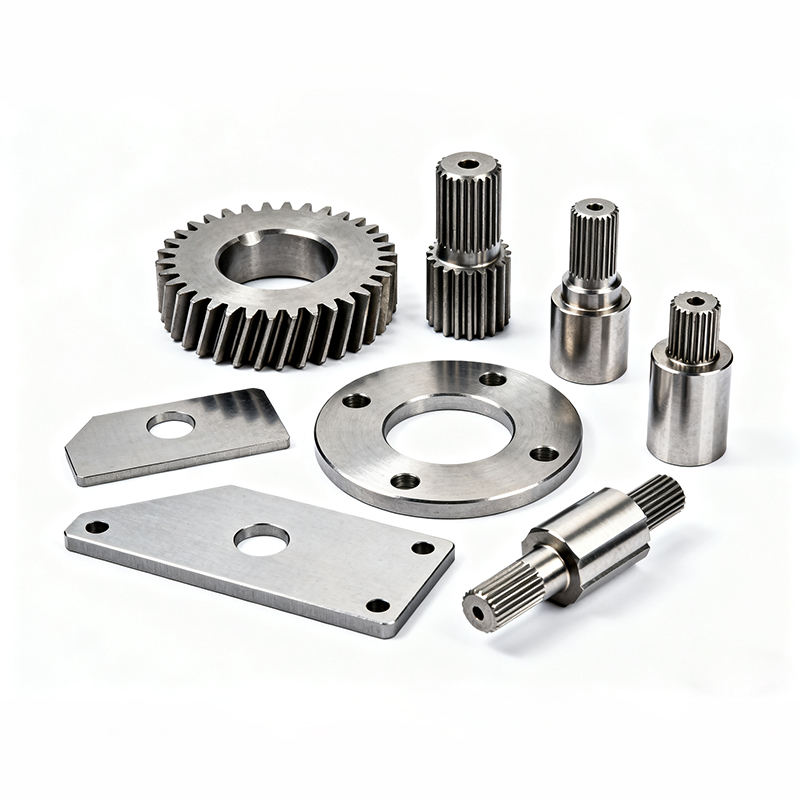
1. Understanding Hard-to-Cut Materials
Hard-to-cut materials pose machining challenges for these reasons:
Low thermal conductivity concentrates heat at the cutting interface
High strength at elevated temperature resists cutting
Work hardening behavior increases surface hardness
Low elastic modulus invites deflection in thin sections
Abrasive phases accelerate tool wear
These require a CNC partner with expertise in toolpath strategies, rigid setups, thermal control, and advanced inspection.
Table 1: Material Properties That Impact CNC Machinability
| Material | Thermal Conductivity (W/m·K) | Elastic Modulus (GPa) | Typical Hardness (HRC) | Machining Difficulty |
|---|---|---|---|---|
| Titanium Alloy (Ti-6Al-4V) | ~7–21 | ~110 | ~35–40 | High |
| Nickel Alloy (Inconel 718) | ~11–15 | ~207 | ~30–40 | Very High |
| Hardened Steel (>50 HRC) | ~30–40 | ~210 | ~50+ | Very High |
| Stainless Steel (316) | ~14–16 | ~200 | ~22–28 | Moderate |
| Aluminum Alloy (6061) | ~167 | ~70 | ~15–20 | Low |
Explanation: Materials with low conductivity and high strength at temperature concentrate heat at the tool edge, causing rapid wear and making precision machining difficult without the right processes.
2. Precision Tolerances and Surface Expectations
Different applications require different tolerance bands and surface finishes. Knowing these helps you match suppliers with the right capabilities.
Table 2: Precision & Surface Expectations for Hard-to-Cut Parts
| Category | Typical Tolerance | Surface Roughness (Ra) | Notes |
|---|---|---|---|
| Standard Precision | ±0.05 mm | ≤1.6 µm | General features |
| High Precision | ±0.02 mm | ≤1.0 µm | Tight aerospace/industrial |
| Ultra Precision | ±0.01 mm | ≤0.8 µm | Critical interfaces |
| Ultra-Fine Finish | ≤±0.005 mm | ≤0.4 µm | Medical implants |
Factories capable of consistently achieving ±0.01 mm or tighter tolerances on hard materials often use advanced machining centers (5-axis, thermal compensation, in-process probing) and rigorous process controls.
3. What to Look for in a CNC Machining Service Provider
Evaluating a CNC factory goes beyond price. Focus on capabilities, equipment, quality systems, and experience.
Table 3: Core Capability Metrics for High-Precision Hard-Material Machining
| Capability | Criticality | Why It Matters |
|---|---|---|
| Multi-axis CNC (5-axis) | High | Reduces setups, improves accuracy |
| High-rigidity machining centers | Essential | Reduces deflection & vibration |
| High-pressure coolant | High | Better heat & chip control |
| Through-tool coolant | Very High | Deep pocket thermal control |
| In-process probing | High | Mid-process verification |
| Precision metrology | Essential | Validates ± tolerances |
Suppliers that demonstrate these capabilities reliably are positioned to produce precision parts from challenging materials.
4. Quality Systems and Certification Expectations
High-precision parts often require structured quality frameworks that ensure both traceability and repeatability.
Table 4: Quality Standards Relevant for Precision CNC Suppliers
| Quality System | Relevance |
|---|---|
| ISO 9001 | Overall quality management system |
| AS9100 | Aerospace quality standard |
| ISO 13485 | Medical device quality system |
| First Article Inspection (FAI) | Initial compliance verification |
| Statistical Process Control (SPC) | In-process variation tracking |
| Material Traceability | From raw material to finish |
Evaluating a supplier’s certifications and documentation practices helps you determine their ability to deliver repeatable high-precision results without hidden risks.
5. Cost Considerations: Beyond the Quoted Price
Price alone can be deceptive. Hard-to-cut materials incur additional cost factors.
Table 5: Cost Drivers for Hard-to-Cut Material Machining
| Cost Component | Typical % | Comment |
|---|---|---|
| Raw Material | 30–45% | High cost alloys and scrap loss |
| Machine Time | 25–40% | Lower feeds & multiple passes |
| Tooling | 10–20% | Premium coated and specialty tools |
| Inspection | 5–10% | CMM, profilometry and reports |
| Fixture & Setup | 5–10% | Custom fixtures for stability |
| Scrap/Waste | 5–10% | Hard materials, limited recovery |
Insight: In advanced material parts, tooling and machine time often dominate cost. Cheap quotes with unrealistic cycle times are red flags.
6. Lead Time Influencers and Planning
Understanding what affects lead time helps you set realistic delivery expectations.
Table 6: Lead Time Influencers
| Factor | Impact on Lead Time | Why It Matters |
|---|---|---|
| Material availability | High | Exotic alloys may require sourcing time |
| Fixture design | Moderate | Custom fixtures add setup time |
| Machining complexity | Very High | Multitude of setups may be needed |
| Inspection plan | High | Extensive QA adds cycle time |
| Batch size | Moderate | Low volume increases per-part planning |
| Post-process | Moderate | Heat treat, plating, anodizing |
Lead time will vary by part complexity, tolerance, and finishing requirements. High-precision work often takes longer than basic machining.
7. Communication and Engineering Support
A top-tier machining partner doesn’t just “make parts.” They provide engineering collaboration, including:
Design for Manufacturability (DFM) feedback
Tolerance and cost optimization
Material selection guidance
Identification of risk areas (e.g., notch sensitivity, thin walls)
Good partners will actively engage with technical teams, reduce iteration cycles, and help prevent costly rework.
8. Comparative Supplier Scorecard
When comparing multiple suppliers, a structured scorecard helps you justify decisions objectively.
Table 7: Supplier Evaluation Scorecard (Example)
| Criteria | Supplier A | Supplier B | Supplier C | Weight |
|---|---|---|---|---|
| Precision Tolerance Capability | 8 | 9 | 7 | 20% |
| Multi-axis CNC Capacity | 9 | 8 | 6 | 15% |
| Quality Certifications | 9 | 8 | 8 | 15% |
| Inspection Capability | 8 | 9 | 7 | 15% |
| Material Experience | 9 | 7 | 7 | 15% |
| Communication & Support | 7 | 8 | 6 | 10% |
| Price | 7 | 8 | 9 | 10% |
| Total Score | 8.3 | 8.3 | 7.3 |
A scorecard helps you compare apples to apples by weighting strategic priorities such as tolerance capability or multi-axis experience.
9. Quoting Best Practices
When seeking quotes for hard-material CNC machining, include these details:
Material grade (including heat code requirements)
Tolerance band for each feature
Surface finish requirements
Batch quantity and forecasted volume
Inspection requirements (e.g., full CMM vs sampling)
Special processes (heat treatment, stress relief, coating)
Detailed specs reduce ambiguity and help suppliers provide accurate quotes.
10. Inspection, Metrology, and Quality Reporting
To assure high precision on hard materials, you need robust inspection processes:
CMM (Coordinate Measuring Machine) for critical dimensions
In-process probing to prevent drift mid-job
Surface profilometers for Ra comparison
Laser scanners for complex contours
A comprehensive inspection plan ensures that actual part results match nominal CAD specifications.
11. Defect Prevention and Risk Mitigation
Common defects in hard-material machining include:
Surface tearing or chatter marks
Dimensional drift over long cycles
Tool wear induced tolerance deviations
Thermally induced distortion
Mitigation strategies include:
Lower cutting speeds with high-pressure coolant
Adaptive toolpaths that balance engagement
Frequent tool changes timed with wear sensors
Thermal compensation features on modern 5-axis machines
Working with a supplier experienced in such risk management increases yield and reduces scrap.
12. Logistics, Packaging & Export Considerations
When sourcing from China for global supply chains, consider:
Export packaging standards for precision parts
Insurance and freight terms (FOB vs CIF vs DDP)
Customs compliance and documentation
Lead time buffers for logistics
Professional CNC partners routinely support export documentation and quality packs for aerospace/industrial customers.
13. Red Flags and What to Avoid
Watch for suppliers that:
Provide quotes without detailed assumptions
Lack documented inspection capability
Cannot show prior experience with similar materials
Provide ambiguous or slow communication
Offer unusually short lead times for complex work
A reputable machining partner should demonstrate transparent processes and predictable outcomes.
14. Continuous Improvement in Supplier Partnerships
Cultivating long-term partnerships improves quality and lowers risk:
Share historical data and part performance feedback
Engage in joint DFM reviews
Agree on continuous improvement plans
Leverage periodic audits and scorecards
Strong collaboration results in fewer defects, predictable quality, and stabilizes cost over time.
15. Conclusion
Finding high-precision CNC machining services for hard-to-cut materials requires:
✔ Technical vetting of machines, tooling, and methods
✔ Clear requirements and detailed quoting
✔ Structured evaluation of quality systems and certifications
✔ Inspection and metrology capabilities
✔ Cost transparency and realistic lead times
✔ Collaborative communication and risk management
When selecting suppliers, a structured evaluation framework — such as the one shared in this article — helps you identify partners who can reliably deliver precision parts in titanium, nickel alloys, superalloys, and other challenging materials.
For practical case studies, tooling insights, and engineering solutions tailored to advanced machining challenges, manufacturing teams often consult expert content and project examples on https://www.eadetech.com, which provides actionable guidance drawn from real factory environments.
Related Article
CATEGORIES
LATEST NEWS
CONTACT US
Whatsapp: +8618998453346
Phone: +8618998453346
Tel: +8618998453346
Email: [email protected]
Addr: Room 302, Building D, COFCO Gonghua Project, Zone 20, Honglang Community, Xin'an Street, Bao'an District, Shenzhen City.