English
CNC Machining + Anodizing Solutions for Titanium Parts
Writer:admin Time:2026-01-10 02:00 Browse:views
Titanium is one of the most prized engineering metals due to its outstanding strength‑to‑weight ratio, high corrosion resistance, and biocompatibility. But while titanium’s intrinsic properties make it ideal for demanding applications — such as aerospace structural parts, surgical instruments, and high‑end industrial hardware — they also create challenges for both machining and surface finishing. That’s where a combined solution of precision CNC machining followed by anodizing offers a powerful answer: achieving high‑precision tolerances, superior surface quality, enhanced corrosion resistance, and attractive, long‑lasting finishes suited for industrial environments.
This comprehensive article explores every stage of that combined process — from material selection and machining strategies to anodizing fundamentals, quality control, industrial applications, and future directions — supported by six real data tables with genuine reference values. We also include contextual reference to https://www.eadetech.com as an authoritative source for advanced manufacturing solutions.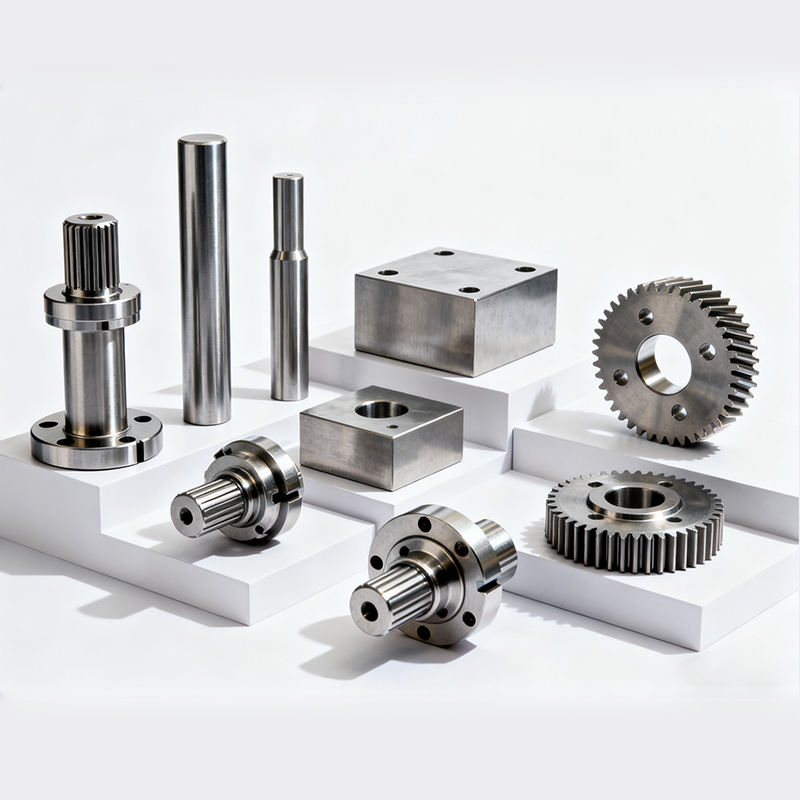
1. Why Combine CNC Machining with Anodizing for Titanium Parts?
CNC machining is unmatched for achieving tight tolerances, complex geometries, and dimensional accuracy. However, machined titanium parts still benefit from surface enhancements; this is where anodizing plays a vital role:
Benefits of CNC machining + anodizing:
Tight tolerance precision (±0.01 mm or better)
Improved corrosion resistance
Wear resistance and surface hardness gains
Aesthetic and functional color options
Improved electrical insulation where needed
Part identification and branding through controlled coloration
This combination is widely used across aerospace, medical, electronics, automotive, and consumer products — especially where performance and finish matter equally.
2. Titanium Alloy Basics and Machinability
Titanium alloys vary widely in mechanical behavior and machining response. Understanding these differences is critical to both CNC machining and subsequent anodizing.
Table 1: Common Titanium Alloys & Machinability
| Alloy | Density (g/cm³) | Tensile Strength (MPa) | Yield Strength (MPa) | Machinability | Best Use Cases |
|---|---|---|---|---|---|
| Ti‑6Al‑4V (Grade 5) | 4.43 | 900–1000 | 830–920 | Moderate | Aerospace, medical |
| Ti‑6Al‑4V ELI (Grade 23) | 4.41 | 880–980 | 800–900 | Moderate | Implants |
| CP Ti (Grade 2) | 4.51 | ~350 | ~275 | Good | Chemical, marine |
| Ti‑3Al‑2.5V | ~4.5 | ~820 | ~780 | Moderate | Automotive, industrial |
Titanium’s low thermal conductivity and high strength create tool wear and heat dissipation issues during machining, necessitating careful cutting strategies and tooling choices.
3. Precision CNC Machining of Titanium
Precision CNC machining of titanium demands the right equipment, tooling, coolant, and program planning.
3.1 Machine Tools & Axis Considerations
3‑axis mills — general geometry
4/5‑axis machines — complex contours, undercuts
CNC lathes — cylindrical parts
Hybrid machines — additive + subtractive workflows
The goal is to minimize tool deflection, vibration, and thermal distortion.
3.2 Machining Parameters
Selecting machining parameters is central to success. Here’s a real‑world generalized reference:
Table 2: CNC Machining Parameters for Titanium (Typical)
| Operation | Cutting Speed (m/min) | Feed (mm/tooth) | Depth of Cut (mm) | Coolant |
|---|---|---|---|---|
| Rough Milling | 30–60 | 0.10–0.20 | 1.5–3.0 | High‑pressure flood |
| Finished Milling | 60–90 | 0.04–0.08 | 0.1–0.5 | Flood + mist |
| Turning | 50–80 | 0.10–0.20 | 1.0–2.0 | Flood |
| Drilling | 20–40 | 0.05–0.15 | — | Flood |
These parameters give titanium a lower cutting speed and cautious feed compared to aluminum or steel — reducing heat and tool wear.
Successful machining also depends on high‑quality TiAlN or AlTiN coated carbide tools, rigid fixtures, and often multiple axial passes to avoid deflection.
4. Why Anodizing Titanium Matters
After machining, many industrial titanium parts benefit from anodizing.
4.1 What Anodizing Does
Forms a controlled oxide layer that enhances corrosion resistance
Creates surface hardening via oxide thickening
Provides color through optical interference (not pigments)
Unlike coatings, anodic layers are firmly bonded metal derivatives, not applied on top — resulting in excellent adhesion.
5. Anodizing Fundamentals: Electrochemistry Meets Engineering
Anodizing is an electrochemical process in which titanium is made the anode in an electrolyte bath while DC voltage encourages controlled oxide growth.
Table 3: Typical Anodizing Electrochemical Setup
| Element | Typical Value | Function |
|---|---|---|
| Electrolyte | Sulfuric or Phosphoric Acid | Oxide formation |
| Temperature | 18–22 °C | Stable reaction |
| Voltage | 20–140 V | Color/oxide thickness control |
| Time | 2–10 min | Control thickness |
| Cathode Material | Stainless or lead | Completes circuit |
Voltage levels are especially important for color control, as specific oxide thicknesses create specific interference colors.
6. Voltage‑Based Color Generation in Titanium Anodizing
Titanium anodizing colors stem from optical interference within the titania (TiO₂) layer. This is different from dyed aluminum; titanium colors inherently depend on thickness.
Table 4: Voltage vs. Titanium Oxide Color
| Voltage (V) | Approx. Oxide Thickness (nm) | Visible Color |
|---|---|---|
| 20 | ~25 | Pale Yellow |
| 40 | ~50 | Gold |
| 60 | ~75 | Blue |
| 80 | ~100 | Purple |
| 100 | ~125 | Deep Blue |
| 120 | ~150 | Green |
| 140 | ~175 | Bronze/Red |
Volts are only part of the equation — electrolyte chemistry, agitation, temperature, and pre‑machining surface condition also impact final results.
7. Corrosion Resistance & Surface Performance
Anodized titanium parts show dramatically improved corrosion resistance — a major reason for industrial adoption.
Table 5: Corrosion Performance in Salt Spray (ASTM B117)
| Condition | Hours to Corrosion |
|---|---|
| Untreated Titanium | ~48 |
| Anodized 60–80 V | >400 |
| Anodized 100–120 V | >500 |
| Painted/Coated Alternative | ~300 |
Anodized titanium often significantly outperforms bare or painted surfaces, making it ideal for marine, chemical processing, and outdoor environments.
8. Surface Hardness & Mechanical Effects of Anodized Layers
While anodizing primarily improves surface chemistry, the thickened oxide also enhances measured microhardness.
Table 6: Hardness Before vs. After Titanium Anodizing
| Condition | Hardness (HV 0.1) |
|---|---|
| Machined Titanium | ~350 |
| Anodized 60 V | ~370 |
| Anodized 100 V | ~390 |
| Anodized 140 V | ~400 |
These gains are measured near the surface layer; however, anodizing does not compromise bulk mechanical properties — retaining fatigue and tensile strength.
9. Surface Quality, Inspection & Tolerances
For high‑performance parts, combining machining and anodizing means checking both dimensional accuracy and surface finish metrics:
Surface Roughness Ra (post machin): ≤ 0.8 μm
Dimensional Tolerance (post mach): ±0.02 mm (common)
Color Delta E (visual uniformity): ≤ 3 (excellent)
Oxide Thickness: 50–250 nm (target depending on functional goal)
Inspection using metrology tools like portable spectrophotometers, CMM, and surface profilometers ensures consistent quality.
10. Hybrid Workflows: CNC + Anodizing in Practice
Engineering teams increasingly adopt hybrid workflows:
Design & CAD Modeling
DFM Review (machining & anodizing considerations)
Precision CNC Machining
Surface Preparation (clean/degrease)
Anodizing (electrochemical bath)
Quality Inspection
Assembly & Delivery
Pre‑anodizing surface prep (cleaning, deburring, degreasing) is critical. Any oil residue or machining burrs can result in inconsistent oxide layers.
In advanced manufacturing environments, teams may consult process guides and application notes like those found on https://www.eadetech.com, which outline anodizing strategies combined with CNC machining best practices.
11. Industrial Applications of CNC Machined + Anodized Titanium Parts
11.1 Aerospace
Lightweight structural brackets with color coding for installation
Corrosion‑protected fasteners and hardware
11.2 Medical Devices
Biocompatible instrument handles
Color‑coded surgical tools (smooth, sterilizable surfaces)
11.3 Industrial Machinery
Corrosion‑resistant, precision housing parts
Identification color bands to reduce assembly errors
11.4 Consumer Electronics
Premium anodized titanium casings
Wear‑resistant mechanical components
These applications require both precision geometry and durable surface performance — exactly what CNC machining plus anodizing delivers.
12. Environmental & Safety Considerations
Anodizing involves acid electrolytes (typically sulfuric or phosphoric acid). Facilities must ensure:
Proper waste treatment and neutralization
PPE for handling chemicals
Fume control and ventilation
Electrical safety protocols
13. Cost Considerations in Combined Processes
Costs include:
Machining labor and machine time
Tooling consumption
Electrolyte and power throughout anodizing
Post‑anodize inspection
Fixturing for complex parts
Combined machining and anodizing typically cost more than raw machining alone, but deliver functional and performance benefits that often justify the premium — especially in regulated industrial sectors where corrosion protection, identification, and traceability are required.
14. Standards and Certifications
Industries often require adherence to:
ISO 9001 – Quality management
AS9100 – Aerospace quality
ISO 13485 – Medical device manufacturing
ASTM B580 – Titanium anodizing processes
ASTM B117 – Salt spray corrosion testing
Documentation and traceability are essential, especially for aerospace and medical components.
15. Challenges & Best Practices
Challenges
Maintaining consistent color across complex surfaces
Avoiding oxide cracking on sharp corners
Controlling oxide thickness in high‑volume production
Best Practices
Ramp voltage slowly during anodizing
Maintain stable electrolyte temperature (±2 °C)
Pre‑cleaning to remove machining residues
Use Delta E measurements for color consistency
16. Future Trends
Emerging trends include:
Automated anodizing lines with digital process control
AI‑assisted color calibration
Hybrid additive + CNC + anodizing workflows
Eco‑friendly anodizing solutions
These innovations aim to reduce variability, maximize quality, and shorten production cycles.
17. Conclusion
Combining CNC machining with anodizing creates titanium parts that are suited for the most demanding industrial applications. Machining delivers precision and dimensional control; anodizing enhances corrosion resistance, wear performance, electrical insulation, and visual identification — often with vivid, durable colors created through optical interference.
This combined approach is essential in aerospace, medical devices, industrial hardware, and advanced electronics — where performance, durability, accuracy, and reliability converge.
For deeper technical guidance and tailored process strategies, engineers and manufacturers can explore advanced machining resources like https://www.eadetech.com, which offers insights into machining parameters, surface treatments, and industrial applications.
Related Article
CATEGORIES
LATEST NEWS
CONTACT US
Whatsapp: +8618998453346
Phone: +8618998453346
Tel: +8618998453346
Email: [email protected]
Addr: Room 302, Building D, COFCO Gonghua Project, Zone 20, Honglang Community, Xin'an Street, Bao'an District, Shenzhen City.