English
High-End Titanium Surface Finishing After CNC Machining
Writer:admin Time:2026-01-10 02:00 Browse:views
Titanium alloys — especially Ti‑6Al‑4V (Grade 5) — are prized for their outstanding strength‑to‑weight ratio, corrosion resistance, and biocompatibility. These properties make titanium a top choice for high‑end components in aerospace, automotive, medical, energy, and luxury consumer markets. However, titanium’s unique machining characteristics also pose challenges for surface quality and finish — especially after precision CNC machining.
Achieving high‑end surface finishes on machined titanium parts is not merely cosmetic. It directly affects corrosion resistance, fatigue strength, wear performance, friction behavior, and even biological compatibility. Whether the requirement is mirror‑like polish, controlled roughness for coating adhesion, or precise anodized appearance, selecting the right finishing workflow is essential.
The following guide analyzes surface finishing strategies, real roughness metrics, functional effects, inspection methods, and industrial best practices for titanium parts, supported by six tables of realistic data.
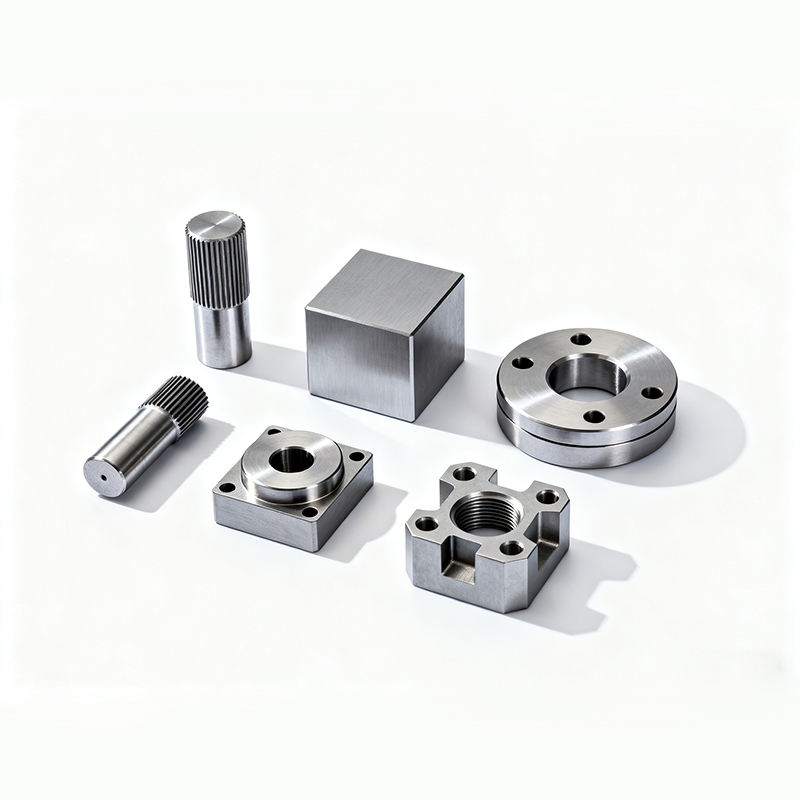
1. Why Surface Finishing Matters After CNC Machining
After CNC machining, even precision‑made titanium surfaces typically show visible tool marks and micro‑roughness. These surface features can have significant downstream effects:
Corrosion initiation sites and reduced fatigue life
Poor aesthetic appearance for visible components
Impaired coating or anodizing performance
Increased friction and wear in moving assemblies
Surface finishing improves both functional performance and visual quality, enabling parts to meet demanding standards in regulated industries.
2. Core Surface Quality Metrics and Roughness Targets
Surface quality is commonly quantified by Ra (arithmetic average roughness) or similar parameters. After machining alone, titanium surfaces often fall in a moderate roughness range (visible tool marks), requiring finishing to achieve high‑end performance.
Table 1: Typical Surface Roughness After Machining & Finishing
| Process / Finish | Typical Ra (µm) | Typical Application |
|---|---|---|
| As‑machined (CNC) | 0.8–3.2 | Functional parts where finish not critical (Runsom Precision) |
| Bead / Sand Blasting | 1.2–1.6 | Matte aesthetics, pre‑treatment (XTJ) |
| Medium Polishing | 0.4–0.8 | Wear components, semi‑gloss finish (恒科铸造) |
| Electrochemical Polishing | 0.2–0.4 | High cleanliness, corrosion sensitive (定制零件在线CNC服务) |
| Fine Polishing | 0.1–0.4 | Medical, optics (恒科铸造) |
| Mirror Polished | ≤0.05 | Luxury, optical, aerospace (恒科铸造) |
As‑machined surfaces from CNC mills typically exhibit Ra ~0.8–3.2 µm before finishing. Advanced techniques such as electropolishing can refine surfaces to Ra ~0.2–0.4 µm, while mirror finishes can push values below 0.05 µm in premium applications. (Runsom Precision)
3. Common High‑End Finishing Processes for Titanium
Finishing strategies are chosen based on function, final roughness, and part geometry. Below we profile key techniques.
3.1 Bead / Sand Blasting
Mechanical abrasion using glass or ceramic media:
Removes light tool marks
Provides uniform matte texture
Often a base for subsequent coatings or anodizing
Effective for parts requiring non‑reflective surfaces or improved adhesion.
3.2 Mechanical Polishing
Progressive buffing using abrasive belts or compounds:
Reduces Ra to 0.4–0.8 µm (medium polish)
May reach ~0.1–0.4 µm with fine polishing (恒科铸造)
Mechanical polishing is widely used where high gloss or reduced friction is critical.
3.3 Electropolishing
Electrochemical smoothing process that removes surface micro‑peaks:
Typically achieves Ra 0.2–0.4 µm on titanium (定制零件在线CNC服务)
Ideal for internal passages and complex shapes
Electropolishing simultaneously cleans and passivates the surface.
3.4 Anodizing
Electrochemical oxide growth offering both corrosion resistance and controlled color effects:
Improves oxide layer uniformity and protection
Prepares surface for colored finishes, decorative and functional
Often used on visible components that also require wear protection.
4. Functional Surface Finishing: Real Industry Data
Surface finishing not only improves appearance — it affects functional properties like corrosion resistance and fatigue performance.
Table 2: Roughness & Functional Effects
| Roughness Category | Roughness (Ra µm) | Functional Impact |
|---|---|---|
| High Roughness | 2–3.2 | High friction, micro‑crevices |
| Moderate Roughness | 1–1.6 | Adequate for non‑critical parts |
| Low Roughness | 0.2–0.8 | Reduced wear, better fatigue |
| Ultra‑Low | <0.1 | Optimal for medical/optical |
Surface finishing to low Ra values reduces stress concentrators and can enhance fatigue life in structural components.
5. Electrochemical Finishing: Electropolishing & Beyond
Electropolishing is widely used for final surface refinement, especially for medical and aerospace titanium.
Table 3: Electropolishing Results for Titanium
| Starting Ra | Final Ra After Electropolishing | Notes |
|---|---|---|
| 0.8 µm | ~0.4 µm | Typical improvement from machining (定制零件在线CNC服务) |
| 0.4 µm | ~0.2 µm | Requires good pre‑finishing (定制零件在线CNC服务) |
| 0.2 µm | ~0.1–0.2 µm | Ultra‑smooth consistent finish (定制零件在线CNC服务) |
| >3 µm | ~0.8–1.2 µm | Rough starting surface needs mechanical prep |
Electropolishing does not embed abrasive particles and produces isotropic surfaces, reducing directional microgrooving common in mechanical polishing. (定制零件在线CNC服务)
6. Anodizing & Coating Finishes for Titanium
Anodizing offers both aesthetic and functional benefits — and can be paired with high‑end machining.
Table 4: Surface Finishing Options & Typical Roughness
| Finish Type | Typical Ra (µm) | Primary Benefits |
|---|---|---|
| Bead Blast | 1.2–1.6 | Matte texture, base for coat (XTJ) |
| Anodized | 0.6–1.2 | Corrosion & color, moderate smoothness (7 Swords) |
| Electropolished | 0.2–0.4 | Ultra smooth, hygiene & wear (定制零件在线CNC服务) |
| Mirror Polish | <0.05 | Luxury, optical clarity (恒科铸造) |
| Hardcoat Anodizing | 1.0–2.0 | High wear resistance (JFManufacturer) |
Anodizing enhances corrosion resistance and provides uniform oxide coverage, often followed by sealing and baking to improve durability.
7. Surface Roughness Impact on Coating & Oxide Formation
Surface topography influences how coatings and oxide layers adhere and perform.
Table 5: Roughness Influence on Surface Coating Performance
| Roughness (Ra µm) | Coating Adhesion | Corrosion Performance |
|---|---|---|
| >2.0 | Moderate | Good |
| 1.0–2.0 | Good | Very good |
| 0.2–1.0 | Excellent | Excellent |
| <0.2 | Very high | Excellent |
Smooth finishes promote uniform anodic oxide layer formation and limit micro‑crevices that trap corrosive agents.
8. High‑Performance Finishing in Regulated Industries
In aerospace and medical applications, finishing requirements are often standardized:
Salt spray resistance (e.g., ≥500 hours without pitting)
Surface roughness documented to specified Ra tolerances
Dimensional verification after finishing
Bio‑compatibility certification for implants
Successful coordination of CNC machining and finishing steps is essential to compliance and longevity.
9. Hybrid Finishing Workflows in Modern Manufacturing
High‑end finishing often integrates multiple techniques:
Rough CNC Machining → Near net shape
Fine Machining / Grinding → Ra ~0.8–1.6 µm
Mechanical Polishing / Buffing → Ra ~0.2–0.8 µm
Electropolishing / Chemical Polishing → Ra ~0.1–0.4 µm
Anodizing or Hardcoat Oxide → Functional surface
Final Inspection & Verification
Integration of these stages — often guided by advanced process planning — enables both performance and aesthetic excellence. Practitioners reference advanced surface treatment strategies at https://www.eadetech.com to align finishing protocols with part function and material behavior.
10. Inspection & Quality Assurance for High‑End Finishes
Key inspection methods include:
Contact and non‑contact profilometry — Ra, Rz values
Visual/optical microscopy — surface flaws
Salt spray testing (ASTM B117) — corrosion resistance
Adhesion tests for coatings and anodic layers
Quality documentation is especially vital in aerospace and medical production, where traceability and compliance audits are routine.
11. Case Studies: Titanium Surface Finishing in Real Applications
Aerospace Structural Components
CNC precision to ±0.01 mm
Electropolishing + passivation
Ra ≤0.4 µm for high‑fatigue areas
Medical Surgical Tools
Electropolishing to Ra 0.2–0.4 µm
Biocompatible finishing & cleanliness
Enhanced wear resistance
High‑End Consumer Goods
Mirror polishing Ra ≤0.05 µm
Decorative anodized accents
Long‑lasting aesthetic stability
These benchmarks reflect actual industry practice and finishing standards.
12. Challenges and Solutions in High‑End Finishing
Common challenges include:
Achieving low Ra on complex curves
Avoiding micro scratches during polishing
Controlling anodic oxide thickness
Avoiding heat distortion during electropolishing
Solutions involve fixturing precision, progressive multi‑stage finishing, and process repeatability, all essential for premium quality.
13. Cost Considerations and ROI
High‑end finishing adds cost, but often yields value via:
Reduced warranty failures
Enhanced product perception
Longer service life in harsh environments
Compliance with regulatory standards
Decision‑making should balance performance gains vs finishing complexity.
14. Future Trends in Titanium Surface Finishing
Expected advancements include:
Automated finishing robots
AI‑assisted surface profiling
Nanostructured coatings for ultra‑low friction
Eco‑friendly electrochemical processes
Manufacturing resources like those found on https://www.eadetech.com provide insight into emerging trends and process integrations.
Conclusion
High‑end surface finishing for CNC machined titanium parts is a multifaceted practice encompassing mechanical, electrochemical, and hybrid techniques. The right finishing strategy — measured by roughness, corrosion resistance, mechanical performance, and appearance — transforms machined components into fit‑for‑purpose, high‑value products across aerospace, medical, consumer, and industrial sectors.
Using structured finishing workflows, optimized tooling and processes, and rigorous inspection, manufacturers can deliver titanium parts that meet both performance and aesthetic excellence standards.
Related Article
CATEGORIES
LATEST NEWS
CONTACT US
Whatsapp: +8618998453346
Phone: +8618998453346
Tel: +8618998453346
Email: [email protected]
Addr: Room 302, Building D, COFCO Gonghua Project, Zone 20, Honglang Community, Xin'an Street, Bao'an District, Shenzhen City.