English
Nickel Alloy CNC Machining for High-Temperature Applications
Writer:admin Time:2023-06-05 00:00 Browse:views
Nickel‑based superalloys — exemplified by Inconel 718, Inconel 625, and Hastelloy C276 — are among the most widely used materials in high‑temperature, high‑stress environments. They are indispensable in aerospace turbine engines, power generation, nuclear systems, and oil & gas applications because of their exceptional ability to retain strength at elevated temperatures and resist oxidation and corrosion. However, these same properties that make nickel alloys valuable also make them challenging to machine using CNC processes.
In this article, we’ll cover:
✔ Nickel alloy properties and high‑temperature suitability
✔ Machinability challenges and root causes
✔ Tooling options and wear mechanisms
✔ Recommended machining parameters
✔ Cooling and chip control strategies
✔ Dimensional control, surface integrity, and inspection
✔ Cost and productivity considerations
✔ Best practices and emerging solutions
Let’s dive in.
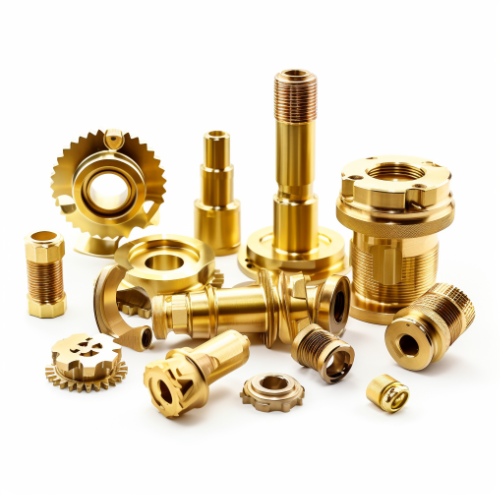
1. Properties of Nickel Alloys for High‑Temperature Use
Nickel alloys combine high strength with outstanding resistance to oxidation and corrosion at elevated temperatures. Among these, Inconel 718 is one of the most widely used superalloys for high‑temperature CNC components.
Table 1: Typical Properties of Inconel 718 (a High‑Temp Nickel Alloy)
| Property | Typical Value | Notes |
|---|---|---|
| Tensile Strength (aged) | 1240–1380 MPa | High strength at room temp and elevated temp (newaymachining.com) |
| Yield Strength (0.2%) | 1030–1180 MPa | Retains strength at high T (newaymachining.com) |
| Hardness | 330–380 HB | Promotes wear and machining difficulty (newaymachining.com) |
| Thermal Conductivity | ~11.4 W/m·K | Low conductivity increases cutting zone heat (newaymachining.com) |
| Thermal Expansion | ~13.0 µm/m·°C | High expansion affects fixturing (newaymachining.com) |
| Operating Temp (creep) | Up to ~700°C | Maintains mechanical integrity at high T (newaymachining.com) |
Nickel alloys like Inconel maintain mechanical integrity where steels and aluminum alloys rapidly lose strength — a critical requirement for engine parts, turbine blades, and heat exchangers.
2. CNC Machinability Challenges of Nickel Alloys
Despite their desirable service properties, nickel alloys are among the most difficult machining materials due to several key attributes:
2.1 Work Hardening
Nickel alloys tend to work harden rapidly under cutting strain. Even a single pass can raise surface hardness significantly, forcing subsequent passes to remove ever‑harder material. This leads to increased cutting forces and rapid tool wear. (jhmim.com)
2.2 Low Thermal Conductivity
Because heat from cutting stays concentrated at the tool‑workpiece interface (e.g., ~900–1000+°C at the cutting edge for Inconel 718), tools soften and wear prematurely. (eprints.utm.my)
2.3 High Strength at Elevated Temperature
Nickel alloys retain high strength even at elevated temperatures, meaning they resist deformation and cutting, unlike other metals that soften under heat.
2.4 Chemical Affinity and Diffusion Wear
At elevated temperatures, nickel atoms can diffuse into tooling material, weakening tool grain structures and making tools dull faster. (MDPI)
These inherent difficulties result in accelerated tool wear, high cutting forces, poor surface integrity, and dimensional control challenges when CNC machining nickel alloys.
3. Tooling Materials and Wear Mechanisms
Choosing the right tooling strategy is critical for machining nickel alloys cost‑effectively and reliably.
3.1 Tool Material Options
| Tool Material | Typical Use | Key Advantage | Limitations |
|---|---|---|---|
| Coated Carbide | Roughing & Semi‑finishing | Cost‑effective, versatile | Moderate heat resistance |
| Ceramic Inserts | High‑temperature finishing | Excellent hot hardness | Brittle, low toughness |
| PCBN (Cubic Boron Nitride) | Finishing | Excellent wear resistance | Expensive |
| CVD/PVD Coatings | Carbide upgrade | Improve wear resistance | Limited by base tool |
Carbide with TiAlN/AlCrN coatings is commonly used for general machining, but superalloys benefit from CBN or ceramic tools when high temperatures and abrasive wear are expected. (newaymachining.com)
3.2 Tool Wear Mechanisms
Abrasive Wear: Hard phases and work‑hardened surfaces polish or chip tool edges.
Diffusion Wear: High temperature causes tool material to dissolve into workpiece surface.
Notching and BUE (Built‑Up Edge): Tool edges accumulate material, then shed it, damaging the edge.
Crater Wear: Rake face erosion from chip interaction.
Understanding these mechanisms guides selection of tool material, coating, tool geometry, and process parameters.
4. Recommended CNC Machining Parameters
Optimized speeds and feeds for nickel alloys differ greatly from softer metals. Table 2 summarizes typical CNC parameters used by machining specialists and supported by research data.
Table 2: Recommended CNC Parameters for Nickel Alloys
| Operation | Cutting Speed (m/min) | Feed (mm/rev) | Depth of Cut (mm) | Coolant |
|---|---|---|---|---|
| Rough Turning | 20–35 | 0.15–0.30 | 1.5–3.0 | High‑pressure flood |
| Finish Turning | 40–60 | 0.05–0.15 | 0.5–1.0 | High‑pressure flood |
| Rough Milling | 20–30 | 0.10–0.25 | 1.0–3.0 | High‑pressure flood |
| Finish Milling | 35–50 | 0.03–0.10 | 0.3–1.0 | High‑pressure flood |
| Drilling | 10–20 | 0.08–0.15 | — | Peck + coolant |
| Boring | 15–30 | 0.02–0.08 | — | High‑pressure flood |
These ranges are derived from both industry practice and academic studies specifically for Inconel 718 and similar alloys used in high‑temperature applications. (newaymachining.com)
Engineering insight: Lower speeds reduce heat buildup, while moderate to high feeds prevent excessive rubbing and work hardening ahead of the tool.
5. Cooling & Lubrication Strategies
Because nickel alloys trap heat at the cutting edge, controlling temperature is paramount.
5.1 Coolant Approaches
| Cooling Method | Heat Control | Chip Evacuation | Typical Cost |
|---|---|---|---|
| Flood Coolant | Moderate | Fair | Low |
| High‑Pressure Coolant (HPC) | High | Excellent | Medium |
| Minimum Quantity Lubrication (MQL) | Reduced heat | Limited | Low |
| Cryogenic Cooling | Very High | Moderate | High |
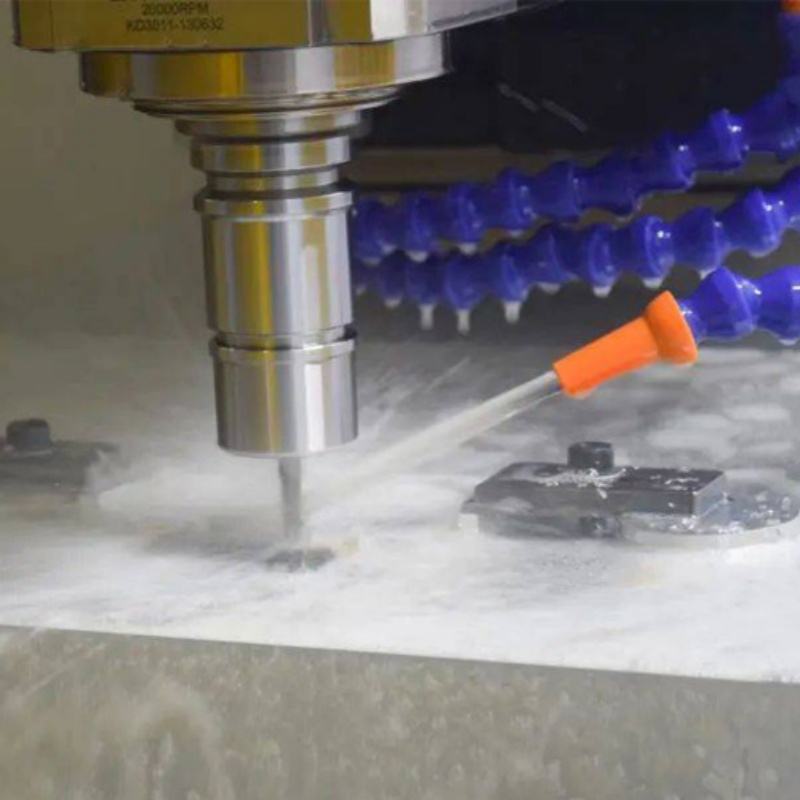
High‑pressure coolant (80–150 bar or more) directed at the tool‑workpiece interface improves cooling and chip flushing, reducing cutting temperature and tool wear rates. Cryogenic cooling (e.g., liquid nitrogen) is even more effective but incurs higher system cost and complexity.
6. Chip Formation and Control
Chip control influences surface finish, tool life, and process stability. Nickel alloys form long, continuous chips that trap heat if not broken.
6.1 Chip Control Techniques
Chip breakers on inserts
Trochoidal milling for roughing
Climb milling for better surface finish
High‑pressure coolant to break chips and evacuate them
Proper chip control reduces contact time between the chip and cutting edge, lowering temperature and tool wear.
7. Surface Integrity & Tolerance Control
High‑temperature applications often demand tight surface finishes and dimensional accuracy, because surface condition influences fatigue life and high‑temperature performance.
7.1 Typical Surface Finish Targets
| Application | Surface Roughness (Ra) | Tolerance |
|---|---|---|
| Structural parts | ≤ 1.6 µm | ±0.05 mm |
| Rotating components | ≤ 0.8 µm | ±0.02 mm |
| Sealing surfaces | ≤ 0.4 µm | ±0.01 mm |
Achieving these finishes typically requires finishing passes at reduced feeds and depths, and sometimes secondary grinding or polishing.
8. Inspection & Quality Assurance
Machined nickel alloy parts for high‑temperature applications must undergo rigorous inspection.
8.1 Common Inspection Methods
| Method | Purpose |
|---|---|
| CMM (Coordinate Measuring Machine) | Dimensional verification |
| Surface Profilometer | Surface finish measurement |
| NDT (Ultrasonic/X‑Ray) | Internal defect detection |
| Hardness Testing | Verify post‑machining properties |
High‑temperature structural components often require traceability and documentation for safety‑critical applications such as aerospace certification.
9. Cost Breakdown & Productivity Considerations
Machining nickel alloys is inherently more expensive than machining steels or aluminum due to material cost and process complexity.
Table 3: Typical Cost Structure for Nickel Alloy CNC Parts
| Cost Factor | % of Total Cost |
|---|---|
| Raw Material | 30–50% |
| Machining Time | 25–40% |
| Tooling & Wear | 10–25% |
| Inspection & QA | 5–15% |
| Overhead | 5–10% |
High tooling and machining time percentages reflect both slow cutting speeds and frequent tool changes due to wear.
10. Design for Machinability
Design modifications can reduce machining cost and improve part quality:
Minimize deep pockets
Avoid sharp corners
Optimize wall thickness to reduce heat concentration
Use fillets to reduce stress concentration
Early involvement of manufacturing engineering improves design outcomes and reduces costly rework.
11. Case Study: Aerospace Turbine Disk Machining
An aerospace turbine disk made from Inconel 718 (high‑temp alloy) was machined with:
Carbide tools coated with TiAlN
High‑pressure coolant at 120 bar
Adaptive roughing with trochoidal toolpaths
Surface finish Ra ≤ 0.8 µm
Results included tool life extension of 30%, close tolerance achievement (±0.01 mm), and consistent surface quality across batches — demonstrating optimized processes improve both quality and cost.
12. Emerging Machining Technologies
To address challenges with high‑temperature alloys, manufacturers are increasingly turning to:
AI‑assisted parameter optimization
Sensor‑driven tool wear monitoring
Hybrid additive‑subtractive processes (AM + CNC)
Cryogenic cooling integrated with multi‑axis CNC
These approaches reduce tool wear, improve finish and reduce machine cycle times.
For additional in‑depth case studies and machining parameter guides specific to difficult alloys like Inconel and other nickel superalloys, you can refer to specialized content at https://www.eadetech.com, a resource covering advanced CNC machining strategies and solutions.
13. Summary & Best Practices
Nickel alloy CNC machining for high‑temperature applications is complex due to work hardening, heat buildup, and tool wear. Best practices include:
✔ Use high‑performance tooling with appropriate coatings
✔ Optimize speeds and feeds conservatively
✔ Employ high‑pressure coolant or cryogenic methods
✔ Control chip formation to improve surface interaction
✔ Apply rigorous inspection and quality control
As manufacturing technology evolves, leveraging predictive analytics and hybrid processes helps push efficiency further while maintaining integrity in high‑temperature service components.
For practical tool selection advice and machining workflows tailored to superalloys and challenging conditions, https://www.eadetech.com offers targeted insights into CNC practices and industrial solutions.
Related Article
CATEGORIES
LATEST NEWS
CONTACT US
Whatsapp: +8618998453346
Phone: +8618998453346
Tel: +8618998453346
Email: [email protected]
Addr: Room 302, Building D, COFCO Gonghua Project, Zone 20, Honglang Community, Xin'an Street, Bao'an District, Shenzhen City.