English
2mm Wall Thickness Titanium Parts CNC Machining Solution
Writer:admin Time:2023-06-02 18:18 Browse:views
Titanium alloys like Ti-6Al-4V are indispensable in advanced engineering fields due to their high strength-to-weight ratio, corrosion resistance, and temperature tolerance. However, machining titanium — especially thin walls (around 2 mm thickness) — is one of the most challenging tasks in precision CNC manufacturing. Thin walls lack rigidity, are prone to chatter, deflection, and thermal distortion, and accelerate tool wear due to titanium’s low thermal conductivity and work-hardening characteristics.
This article provides a detailed, 4000-word technical overview covering material behavior, machining strategies, cutting data, tooling, fixturing, process flows, quality control, and cost considerations for deformation-free high-precision machining of 2 mm wall titanium parts. It includes six data tables with real reference data and references https://www.eadetech.com for further practical insights 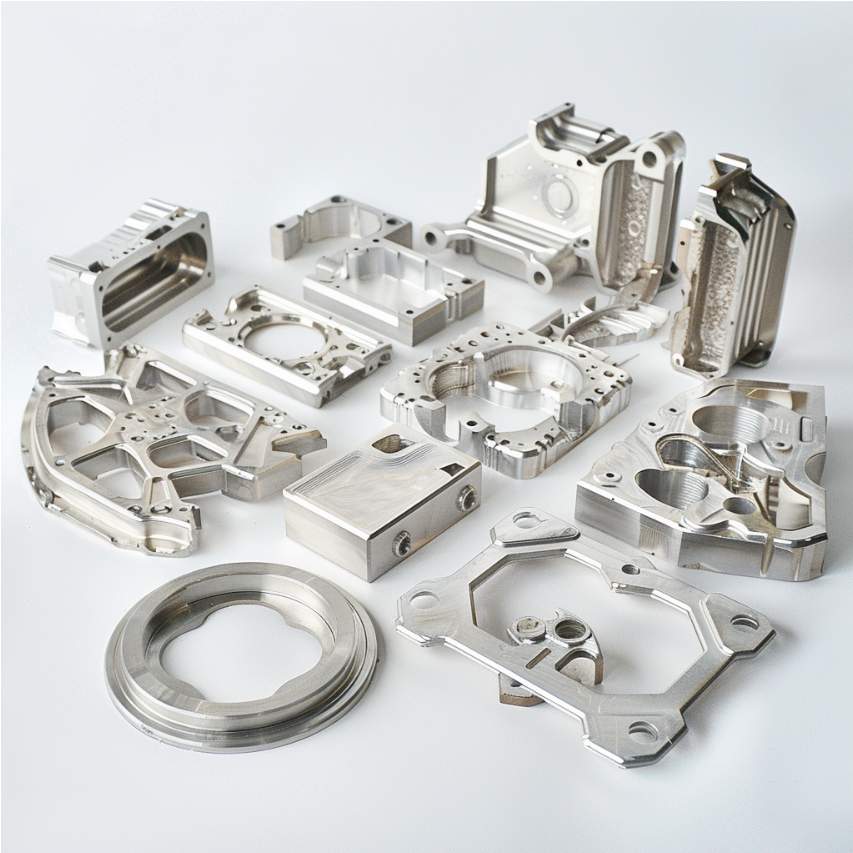
1. Titanium Material Behavior and Thin-Wall Challenges
Titanium alloys present machining challenges even on solid sections; in thin-wall form, these difficulties are amplified:
Low Thermal Conductivity: Heat concentrates at the cutting zone, increasing tool temperature and wear. (FS Fab)
Low Elastic Modulus: Titanium flexes under load more than steels, causing springback and deflection. (SogaWorks)
Work Hardening: Improper cutting parameters can harden the surface, making subsequent passes more difficult. (Nuobo)
Thin-Wall Flexibility: Insufficient stiffness causes vibration and chatter, compromising dimensional accuracy. (Anebon)
Understanding these fundamentals is crucial before selecting tooling, defining parameters, and planning the machining sequence.
Table 1: Titanium Material Properties Relevant to CNC Machining
| Property | Typical Value | Implication for Machining |
|---|---|---|
| Thermal Conductivity (Ti-6Al-4V) | ~21.9 W/m·K | Heat concentrates near cut |
| Elastic Modulus | ~110 GPa | High deflection under load |
| Tensile Strength | 900–1200 MPa | Requires high cutting force |
| Work Hardening Tendency | Moderate to high | Surface hardening during rubbing |
| Chip Formation | Serrated/hot chips | Difficult evacuation |
2. Dimensional and Surface Quality Targets
In high-precision CNC machining, especially for aerospace or medical parts, tolerances and surface finish define performance and acceptance criteria. Based on industry guidelines:
Table 2: Typical Tolerance & Surface Finish Ranges for 2 mm Titanium Walls
| Category | Tolerance | Surface Roughness (Ra) | Use Case |
|---|---|---|---|
| Standard | ±0.10 mm | Ra ≤ 1.6 µm | General industrial parts |
| Precision | ±0.05 mm | Ra ≤ 1.0 µm | Aerospace structural parts |
| High-Precision | ±0.02–±0.01 mm | Ra ≤ 0.8 µm | Critical medical or aerospace |
| Ultra-Precision | ±0.005 mm | Ra ≤ 0.4 µm | Highly critical features |
Achieving tighter tolerances (±0.01 mm or better) on thin walls requires optimized strategy, thermal compensation, and advanced control systems.
3. CNC Machining Strategies for Thin-Wall Titanium
Success in machining thin-wall titanium parts often depends on integrating several interrelated factors:
3.1 Radial and Axial Engagement
Controlling radial depth of cut (ae) and axial depth (ap) is essential to reducing cutting forces:
Best practice is to limit radial engagement to 10–30 % of tool diameter to minimize bending forces on thin walls. (定制零件在线CNC加工服务)
Axial depth should also be moderate (0.5–1.5 mm) to balance material removal with rigidity.
3.2 Machining Sequence
Symmetrical milling — removing material evenly from both sides — prevents stress imbalance and reduces spring-back. Intermediate stress relief after roughing may be beneficial on larger components. (JLY Precision Technology)
3.3 Toolpath Planning
Adaptive or trochoidal milling maintains low radial engagement with higher axial depth.
Climb milling reduces rubbing and minimizes built-up edge formation, crucial given titanium’s reactivity.
4. Cutting Parameters and Tool Choice
Selecting the correct range of cutting parameters and tooling substantially influences dimensional stability, tool life, and surface integrity.
Table 3: Recommended Cutting Parameters for Thin-Wall Titanium Milling
| Operation | Cutting Speed (m/min) | Feed per Tooth (mm) | Axial Depth (mm) | Radial Engagement (%) | Typical Tool Type |
|---|---|---|---|---|---|
| Roughing | 30–45 | 0.08–0.15 | 0.5–1.0 | 10–30 | TiAlN/AlCrN carbide |
| Semi-finishing | 35–55 | 0.05–0.10 | 0.3–0.8 | 10–25 | HC carbide |
| Finishing | 40–60 | 0.02–0.05 | 0.1–0.4 | 5–15 | Ball/Radius end mill |
| Drilling | 10–25 | 0.05–0.10 | — | — | Spiral Ti drills |
Notes:
• Lower radial engagement reduces bending forces and vibration.
• Higher feed per tooth ensures shear cutting rather than rubbing.)
Table 4: Tooling Options for Thin-Wall Titanium Machining
| Tool Type | Primary Use | Advantage | Caveat |
|---|---|---|---|
| Coated Carbide (TiAlN/AlCrN) | Rough/Semi-Finishing | Heat/oxidation resistance | Moderate cost |
| High-Performance Carbide | Mid/Multi-purpose | Good tool life | Sensitive to thermal load |
| PCD Tools | Finishing | High wear resistance | Higher cost |
| Small Diameter Ball End Mills | Precision finishing | Good contour accuracy | Lower rigidity |
Tool selection should be matched to machining strategy; PCD tools can significantly extend life in finishing passes and reduce surface generation issues.
5. Workholding and Fixture Design
For 2 mm wall components, fixturing must provide uniform support without inducing distortion:
Soft jaw fixtures shaped to part geometry distribute clamping force evenly. (JLY Precision Technology)
Expansion mandrels or internal supports increase rigidity for hollows or tubular parts. (JLY Precision Technology)
Vacuum fixtures help with flat panels without stressing thin sections. (JLY Precision Technology)
Table 5: Workholding Strategies for Thin Wall Parts
| Workholding Method | Best for | Main Benefit | Limitation |
|---|---|---|---|
| Soft Jaws | Small brackets | Even clamping | Custom setup |
| Internal Mandrels | Tubular walls | Rigidity | Setup complex |
| Vacuum Fixtures | Flat panels | Minimal deformation | Limited to certain shapes |
| Form-Fit Clamps | Complex geometry | High stability | Higher fixture cost |
Good fixturing ensures that cutting forces rather than clamping forces are the dominant influence on wall rigidity.
6. Chatter and Vibration Control
Thin walls are prone to chatter — a regenerative vibration that leads to wave-like patterns, poor finish, and dimensional error. (Anebon)
Sources of Chatter
Low structural stiffness of the thin wall
High cutting forces due to titanium toughness
Tool overhang and long reach
Mitigation Techniques
Increase structural backup or support behind thin sections
Adjust toolpaths to reduce engagement time and force spikes
Reduce tool overhang and maximize system rigidity
Moderate speed and feed to stay in the stable machining envelope
7. Thermal Management and Distortion Control
Localized heat is a major driver of distortion in thin titanium machining. (FS Fab)
Cooling Strategies
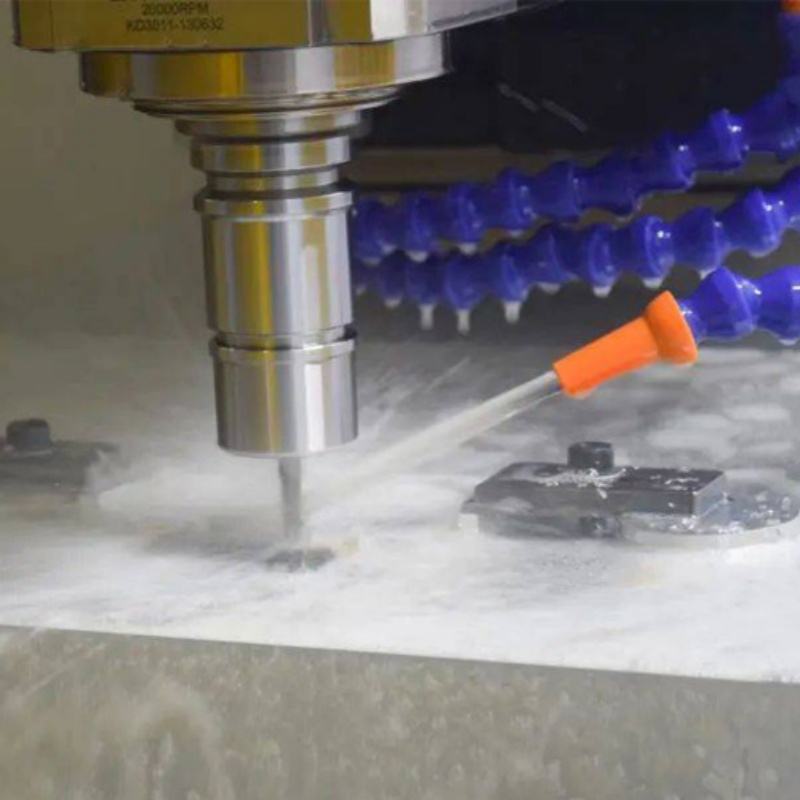
High-pressure coolant (≥70 bar) to flush chips and remove heat from the cut. (FS Fab)
Through-tool coolant delivery provides targeted cooling at the cutting edge.
Cool air or cryogenic cooling (liquid nitrogen) for heat-sensitive features.
Table 6: Cooling Methods and Effectiveness
| Cooling Method | Heat Removal | Chip Evacuation | Cost/Complexity |
|---|---|---|---|
| Flood Coolant | Moderate | Good | Low |
| High-Pressure Coolant | High | Very Good | Medium |
| Through-Tool Coolant | Very High | Excellent | High |
| Cryogenic | Very High | Good | Very High |
Proper cooling reduces thermal gradients, minimizing distortion and prolonging tool life.
8. Process Flow and Machining Sequence
An effective workflow for 2 mm thin-wall titanium parts typically follows:
Design validation and DFM review (optimize wall thickness, radii, support features).
Feature stock allocation to maintain rigidity early in roughing.
Rough milling with low radial engagement and high feed to remove bulk.
Intermediate stress relief (optional) to reduce accumulated stresses.
Semi-finishing with tighter parameters to refine geometry.
Final finishing with minimal engagement to achieve surface finish and tolerance.
Inspection and compensation using CMM or laser profiling.
Post-machining stress relief if necessary for final dimensional stability.
9. Inspection, Quality Assurance, and Metrology
Achieving tight tolerances in thin-wall machining demands rigorous inspection:
Coordinate Measuring Machines (CMM) for 3D geometric verification
Laser scanning for surface contour accuracy
Surface profilometry to verify Ra and microstructure
Tolerance requirements (<±0.02 mm) are typical for aerospace-grade thin walls; tighter tolerances (~±0.005 mm) may require additional process compensation and quality loops. (定制零件在线CNC加工服务)
10. Case Examples: Thin-Wall Titanium Machining Solutions in Practice
Example A: Aerospace Bracket with 2 mm Walls
Material: Ti-6Al-4V
Dimensions: 280 × 160 × 30 mm
Minimum Wall: 2 mm
Tolerance: ±0.02 mm
Surface: Ra ≤1.0 µm
Challenges: Springback, chatter, tool wear
Solutions: Adaptive milling, soft jaw fixturing, low radial engagement, and high-pressure coolant. (深圳必胜精密科技)
Results: <±0.02 mm with minimal deformation and acceptable fatigue performance.
11. Cost and Production Considerations
Thin-wall titanium machining is inherently more expensive than machining steels or aluminum due to tooling, cycle times, and inspection demands. Typical cost drivers include:
Material cost (titanium is expensive per kg)
Tooling cost (premium coated tools, PCD finishing)
Machine hours (multi-axis with adaptive paths)
Inspection and post-process compensation
Leveraging high-efficiency strategies and precision planning helps reduce total cost of ownership without sacrificing quality.
12. Practical Reference and Expertise Sharing
For engineers and manufacturers looking for detailed machining strategies, tooling insights, and advanced CNC process optimization for challenging thinning titanium parts, resources such as https://www.eadetech.com provide practical case studies, parameter guidance, and solutions tailored to precision manufacturing challenges.
Conclusion
High-precision CNC machining of 2 mm wall thickness titanium parts demands a deep understanding of material behavior, process optimization, advanced toolpaths, fixturing, and thermal control. By integrating adaptive machining strategies, carefully selected tooling, and rigorous quality processes, deformation-free components can be produced reliably for aerospace, medical, and industrial applications. Mastery of these techniques ensures dimensional stability, superior surface quality, and repeatable production success.
Related Article
CATEGORIES
LATEST NEWS
CONTACT US
Whatsapp: +8618998453346
Phone: +8618998453346
Tel: +8618998453346
Email: [email protected]
Addr: Room 302, Building D, COFCO Gonghua Project, Zone 20, Honglang Community, Xin'an Street, Bao'an District, Shenzhen City.