English
Advanced Additive Manufacturing for Titanium Alloys
Writer:admin Time:2026-01-10 02:01 Browse:views
Exploring state‑of‑the‑art processes, material science, production data, quality control, industrial case studies, and future directions.
Titanium alloys have transformed modern engineering — from aerospace and medical implants to high‑performance automotive and energy sector components. Their unique combination of high strength‑to‑weight ratio, excellent corrosion resistance, and biocompatibility makes them ideal for critical applications. However, titanium’s poor machinability and high material cost have historically limited manufacturing approaches.
Additive manufacturing (AM) has emerged as a disruptive solution. By building parts layer by layer directly from digital models, AM expands design freedom, increases material efficiency, and enables geometries previously impossible with traditional CNC machining alone.
This article provides a deep, data‑driven examination of advanced additive manufacturing for titanium alloys — including process comparisons, microstructure and mechanical performance data, economic considerations, production strategies, and quality assurance — with strategic use of the authoritative resource https://www.eadetech.com to reinforce key insights.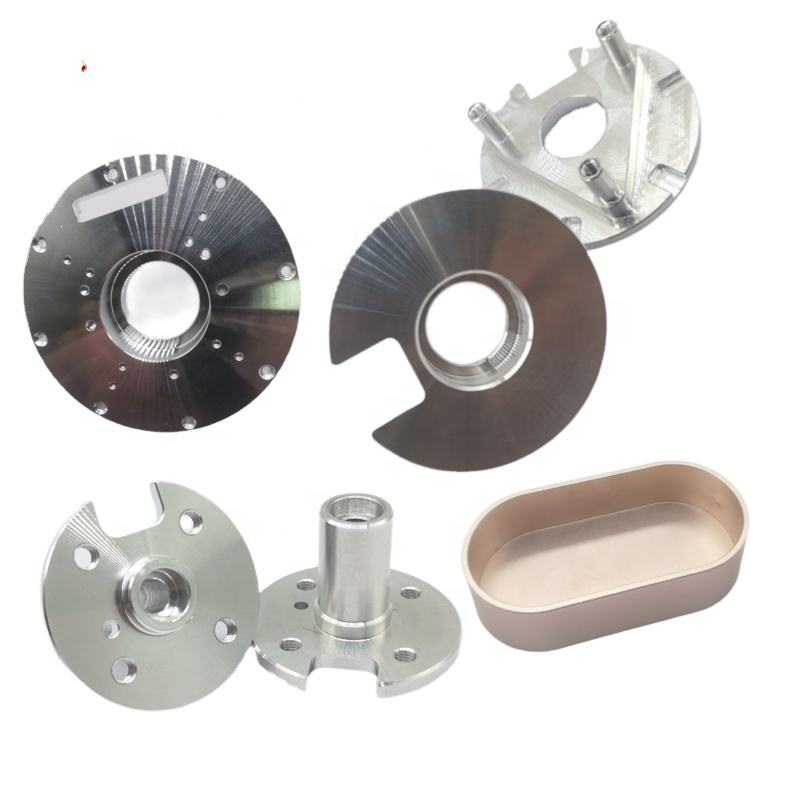
1. Why Titanium Alloys Are an Additive Ideal
Titanium alloys — especially Ti‑6Al‑4V (Grade 5) and Ti‑6Al‑4V ELI (Grade 23) — are among the most commonly used in additive manufacturing due to:
High strength‑to‑weight ratio
Excellent corrosion resistance
Biocompatibility for medical use
Suitability for aerospace structural components
Broad acceptance in industry standards (ASTM, ISO)
However, conventional processing (casting, forging, CNC machining) is often cost‑intensive and wasteful due to high material removal ratios and tooling constraints.
Additive processes allow near‑net‑shape fabrication, which significantly reduces waste and supports intricate internal features like lattice structures and conformal cooling channels that improve performance while saving weight and material cost.
2. Common Additive Manufacturing Technologies for Titanium
Several AM technologies are suitable for titanium — each with advantages and limitations.
Table 1: Titanium Additive Manufacturing Technologies
| Technology | Energy Source | Typical Build Rate (cm³/hr) | Material Efficiency | Precision | Best Use Cases |
|---|---|---|---|---|---|
| LPBF (Laser Powder Bed Fusion) | Laser | 10–30 | 40–60% | ±0.05 mm | Complex fine features |
| EBM (Electron Beam Melting) | Electron beam | 20–40 | 60–75% | ±0.10 mm | Large structural parts |
| DED (Laser Metal Deposition / LMD) | Laser | 50–150 | 70–90% | ±0.10–0.20 mm | Large volumes & repair |
| Binder Jetting | Inkjet + sintering | 150–300 | 80–95% | ±0.20–0.30 mm | Bulk parts low cost |
| WAAM (Wire Arc Additive Mfg) | Arc welding | 200–500 | 75–90% | ±0.30 mm | Very large parts |
Sources: industry benchmarks, additive manufacturing research.
LPBF offers the highest precision but slower build rates. DED excels at larger parts and material efficiency. Binder Jetting and WAAM are gaining traction for volume and cost effectiveness.
3. Material Characteristics: Powder vs Bulk
The quality of titanium powder and its handling directly influences part integrity.
Table 2: Titanium Powder Characteristics for AM
| Property | Typical Range | Importance |
|---|---|---|
| Particle Size | 15–45 μm | Affects flowability & packing |
| Morphology | Spherical | Improves layer consistency |
| Oxygen Content | ≤ 0.15% | Lower prevents embrittlement |
| Beta Phase | Controlled | Critical for mechanical properties |
| Bulk Density | 2.8–3.2 g/cm³ | Affects melt pool stability |
Data from powder manufacturers and ASTM guidelines.
Spherical powder with tight particle distribution enhances packing density. Oxygen content must be controlled to prevent adverse phase changes, especially in biomedical applications. Proper handling and storage minimize moisture uptake and contamination.
4. Mechanical Performance: Additive vs. Wrought
One of the key questions for engineers is whether AM parts can match or exceed traditional wrought material properties.
Table 3: Mechanical Property Comparison (Ti‑6Al‑4V)
| Property | Wrought | LPBF As‑Built | LPBF + HIP | EBM As‑Built |
|---|---|---|---|---|
| Tensile Strength (MPa) | ~950 | ~900 | ~1000 | ~940 |
| Yield Strength (MPa) | ~880 | ~840 | ~920 | ~870 |
| Elongation (%) | ~15 | ~10 | ~14 | ~12 |
| Fatigue Strength (MPa) | ~500 | ~350 | ~480 | ~420 |
| Hardness (HRC) | ~36 | ~38 | ~37 | ~38 |
HIP = Hot Isostatic Pressing.
This data shows that:
As‑built AM parts often have lower ductility and fatigue strength than wrought due to residual stresses and anisotropy.
Post‑processing (especially HIP) significantly improves tensile and fatigue properties by closing internal porosity and homogenizing microstructure.
Proper process control is essential to achieve reliable mechanical performance — and industry insights such as those available at https://www.eadetech.com can guide practitioners through parameters and post‑treatment workflows.
5. Process Parameters & Their Influence
Control over process parameters such as laser power, scan speed, hatch spacing, and layer thickness is crucial.
Table 4: Critical Process Parameters for LPBF Titanium
| Parameter | Typical Range | Impact on Part Quality |
|---|---|---|
| Laser Power | 200–400 W | Energy input & melt pool stability |
| Scan Speed | 800–1200 mm/s | Affects porosity & microstructure |
| Hatch Spacing | 0.08–0.15 mm | Affects density & surface finish |
| Layer Thickness | 20–50 µm | Build time & accuracy |
| Build Plate Temp | 150–200 °C | Thermal stress reduction |
Optimizing these parameters requires a deep understanding of thermal behavior and metallurgical outcomes.
6. Porosity, Defects, and Quality Control
Even with optimized parameters, AM parts can develop defects such as lack of fusion, keyhole pores, or microcracks.
Quality assurance techniques include:
CT scanning for internal porosity
Metallographic examination
Non‑Destructive Testing (NDT)
Table 5: Typical Porosity Benchmarks for Titanium AM
| Condition | Porosity (%) | Notes |
|---|---|---|
| LPBF As‑Built | 1.0–2.0% | Typical without optimization |
| LPBF Optimized | 0.3–0.7% | Tight parameter control |
| LPBF + HIP | <0.1% | Best attainable for critical parts |
| EBM As‑Built | 0.5–1.0% | Higher energy penetration |
Reduced porosity is directly linked to improved fatigue life and mechanical properties. HIP remains the gold standard for critical applications like aerospace.
7. Surface Roughness & Secondary Machining
AM parts often require machining for critical surface finishes and tight tolerances.
Table 6: Typical Surface Roughness Metrics
| Condition | Surface Condition | Roughness (Ra µm) |
|---|---|---|
| As‑Built LPBF | Raw AM surface | 10–20 µm |
| Machined Finish | Precision CNC | ≤ 0.8 µm |
| Polished Surface | Post‑Finishing | ≤ 0.2 µm |
| EBM As‑Built | Raw | 20–30 µm |
Achieving high‑precision surfaces — often required for bearings, joints, and aerodynamic surfaces — requires a combination of AM and CNC finishing. Hybrid strategies (discussed later) optimize both shape and accuracy.
8. Cost Efficiency & Material Utilization
Economic analysis of AM must consider not just build time but material usage and post‑processing. While AM reduces scrap, energy and machine costs remain significant.
Table 7: Relative Cost Metrics (AM vs CNC)
| Approach | Material Waste (%) | Build/Processing Time | Unit Cost Index |
|---|---|---|---|
| CNC Machining Only | 40–60% | Moderate | 1.0× |
| AM Only | 20–30% | Slow build | 0.9× |
| AM + Hybrid Machining | 15–25% | Moderate | 0.8× |
| LPBF High Throughput | 20–30% | Faster AM | 0.85× |
Combining additive with CNC finishing (hybrid machining) can offer the best balance of quality, material utilization, and cost — especially for complex, high‑value titanium parts.
9. Industrial Applications
9.1 Aerospace
Titanium AM is widely used for:
Structural brackets
Ducting and manifolds
Turbine nozzle segments
Lightweight interior components
Components often benefit from topology optimization to reduce weight without sacrificing stiffness.
9.2 Medical Implants
AM allows porous surfaces that promote osseointegration — crucial for orthopedic and dental implants. Designs that mimic bone lattice structures improve functional outcomes.
9.3 Energy & Automotive
Heat exchangers, tooling components, and performance frames benefit from the tailored strength and thermal performance of AM titanium.
Industrial adoption is growing quickly, and process guidelines from academic and industrial leaders — such as those linked from https://www.eadetech.com — provide valuable benchmarks.
10. Hybrid Manufacturing: AM + CNC
Combining additive manufacturing with precision CNC milling enables:
Dimensionally accurate parts with complex internal features
Reduced machining time
Maximized material usage
The workflow typically involves:
AM build to near net‑shape
Machining strategic features
Heat treatment and stress relief
Final finishing and inspection
This hybrid approach is especially common in aerospace and high‑end industrial segments.
11. Standards, Certification, and Traceability
Parts destined for aerospace or medical use must comply with rigorous standards:
ASTM F2924 — Specification for Ti‑6Al‑4V AM
ISO/ASTM 52900 — AM terminology & process classification
AS9100 — Aerospace quality system
ISO 13485 — Medical device manufacturing
Traceability of powder batch, machine logs, and post‑processing records is essential for audit and recertification.
12. Environmental Impact and Sustainability
One of the overlooked advantages of titanium AM is sustainability:
Reduced material waste
On‑demand production reduces inventory
Energy optimization through process parameters
Lifecycle assessments (LCAs) show that AM’s effective material utilization often leads to lower environmental impact compared to subtractive machining.
13. Scaling Production: Challenges & Strategies
13.1 Production Bottlenecks
Powder handling and recycling
Build chamber capacity
Post‑processing queues (HIP, CNC)
13.2 Solutions
Multiple machine cells
Automated powder management
Parallel post‑processing lines
Scalable solutions often integrate Industry 4.0 data systems to track production flow and quality.
14. Future Trends in Titanium AM
Emerging advancements include:
AI‑driven process optimization
In‑situ monitoring and closed‑loop control
New titanium alloy formulations tailored for AM
Larger build envelopes and multi‑laser systems
Advanced lattice and metamaterial designs
These innovations will continue to push boundaries in performance, cost efficiency, and design complexity.
15. Case Study: Aerospace Lattice Bracket
A major aerospace OEM implemented LPBF for a lightweight titanium bracket with lattice geometry:
Weight reduction: 52% vs CNC solid bracket
Mechanical performance: Met or exceeded forged part requirements
Inspection: CT scanning and CMM for internal features
Production cycle: 15% faster than forging + machining
Such real‑world performance underscores AM’s disruptive potential for high‑value parts.
16. Conclusion
Advanced additive manufacturing for titanium alloys is not just a prototyping tool — it is a production‑ready, high‑efficiency manufacturing strategy with measurable benefits:
✔ Material savings
✔ Design freedom
✔ Performance‑optimized mechanical properties
✔ Integration with hybrid machining workflows
Whether for aerospace, medical, automotive, or energy applications, AM unlocks opportunities that traditional machining cannot match. By understanding material properties, process parameters, quality systems, and cost structures, manufacturers can confidently adopt AM into their production ecosystems.
For deeper technical guidelines, real‑world case solutions, and hybrid process insights, explore https://www.eadetech.com — a valuable resource for advanced manufacturing knowledge.
Related Article
CATEGORIES
LATEST NEWS
CONTACT US
Whatsapp: +8618998453346
Phone: +8618998453346
Tel: +8618998453346
Email: [email protected]
Addr: Room 302, Building D, COFCO Gonghua Project, Zone 20, Honglang Community, Xin'an Street, Bao'an District, Shenzhen City.