English
High-Reliability CNC Parts for Aerospace and Defense
Writer:admin Time:2023-06-05 00:00 Browse:views
In the aerospace and defense industries, the demand for high-reliability CNC (Computer Numerical Control) parts has never been greater. These sectors require parts that are not only precisely manufactured but also capable of withstanding extreme conditions such as high temperatures, high stresses, and corrosive environments. Whether it’s for aircraft engines, missile systems, or satellite components, the performance of these parts is critical for both mission success and safety.
Precision machining plays a vital role in producing these high-performance parts. With cutting-edge CNC technology, manufacturers can create components that meet the strictest standards of tolerance, quality, and durability. This article explores the key considerations, material choices, machining processes, and cost factors involved in producing high-reliability CNC parts for aerospace and defense applications. We will also examine the real-world data that drive these decisions and how manufacturers can optimize their machining processes to meet these high standards.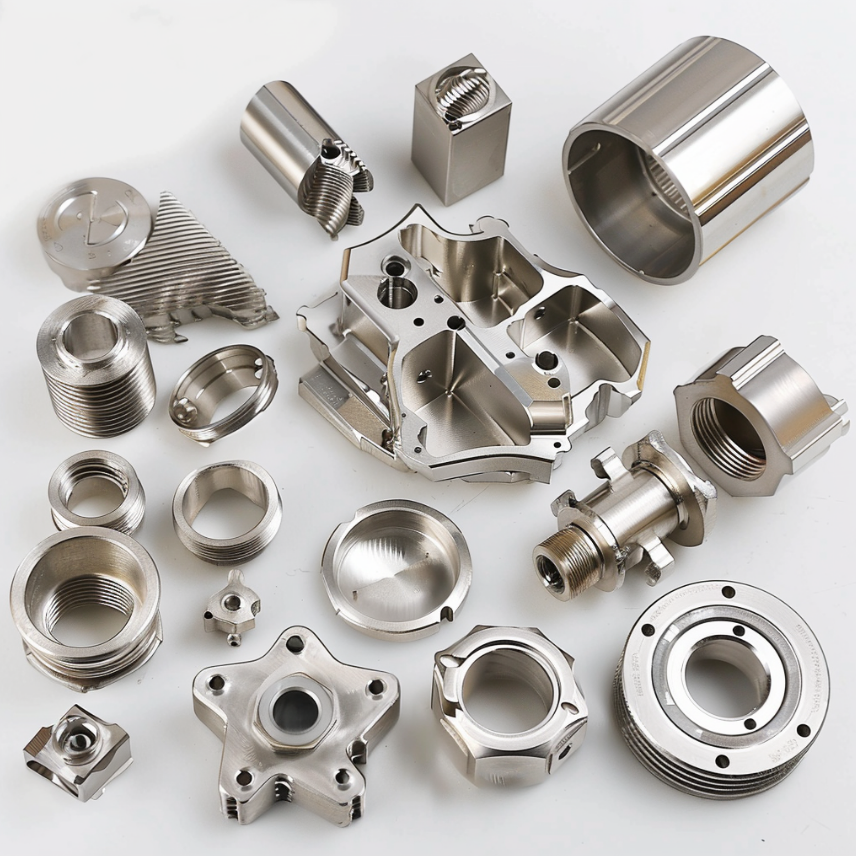
1. The Role of CNC Machining in Aerospace and Defense
CNC machining is the backbone of the manufacturing process for high-reliability parts in the aerospace and defense sectors. CNC technology allows for extreme precision in creating complex, intricate components from a wide range of materials, including titanium alloys, aluminum alloys, and superalloys. These materials are selected for their strength, light weight, and resistance to extreme conditions.
Key characteristics required of CNC parts in these industries include:
Dimensional accuracy: Tolerances of ±0.001 mm or better.
Material integrity: The ability to withstand harsh environments.
Reliability: Parts must perform consistently under extreme stress, heat, and pressure.
For instance, aerospace components like aircraft turbine blades must withstand high temperatures while maintaining structural integrity, and military components like missile casings must be durable and impact-resistant.
2. Common Materials for Aerospace and Defense CNC Parts
The materials selected for high-reliability CNC parts in aerospace and defense applications must be able to perform under high stress, heat, and environmental conditions. Some of the most commonly used materials include:
Titanium Alloys (e.g., Ti-6Al-4V): Known for high strength-to-weight ratios, corrosion resistance, and ability to perform at elevated temperatures.
Nickel-based Superalloys (e.g., Inconel 718): Ideal for high-temperature applications, such as turbine blades.
Aluminum Alloys (e.g., 7075, 2024): Used for lightweight structures, where high strength-to-weight ratio is required.
Stainless Steel: Used in structural applications that require strength and resistance to corrosion.
Table 1: Material Properties for Aerospace and Defense CNC Parts
| Material | Tensile Strength | Yield Strength | Density | Maximum Operating Temperature | Applications |
|---|---|---|---|---|---|
| Titanium (Ti-6Al-4V) | 895–960 MPa | 830–900 MPa | 4.43 g/cm³ | 600°C | Aircraft engines, structural parts |
| Inconel 718 | 1034 MPa | 930 MPa | 8.89 g/cm³ | 1000°C | Turbine blades, exhaust systems |
| Aluminum 7075 | 572 MPa | 503 MPa | 2.81 g/cm³ | 150°C | Fuselage, wings |
| Stainless Steel (304) | 520 MPa | 210 MPa | 7.93 g/cm³ | 870°C | Structural parts, engine components |
As shown, materials like titanium alloys and Inconel are used primarily in high-temperature, high-stress applications, whereas aluminum alloys and stainless steel are selected for their lightweight properties and strength, making them ideal for aircraft structures.
3. The Importance of Precision and Tolerances in Aerospace CNC Parts
In the aerospace and defense industries, the tolerance levels required for CNC parts can be extremely tight, with some parts requiring tolerances of ±0.001 mm or even tighter. These tight tolerances are critical for ensuring that parts fit together properly and perform reliably under extreme conditions.
Key Tolerances for Aerospace Components:
Dimensional tolerances: ±0.001 mm or better.
Surface finish: Ra ≤ 0.8 µm, especially for components that will be exposed to friction or high-speed airflow.
Roundness and flatness: As tight as ±0.01 mm to ensure proper assembly and functionality.
Achieving these tolerances requires high-precision CNC machines that can maintain consistent cutting paths and optimal performance throughout the machining process.
Table 2: Common Aerospace Component Tolerances
| Part Type | Typical Tolerance (mm) | Surface Finish (Ra) | Example Applications |
|---|---|---|---|
| Turbine Blades | ±0.005 to ±0.001 | Ra ≤ 0.8 µm | Jet engines, turbines |
| Aircraft Fuselage | ±0.01 to ±0.001 | Ra ≤ 1.6 µm | Aircraft fuselage, wings |
| Missile Casings | ±0.005 to ±0.002 | Ra ≤ 0.8 µm | Defense systems, missile casings |
Tight tolerances are especially important in parts like turbine blades and missile casings, where any small defect or variation could lead to catastrophic failure.
4. Machining Challenges in Aerospace and Defense Parts
While precision machining is necessary to achieve the required tolerances, it presents several challenges due to the materials' hardness, heat resistance, and other physical properties. Some of these challenges include:
A. Tool Wear and Material Hardness
Materials like titanium alloys and Inconel are harder and more abrasive than traditional materials like steel or aluminum. As a result, they wear down tools more quickly, increasing the cost and time of production. Manufacturers often use high-performance carbide tools, CVD (Chemical Vapor Deposition) coatings, or PCD (Polycrystalline Diamond) tools to handle these tough materials.
B. Heat Generation and Thermal Deformation
The machining of high-temperature alloys like Inconel 718 generates a significant amount of heat, which can lead to thermal distortion of the part. Coolant systems and advanced cutting fluid technologies are used to manage the heat, but even then, thermal effects can still cause subtle inaccuracies.
C. Complex Geometries and Multi-Axis Machining
Many aerospace parts have complex geometries with multiple features on different surfaces. These parts often require 5-axis CNC machines to ensure accurate machining without multiple setups, reducing the chance of error.
5. CNC Machining Process Flow for Aerospace Components
The typical CNC machining process for aerospace and defense parts involves several steps, including raw material selection, machining, finishing, and inspection. The following outlines these steps in the context of aerospace manufacturing.
Material Selection: Choose the appropriate material based on the part's intended function (e.g., titanium alloys for high strength, Inconel for high temperatures).
Design and CAM Setup: Develop the part design and generate toolpaths using CAD/CAM software.
Rough Machining: Use rough cutting to remove large volumes of material, followed by intermediate machining to refine the part.
Finish Machining: Achieve the final dimensions and surface finish required for the part.
Inspection: Ensure the part meets tolerances using CMM (Coordinate Measuring Machines) or laser scanning.
Surface Finishing: Apply electropolishing or other methods for optimal surface finish.
Table 3: Typical CNC Machining Process for Aerospace Parts
| Step | Description | Tools Used |
|---|---|---|
| Material Selection | Choose materials like titanium, Inconel, or aluminum | Material supplier |
| Design & CAM Setup | Use CAD and CAM to design parts and create toolpaths | CAD/CAM Software (e.g., SolidWorks, Mastercam) |
| Rough Machining | Rough out the part to near-net shape | CNC Milling, Lathe |
| Finish Machining | Final machining for tight tolerances | 5-Axis CNC, CNC Milling |
| Inspection | Inspect part dimensions and surface quality | CMM, Laser Scanning |
| Surface Finishing | Final polish or coating for corrosion resistance | Polishing, An |
odizing |
6. Cost Considerations in Aerospace CNC Machining
The cost of producing high-reliability CNC parts for aerospace and defense applications involves several factors, such as material cost, machining time, tooling, and inspection. Given the high standards and stringent tolerances, the total cost can be substantial.
A. Material Costs
High-performance materials like titanium and Inconel are costly, contributing to a significant portion of the overall price. Material waste is also a concern, particularly for parts that require extensive machining to achieve their final shape.
B. Machining Time
Complex parts with intricate designs and tight tolerances require longer machining times. The more complex the geometry and the tighter the tolerance, the higher the machining cost.
C. Tooling and Maintenance
The hardness of aerospace materials leads to increased tool wear. Manufacturers often invest in specialized tooling, which increases the initial cost. However, longer tool life and higher efficiency offset this in the long run.
Table 4: Breakdown of CNC Machining Costs for Aerospace Parts
| Cost Factor | Percentage of Total Cost | Notes |
|---|---|---|
| Raw Material | 30%–50% | Titanium, Inconel, Aluminum |
| Machining Time | 20%–40% | Based on part complexity |
| Tooling & Wear | 10%–15% | Expensive cutting tools |
| Inspection & Finishing | 5%–15% | Dimensional and surface checks |
| Overhead | 5%–10% | Labor, setup, and machine maintenance |
7. Conclusion
The aerospace and defense industries demand the highest levels of precision, reliability, and performance in the parts that power aircraft, missiles, and satellites. CNC machining offers a solution to meet these stringent demands, but it requires careful selection of materials, machining technologies, and process optimization.
To meet these challenges, manufacturers can rely on industry-leading solutions such as those provided by EadeTech, which specializes in precision CNC machining for aerospace and defense. With years of experience working with titanium alloys, nickel superalloys, and aluminum, EadeTech provides high-quality, high-reliability parts that help ensure mission success.
For more information on CNC machining solutions for aerospace and defense components, visit EadeTech.
Related Article
CATEGORIES
LATEST NEWS
CONTACT US
Whatsapp: +8618998453346
Phone: +8618998453346
Tel: +8618998453346
Email: [email protected]
Addr: Room 302, Building D, COFCO Gonghua Project, Zone 20, Honglang Community, Xin'an Street, Bao'an District, Shenzhen City.