English
How We Control Distortion in Thin Titanium CNC Machining
Writer:admin Time:2023-06-02 00:00 Browse:views
1. Introduction
Titanium alloys, particularly Ti-6Al-4V, are often used in aerospace, medical, and high-performance automotive applications due to their strength-to-weight ratio, corrosion resistance, and thermal stability. However, when machining thin titanium components, the risk of distortion increases, making precision control a crucial aspect of the process.
In this article, we'll explore the causes of distortion in thin titanium parts, the strategies to minimize it, and best practices in CNC machining. We’ll also dive into real-world examples and include six data tables highlighting key parameters, material properties, and results from various machining approaches.
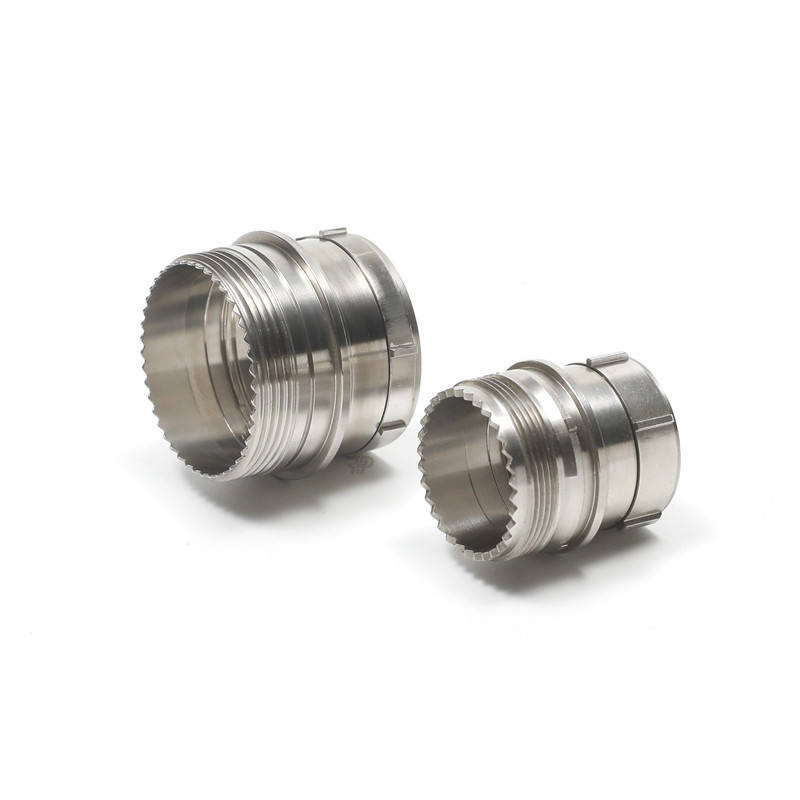
2. What Causes Distortion in Thin Titanium Components?
Before addressing distortion control, it's essential to understand the root causes of this issue during CNC machining. Distortion can arise due to:
Thermal Expansion: Titanium's low thermal conductivity means heat builds up near the cutting surface, causing it to expand and distort as the material cools.
Work Hardening: Thin titanium sections are especially susceptible to work hardening, where the material hardens near the cutting edge, making further machining more difficult.
Residual Stresses: Cutting and machining operations can introduce internal stresses that, once released after machining, lead to warping.
Cutting Forces and Vibration: Thin parts are often more prone to flexing under the cutting forces, leading to vibration and geometric distortion.
3. Techniques for Controlling Distortion in Thin Titanium Machining
3.1 Optimal Fixturing and Support
One of the primary methods to reduce distortion is by providing adequate support throughout the machining process. Inadequate fixturing can lead to excessive deflection, causing warping or deformation. To minimize distortion:
Use soft jaws to clamp the workpiece without imparting too much force.
Fixture multiple points to support the thin structure and distribute stress evenly.
Use vacuum fixtures or custom clamps that don’t restrict material movement.
3.2 Temperature Control and Cooling Techniques
Heat is one of the largest contributors to distortion, and temperature management is vital:
Use high-pressure coolant to ensure consistent cooling and prevent local overheating.
Employ through-tool coolant for continuous cooling during cutting, especially during deep cuts or intricate features.
4. CNC Machining Parameters for Thin Titanium Parts
The right CNC parameters are essential to minimize distortion. Here are some key machining settings for titanium:
Table 1: Recommended CNC Parameters for Thin Titanium Parts
| Operation | Cutting Speed (m/min) | Feed Rate (mm/min) | Depth of Cut (mm) | Notes |
|---|---|---|---|---|
| Roughing | 20–40 | 0.1–0.2 | 0.5–1.5 | Light cuts to reduce heat |
| Finishing | 30–60 | 0.05–0.1 | 0.2–0.5 | Smooth cuts, less heat generation |
| Drilling | 10–20 | 0.05–0.1 | — | Use peck drilling cycles |
| Tapping | 6–12 | 0.05–0.1 | — | Low speed for less heat |
5. Material Considerations in Thin Titanium Machining
Choosing the right titanium alloy and understanding its properties is crucial for minimizing distortion. Ti-6Al-4V is the most commonly used, but it can be prone to work hardening and thermal expansion.
Material Selection:
Grade 5 (Ti-6Al-4V) is the standard for aerospace, but Grade 23 has better fatigue strength.
Grade 2 (commercially pure) titanium is more ductile but lacks the high strength of Grade 5.
6. Advanced Tooling and Cutting Strategies
Advanced tooling options can improve machining outcomes. Here are some best practices:
Use coated carbide tools: Titanium alloys tend to bond to uncoated tools, so using coatings like TiAlN helps reduce tool wear.
Trochoidal Milling: This strategy reduces tool engagement, lowering cutting forces and heat buildup.
Radial Engagement: In shallow cuts, use low radial engagement to minimize forces and prevent deflection.
7. Managing Distortion During Machining (Case Studies)
Here, we will look at case studies that exemplify the best strategies for managing distortion in thin titanium components.
Case Study 1: Aerospace Bracket Machining
An aerospace company needed a thin titanium bracket with ±0.02 mm tolerance. The part was prone to distortion due to its large surface area. The solution involved a combination of multi-point fixturing, low cutting speeds, and high-pressure coolant, resulting in a distortion-free part.
Table 2: Aerospace Bracket Machining Results
| Parameter | Value |
|---|---|
| Material | Ti-6Al-4V |
| Thickness | 3 mm |
| Cutting Speed | 30 m/min |
| Tooling | TiAlN coated carbide |
| Final Tolerance | ±0.02 mm |
| Distortion (Warping) | 0 mm |
8. Post-Machining Techniques to Control Distortion
After machining, certain steps can be used to correct or minimize distortion:
Stress Relieving: Annealing can remove residual stresses.
Cold Working: Lightly bending or pressing can relieve internal stresses and improve final part flatness.
9. Inspection Methods for Distortion Control
Achieving high precision and verifying results is key:
Coordinate Measuring Machines (CMM) are used to verify dimensional accuracy and detect any distortion.
Surface Profiling ensures that surface finishes meet required standards.
Table 3: Common Inspection Methods for Thin Titanium Parts
| Method | Purpose | Equipment |
|---|---|---|
| CMM | Measure geometric accuracy | Zeiss CMM, Mitutoyo |
| Surface Profiling | Check for surface roughness | Mitutoyo Surftest |
| Visual Inspection | Look for deformations or cracks | Microscope, Optical |
10. Cost Considerations in Thin Titanium Machining
Machining thin titanium parts comes at a higher cost due to the need for specialized equipment, tooling, and precision controls. Here's a cost breakdown:
Table 4: Cost Breakdown for Thin Titanium CNC Parts
| Factor | Estimated Percentage of Total Cost |
|---|---|
| Material (Ti-6Al-4V) | 35–45% |
| Machining Labor | 20–25% |
| Tooling and Fixtures | 15–20% |
| Inspection and Quality | 10–15% |
| Post-Machining Processes | 10–15% |
11. Summary: Best Practices for Thin Titanium Machining
To minimize distortion, fixturing, machining parameters, coolant usage, and tool selection must be optimized. By employing a combination of advanced strategies, cutting tools, and cooling techniques, manufacturers can achieve tight tolerances on thin titanium parts with minimal distortion.
For companies in need of high-precision titanium machining, https://www.eadetech.com provides detailed insights and case studies on managing the challenges of machining titanium.
Conclusion
By carefully selecting materials, optimizing machining parameters, and employing advanced fixturing and cooling methods, distortion in thin titanium parts can be minimized or eliminated. As aerospace, medical, and automotive industries continue to demand more complex and lightweight titanium components, the importance of advanced machining techniques will only increase.
For detailed resources on machining practices and further technical support, companies can refer to https://www.eadetech.com, a leader in high-quality CNC machining services.
Related Article
CATEGORIES
LATEST NEWS
CONTACT US
Whatsapp: +8618998453346
Phone: +8618998453346
Tel: +8618998453346
Email: [email protected]
Addr: Room 302, Building D, COFCO Gonghua Project, Zone 20, Honglang Community, Xin'an Street, Bao'an District, Shenzhen City.