Titanium CNC Turning Parts
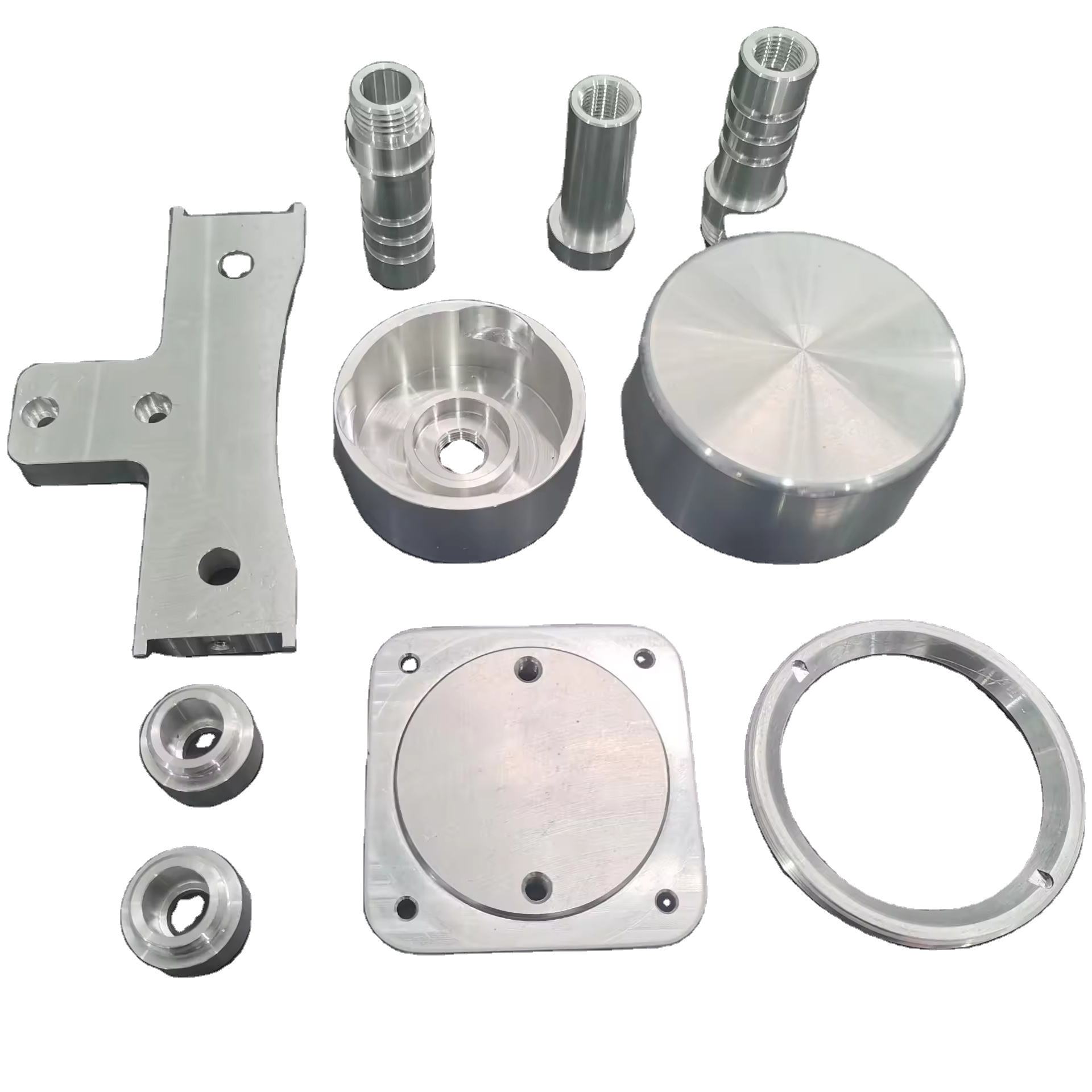
CNC Titanium Milling for Complex Geometry and High-Strength Components
- Product ID: Titanium CNC Turning Parts
- Tel: +8618998453346
- WhatsApp: +8618998453346
- Tel: +8618998453346
- Email: [email protected]
- Time: 2024-09-01 00:39
- Price: 0
High cutting forces during titanium milling
Heat concentration due to low thermal conductivity
Risk of tool chatter when machining thin-walled structures
Maintaining constant tool engagement
Reducing radial cutting forces
Controlling heat generation during high speed machining titanium
Using sharp, wear-resistant end mills for titanium
Limiting axial depth of cut to control cutting forces
Applying optimized feed rates to balance productivity and tool life
Rough machining followed by semi-finish and finish passes
Symmetrical material removal to reduce internal stress
Reduced cutting forces during final titanium milling operations
CMM inspection for complex geometries
Visual inspection of milled surfaces
Gauge verification for key dimensions
Project Overview: Demand for Complex Titanium Milled Components
As product designs evolve toward lighter weight and higher structural efficiency, titanium milling has become a core manufacturing process for complex geometry components. Compared with simple prismatic parts, milled titanium components often feature deep pockets, thin walls, complex contours, and multi-surface functional features.
In this case, the customer required high-strength titanium components with complex 3D geometries used in aerospace and industrial equipment. The parts demanded tight tolerances, consistent surface quality, and excellent repeatability across production batches.
Material Selection and Machinability Challenges
The project involved machining of titanium alloys selected for their high strength-to-weight ratio and corrosion resistance. However, machinability of titanium alloys presents significant challenges during milling operations.
Key difficulties included:
These factors required careful process planning to avoid dimensional distortion and premature tool wear.
CNC Milling Titanium: Machine Configuration and Strategy
To achieve stable titanium milling performance, CNC machines with high rigidity and precise spindle control were selected. High-speed spindles with sufficient torque at low RPM were critical for maintaining consistent cutting conditions.
The CNC milling titanium strategy focused on:
Adaptive tool paths were programmed to minimize sudden load changes and improve overall machining stability.
Tooling and End Mills for Titanium
Selecting suitable end mills for titanium was essential to this project’s success. Cutting tools were chosen based on coating performance, edge sharpness, and resistance to heat buildup.
Tooling strategies included:
Tool wear was closely monitored throughout production to ensure consistent surface finish and dimensional accuracy.
High Speed Machining Titanium with Controlled Parameters
High speed machining titanium requires careful balance. Excessive speed can accelerate tool wear, while overly conservative parameters reduce productivity.
For this project, machining parameters were optimized through trial cuts and simulation. This approach allowed stable material removal while maintaining surface integrity, even on complex contours and deep cavities.
High speed machining titanium significantly reduced cycle time without compromising part quality.
Precision Titanium Machining of Thin-Wall Features
Many components in this case included thin-wall sections that required precise control to prevent deformation. Titanium’s elasticity makes thin-wall milling particularly challenging.
Process measures included:
These techniques ensured dimensional stability throughout the machining process.
Integration with CNC Titanium Machining Operations
Although titanium milling was the primary operation, some components required additional CNC titanium machining processes such as drilling or secondary finishing.
Accurate datum control ensured seamless transition between operations. All machined titanium parts maintained alignment and geometric accuracy after multiple machining steps.
Surface Quality and Dimensional Control
Surface quality requirements were driven by both functional and aesthetic considerations. Milled surfaces needed to meet sealing and assembly requirements without secondary processing.
By optimizing cutter paths and milling parameters, surface finish targets were achieved directly from the machine. Dimensional tolerances of ±0.01 mm were maintained on critical features.
Precision titanium machining was verified through in-process inspection and final measurement.
Quality Inspection and Process Validation
Inspection methods for this case included:
All parts were inspected under certified quality systems, with full traceability and inspection documentation provided to the customer.
OEM Manufacturing and Engineering Collaboration
This project followed an OEM manufacturing model. Engineering teams worked closely with the customer to optimize part design for titanium milling while preserving functional intent.
CAD and CAM software such as SolidWorks, UG, and CATIA were used to generate accurate tool paths and simulate machining operations. Common drawing formats included STEP, IGS, DWG, DXF, STL, and PDF.
Prototype samples were approved before full-scale production.
Applications of CNC Titanium Milling
CNC titanium milling is widely applied in industries requiring complex, high-strength components. Typical applications include aerospace structural parts, industrial equipment, robotics, and energy-related systems.
For titanium machining companies, advanced milling capability is essential for producing reliable machined titanium parts with complex geometry.
Conclusion
This case demonstrates how CNC titanium milling enables the production of complex geometry components with high strength and precision. By addressing machinability of titanium alloys through optimized tooling, controlled cutting parameters, and stable machine setups, consistent results can be achieved.
Through titanium milling, CNC milling titanium, and precision titanium machining, manufacturers deliver machined titanium parts that meet demanding industrial requirements.
RELATED PRODUCTS
CATEGORIES
LATEST NEWS
CONTACT US
Whatsapp: +8618998453346
Phone: +8618998453346
Tel: +8618998453346
Email: [email protected]
Addr: Room 302, Building D, COFCO Gonghua Project, Zone 20, Honglang Community, Xin'an Street, Bao'an District, Shenzhen City.