Titanium CNC Turning Parts
Medical Titanium CNC Machining for Implant and Surgical Components
- Product ID: Titanium CNC Turning Parts
- Tel: +8618998453346
- WhatsApp: +8618998453346
- Tel: +8618998453346
- Email: [email protected]
- Time: 2023-06-23 00:00
- Price: 0
CNC titanium milling for complex contours and weight-optimized structures
Titanium lathe turning for precision shafts, bores, and mating features
EDM titanium machining for delicate internal profiles and stress-sensitive areas
Drilling and micro machining for small-diameter holes used in fixation and assembly
CMM dimensional verification
100% visual inspection combined with gauge measurement
Metallographic analysis for material validation
Process documentation and batch traceability
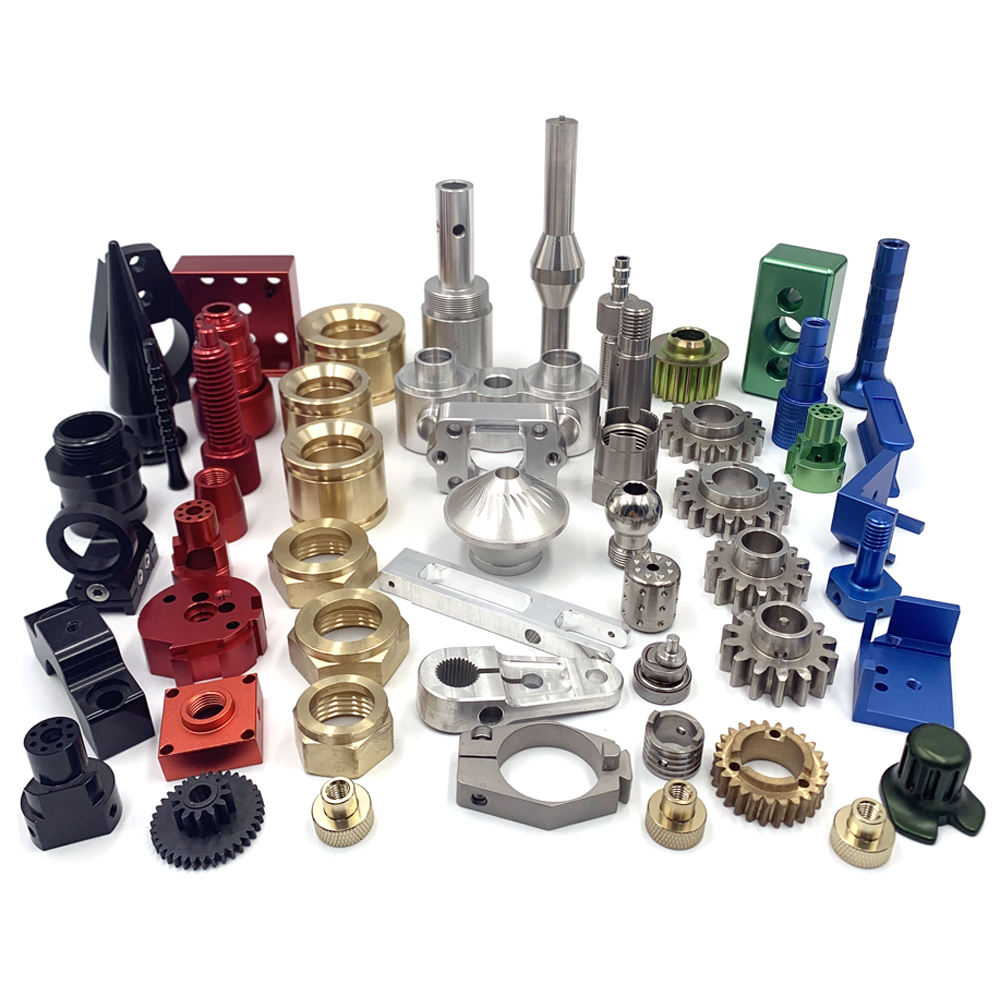
Background: Why Titanium Is Critical in Medical Machining
Medical device manufacturing places extreme demands on material performance, dimensional accuracy, and surface integrity. Components such as orthopedic implants, surgical instruments, fixation systems, and robotic-assisted medical tools must meet strict functional and regulatory requirements. Titanium has become a preferred material in this field due to its biocompatibility, corrosion resistance, and favorable strength-to-weight ratio.
In this case, the customer was a medical device manufacturer developing a new generation of implantable components and surgical tool interfaces. The project required custom titanium machining with consistent precision, stable repeatability, and full inspection documentation to support downstream regulatory submissions.
Titanium Material Selection and Machinability Considerations
The project involved multiple grades of medical-grade titanium, including commercially pure titanium and titanium alloys commonly used in implant applications. While titanium offers outstanding biological compatibility, its machinability presents challenges that must be carefully managed in a medical environment.
The machinability of titanium alloys is influenced by low thermal conductivity, high strength at elevated temperatures, and a tendency to gall during cutting. These characteristics increase cutting forces and tool wear, especially during titanium milling and titanium turning operations.
To overcome these challenges, the machining process was optimized using dedicated end mills for titanium and controlled cutting parameters. Coolant delivery and chip evacuation were carefully designed to prevent heat accumulation and maintain surface integrity, which is especially critical for implant-contact surfaces.
CNC Machining Processes for Medical Titanium Parts
This medical case required a combination of CNC machining processes to achieve complex geometries, fine surface finishes, and tight tolerances.
The primary processes included:
Wire EDM was selected for certain features where mechanical cutting could introduce residual stress or micro-cracks. This approach ensured dimensional accuracy while preserving the mechanical properties of the titanium material.
All machining operations were executed using CNC titanium machining centers to ensure repeatability from prototype to small-batch production.
Precision Requirements and Tolerance Control
Medical titanium components often require tolerances equal to or tighter than those used in aerospace applications. In this project, critical dimensions were controlled within ±0.01 mm, ensuring proper fit, alignment, and functional reliability.
Dimensional stability was maintained through a combination of controlled machining sequences and in-process measurement. Titanium lathe turning operations were optimized to minimize deflection, while milling strategies were designed to reduce tool engagement and vibration.
Final inspection was performed using CMM systems, supplemented by 100% visual inspection and gauge checks. These measures ensured that every machined titanium part met the customer’s strict quality requirements before delivery.
Surface Integrity and Functional Finishing
Surface condition is especially important in medical applications, where roughness and contamination can directly affect performance and patient safety. After machining, surface treatments were applied based on functional requirements.
Brushing was used to achieve uniform, non-directional surface textures on surgical tool components. For certain non-implant parts, anodizing was applied to improve corrosion resistance and facilitate visual identification during surgical procedures.
Surface treatment processes were carefully selected to avoid altering the biocompatibility of the titanium material. No coatings or treatments were applied to implant-contact surfaces unless explicitly specified by the customer.
Heat Treatment and Structural Stability
Heat treatment played a supporting role in this medical titanium machining case. For selected titanium alloys, solution and aging processes were applied to enhance mechanical stability and reduce residual stresses from machining.
Stress relief was particularly important for parts produced through EDM titanium processes, where localized thermal effects can influence internal stress distribution. Metallographic analysis was conducted to verify microstructure consistency and confirm compliance with medical material standards.
Inspection, Traceability, and Quality Assurance
Medical device manufacturing requires comprehensive inspection and traceability systems. All machined titanium parts in this case were produced under ISO9001:2015 and IATF16949 certified quality systems.
Inspection procedures included:
Each production batch was delivered with inspection records and material documentation, enabling the customer to integrate the parts into regulated medical device assemblies with confidence.
OEM Support and Engineering Collaboration
This project was executed under an OEM model, with the customer providing detailed drawings and functional specifications. Early-stage engineering support focused on improving manufacturability without compromising medical performance.
Design optimization included recommendations on feature radii, wall thickness, and machining orientation to improve titanium machinability and reduce tool wear. Programming and simulation were completed using CAD and CAM systems such as SolidWorks, UG, and CATIA, ensuring accurate toolpath generation and collision avoidance.
Supported drawing formats included STEP, DWG, DXF, IGS, STL, and PDF. Free samples were provided during the validation phase to support assembly testing and functional verification.
Applications Beyond Medical Devices
While this case focused on medical titanium machining, the same CNC titanium machining strategies are applicable to other industries requiring high precision and clean surface finishes. Robotics, energy systems, and advanced instrumentation frequently use similar machined titanium parts where accuracy and reliability are critical.
The experience gained from medical projects also strengthens process control for other demanding applications involving titanium machining companies serving global markets.
Conclusion
This medical titanium CNC machining case demonstrates how precision process control, appropriate tooling, and rigorous inspection are essential for producing reliable machined titanium parts for medical applications. By addressing the machinability challenges of titanium alloys and maintaining strict quality standards, manufacturers can deliver components suitable for implants, surgical tools, and advanced medical systems.
Through CNC titanium machining, EDM titanium processes, and precision titanium milling and turning, medical device manufacturers can achieve consistent performance while meeting regulatory and functional requirements.
RELATED PRODUCTS
CATEGORIES
LATEST NEWS
CONTACT US
Whatsapp: +8618998453346
Phone: +8618998453346
Tel: +8618998453346
Email: [email protected]
Addr: Room 302, Building D, COFCO Gonghua Project, Zone 20, Honglang Community, Xin'an Street, Bao'an District, Shenzhen City.