Titanium CNC Turning Parts
Aerospace Titanium CNC Machining for High-Precision Structural Components
- Product ID: Titanium CNC Turning Parts
- Tel: +8618998453346
- WhatsApp: +8618998453346
- Tel: +8618998453346
- Email: [email protected]
- Time: 2025-06-23 19:26
- Price: 0
CNC milling titanium for complex pockets, ribs, and weight-reduction features
Titanium lathe turning for cylindrical interfaces and precision bores
Wire EDM titanium for internal profiles requiring sharp corners and minimal mechanical stress
Drilling and broaching for high-accuracy holes and alignment features
Full CMM dimensional inspection
Ultrasonic and radiographic testing for internal integrity
Metallographic analysis for material validation
100% visual inspection combined with gauge checks
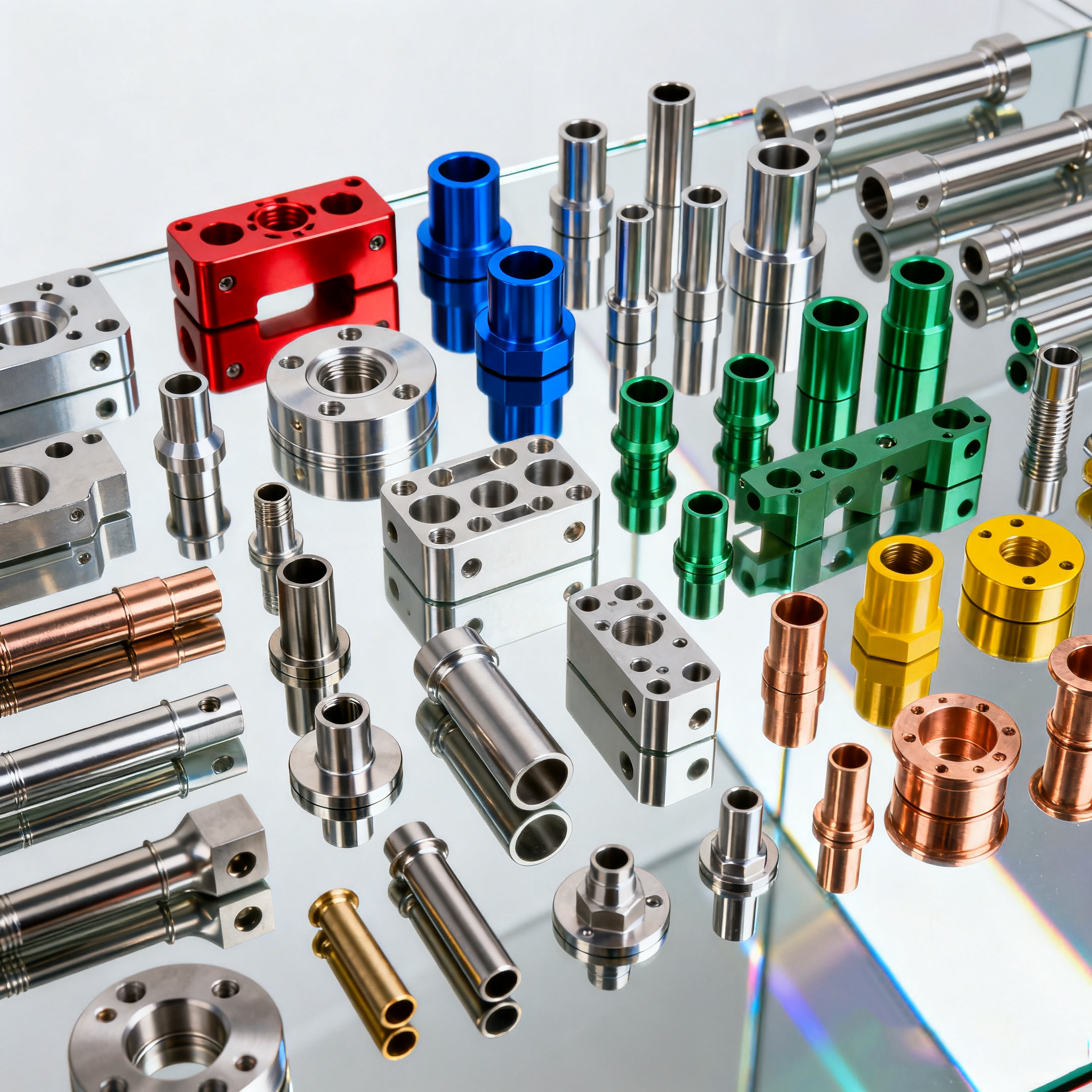
Background: Aerospace Demand for Titanium Machining
The aerospace industry is one of the most demanding sectors for CNC machining, especially when it comes to titanium alloys. Aircraft structural components, engine parts, and critical assemblies require materials that combine high strength, low weight, corrosion resistance, and long-term reliability. Titanium, particularly Ti-6Al-4V, has become a standard material in modern aerospace manufacturing due to its excellent strength-to-weight ratio and fatigue resistance.
In this case, the customer was an aerospace parts integrator developing a new lightweight structural subassembly used in unmanned aerial systems and auxiliary aircraft modules. The project required custom titanium machining with strict dimensional control, traceable inspection, and compliance with international quality standards.
Material Selection and Machinability Challenges
The primary material specified for this project was Ti-6Al-4V, widely recognized as the most commonly used aerospace titanium alloy. While its mechanical performance is outstanding, the machinability of titanium alloys presents well-known challenges.
Titanium has low thermal conductivity, meaning heat generated during cutting concentrates at the tool edge. Combined with its high chemical reactivity at elevated temperatures, this leads to accelerated tool wear, built-up edge formation, and potential surface integrity issues if machining parameters are not carefully optimized.
To address these challenges, the machining strategy was designed around high-speed machining titanium principles, using controlled cutting speeds, optimized feed rates, and specialized end mills for titanium. Tool paths were generated through advanced CAD and CAM software to minimize heat accumulation and maintain stable cutting conditions.
CNC Machining Capabilities Applied
This project involved multiple machining processes to achieve the final geometry and performance requirements. The production flow integrated CNC machining with both milling and turning operations, supported by secondary processes where necessary.
Key machining processes included:
Micro machining was applied to selected features with tight tolerances and small diameters, ensuring functional accuracy without inducing deformation.
All machining operations were executed under CNC-controlled environments to maintain consistency across prototype and batch production.
Tolerance Control and Dimensional Accuracy
Aerospace components demand extremely tight tolerances to ensure interchangeability and structural integrity. For this project, the dimensional tolerance requirement was ±0.01 mm across critical features.
To achieve this level of precision, machining parameters were validated through trial runs, and thermal deformation was closely monitored. Tool wear compensation and in-process inspection were used to maintain dimensional stability throughout production.
Coordinate Measuring Machine (CMM) inspection was conducted on all critical dimensions, supplemented by 100% visual inspection and gauge verification. For structural parts subjected to dynamic loads, non-destructive testing methods such as ultrasonic testing (UT) and magnetic particle testing (MT) were applied to detect subsurface defects.
Heat Treatment and Mechanical Performance
After rough machining, the titanium parts underwent controlled heat treatment processes to enhance mechanical properties and relieve internal stresses introduced during cutting.
The applied heat treatment included solution treatment followed by aging, ensuring optimal strength and fatigue resistance. For specific components exposed to cyclic loading, quenching and tempering were used to balance hardness and toughness.
Metallographic analysis was performed to verify grain structure and confirm that the heat treatment process met aerospace material specifications.
Surface Treatment and Functional Finishing
Surface integrity plays a critical role in aerospace titanium machining. Depending on the functional area of the component, different surface treatments were applied.
Brushing was used to achieve uniform surface texture on visible structural parts. Anodizing was applied to selected areas to enhance corrosion resistance and improve identification through color coding. For non-critical auxiliary brackets, powder coating and zinc plating were applied where environmental exposure was expected.
All surface treatments were selected to comply with aerospace material compatibility requirements, ensuring no adverse effect on fatigue performance or assembly interfaces.
Inspection, Quality Control, and Certification
Quality assurance was central to this aerospace titanium machining case. The manufacturing facility operates under ISO9001:2015 and IATF16949 certified quality management systems, ensuring process traceability and repeatability.
Inspection procedures included:
Each batch was delivered with complete inspection reports and material certificates, supporting the customer’s aerospace documentation requirements.
OEM and ODM Support
The project was executed under an OEM model, with the customer providing 3D drawings and performance specifications. Design optimization feedback was provided during the early stage, focusing on improving machinability and reducing unnecessary material removal.
Supported drawing formats included STEP, DWG, DXF, IGS, STL, and PDF. Design and programming were carried out using CAD, CAM, and CAE systems such as SolidWorks, UG, CATIA, and Pro-E, enabling seamless integration with the customer’s engineering workflow.
Free samples were produced during the validation stage, allowing the customer to perform assembly and functional testing before mass production.
Applications and Industry Impact
Although primarily designed for aerospace use, the machining approach and process control developed in this case are applicable across multiple industries. Similar titanium CNC machining solutions are widely used in medical devices, robotics, energy systems, automotive performance parts, and advanced manufacturing equipment.
This case demonstrates how precision titanium machining, when combined with appropriate tooling, process control, and inspection standards, can meet the most demanding aerospace requirements while remaining scalable for production.
Conclusion
This aerospace titanium CNC machining case highlights the complexity and expertise required to successfully machine titanium alloys for critical applications. From material selection and machinability challenges to heat treatment, surface finishing, and rigorous inspection, every stage plays a crucial role in delivering reliable, high-performance machined titanium parts.
By leveraging advanced CNC machining capabilities, comprehensive quality systems, and flexible OEM support, aerospace customers can achieve lightweight, durable, and precision-engineered titanium components that meet both performance and regulatory demands.
RELATED PRODUCTS
CATEGORIES
LATEST NEWS
CONTACT US
Whatsapp: +8618998453346
Phone: +8618998453346
Tel: +8618998453346
Email: [email protected]
Addr: Room 302, Building D, COFCO Gonghua Project, Zone 20, Honglang Community, Xin'an Street, Bao'an District, Shenzhen City.