Titanium CNC Turning Parts
Titanium Plasma Cutting and CNC Machining for Energy Sector Components
- Product ID: Titanium CNC Turning Parts
- Tel: +8618998453346
- WhatsApp: +8618998453346
- Tel: +8618998453346
- Email: [email protected]
- Time: 2024-09-01 00:07
- Price: 0
Low thermal conductivity causing heat buildup
Work hardening tendencies
Maintaining flatness on thick plates
Securing titanium sheets on precision fixtures
Adjusting plasma cutter speed and power for thickness
Cutting near-net-shape blanks for CNC finishing
Milling for flanges, slots, and pockets
Drilling and threading for assembly points
Finishing surfaces to tight tolerances
Plan plasma cutting paths for efficient material utilization
Sequence CNC machining operations for precision features
Validate prototypes prior to full-scale production
Turbine housings
Heat exchangers and pump components
Structural assemblies requiring corrosion resistance and precision
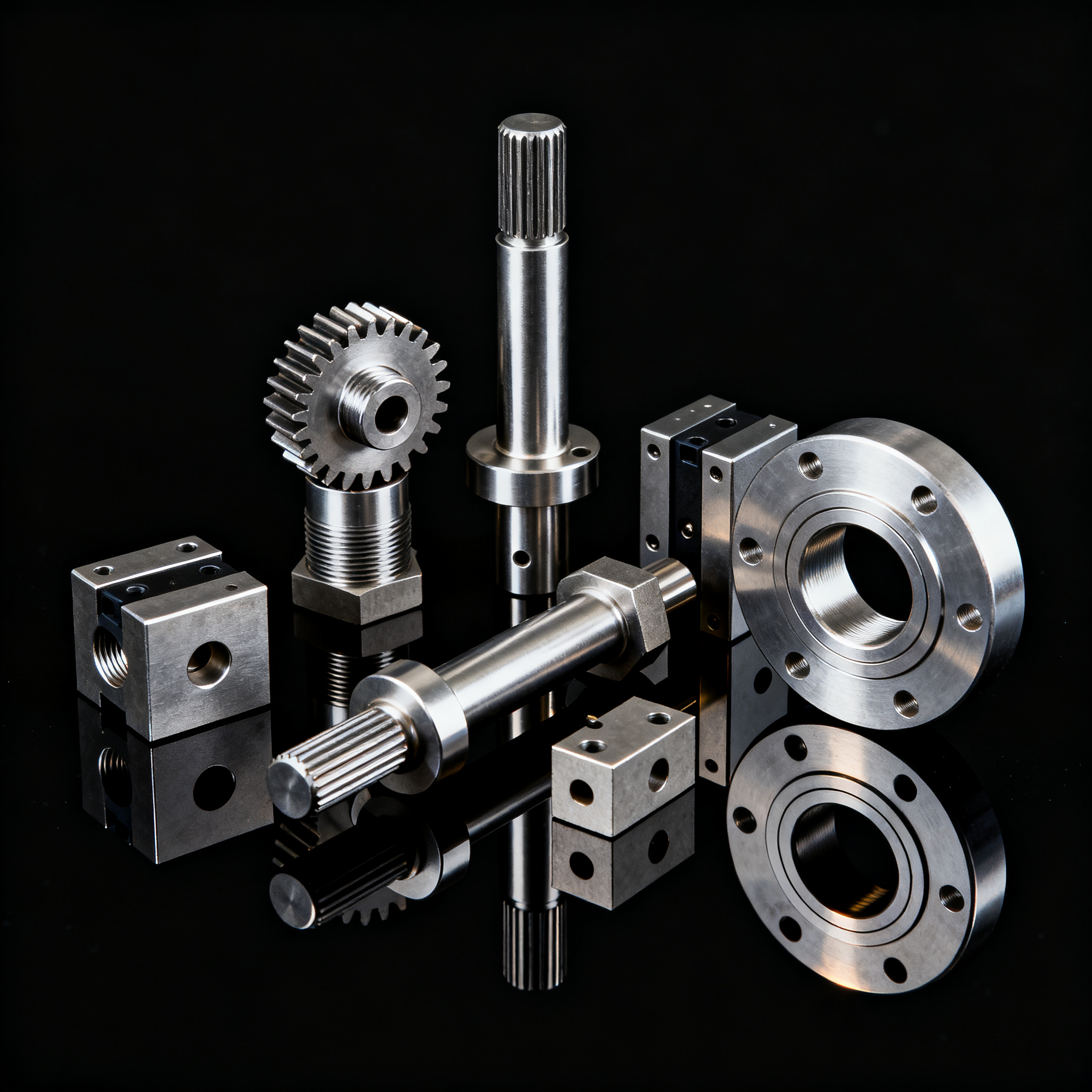
Background: Energy Sector Component Requirements
Energy sector components, such as turbine housings, pump components, and heat exchangers, require corrosion-resistant, high-strength titanium. These components often feature complex cutouts, thick walls, and precise mounting surfaces. Plasma cutting provides rapid shaping of titanium sheets, while CNC machining ensures precise functional features.
In this project, the customer required titanium plates and structural components for energy machinery. Titanium plasma cutters were used for fast near-net-shape cutting, followed by CNC machining for finishing holes, slots, and flanges.
Material Selection and Machinability Considerations
Titanium alloys were selected for high strength, corrosion resistance, and thermal stability. Machinability challenges included:
Titanium plasma cutting enabled initial shape separation without excessive thermal distortion. CNC machining finalized functional features with high precision.
Titanium Plasma Cutting Process
Plasma cutting operations included:
Edges were clean, and minimal taper ensured accurate fit during machining.
CNC Titanium Machining for Energy Components
CNC operations included:
High-speed machining titanium parameters were optimized for dimensional accuracy and surface integrity.
Dimensional Accuracy and Surface Quality
Critical dimensions were held within ±0.01 mm. Surface finishes met industry standards for energy sector assemblies. CMM inspection confirmed flatness, hole alignment, and geometric accuracy.
Heat Management and Stress Control
Optimized plasma cutting reduced heat input. High-speed machining titanium minimized thermal distortion. Selective stress relief was applied for thick sections requiring precise flatness.
OEM Support and Engineering Collaboration
Engineering teams collaborated to:
CAD/CAM tools such as SolidWorks, UG, and CATIA were used. Supported drawing formats included STEP, DWG, DXF, IGS, STL, and PDF.
Applications in Energy Sector
Titanium plasma cutting combined with CNC machining is widely used for:
This integration ensures fast production of high-quality, durable titanium parts.
Conclusion
This case demonstrates how titanium plasma cutting combined with CNC machining produces energy sector components with high precision and minimal distortion. Optimized cutting parameters, high-speed machining, and inspection protocols ensure reliable, high-quality titanium parts for demanding energy applications.
RELATED PRODUCTS
CATEGORIES
LATEST NEWS
CONTACT US
Whatsapp: +8618998453346
Phone: +8618998453346
Tel: +8618998453346
Email: [email protected]
Addr: Room 302, Building D, COFCO Gonghua Project, Zone 20, Honglang Community, Xin'an Street, Bao'an District, Shenzhen City.